
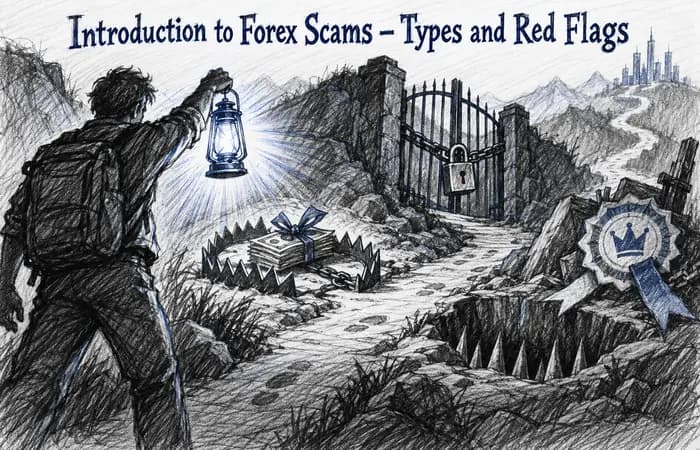
Introduction to Forex Scams – Types and Red Flags
Introduction to Forex Scams – Types and Red Flags
"An introduction to forex scams: the main types of fraud traders meet, why scams play on greed and fear, and the red flags that help you avoid them."
Wikilix Team
Educational Content Team
15 min
Reading time
Advanced
Difficulty
The Forex market is the biggest financial market in the world. Trillions of dollars change hands every day, and millions of traders take their shot at success. With that much money, it's not surprising that scams finally infiltrated.
To the beginner, distinguishing legitimate opportunities from scams can be complex. Scammers know how to disguise their scams with professional websites, polished advertising, and smooth selling techniques. That's why learning about the scams and what to look for as a trader will be some of the most useful knowledge-building you can do.
Why Scams Work In Forex
Scams in Forex rely on two main emotions: greed, which leads us to seek immediate profits, and fear of losing out (FOMO), which leads us to make rushed decisions. Scammers deliberately design their scams to manipulate both of these emotions.
For instance, they may say “You have the chance to double your money in one month!" or "Act fast, there are only 10 spots available!" Both of these are designed to trigger a rush instead of proper research.
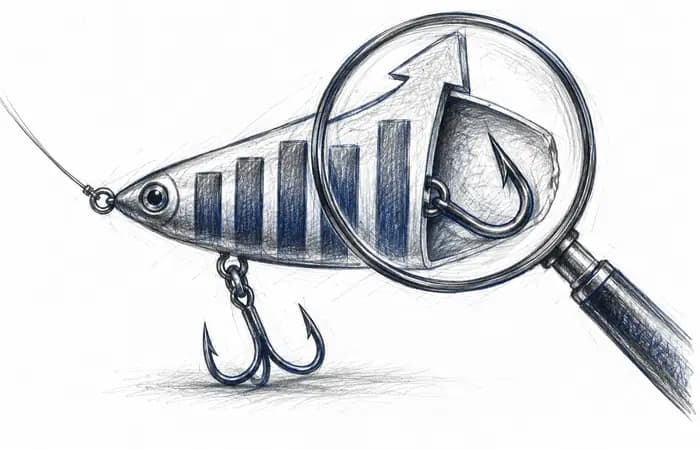
Common Forex Scams
Let's look at a few of the scams you are most likely to encounter:
1. Ponzi and Pyramid schemes.
These schemes provide unrealistically consistent high returns. Initially, early investors may enjoy payouts, as these typically come from newer investors rather than actual profit.Ultimately, the system will collapse and participants end up with nothing.
2. Scam Brokers
Scam brokers are brokers who appear legitimate but have no regulation whatsoever. They may manipulate the trading platform, deny you access to take withdrawals, or just disappear when they have enough of your deposits.
3. Fake Forex Robots and Signal Services
These scams state you can trade “hands-free” or “guaranteed winning signals.” In reality, the robots are poorly programmed and the signals are completely random. Believe it or not, some brokers even promote this scam because they make a commission when you lose your money.
4. Managed Account Scams
In this scenario, someone tells you they will trade for you and they are an expert. They typically want you to deposit more and they either trade at random or steal your money.
What to Watch Out For
While scams can take various forms, they usually have similar warning signs. Here’s what to look for:
Unrealistic promises – Any broker that claims you can get guaranteed profits or at minimum, risk-free trading is a scam.
Non-regulation – If you cannot verify the broker is licensed by a trusted authority, just say no.
Withdrawal process – Delays, undesirable excuses or strange conditions to get your money is a huge red flag.
If you see any of these things, take it as a warning signal to stop and reassess.

A Quick Comparison
Below is a basic chart to compare real brokers and scams:
Genuine Broker | Scam Broker |
|---|---|
Warns about trading risks | Promises easy or guaranteed profits |
Allows smooth withdrawals | Blocks or delays withdrawals |
Regulated by trusted authorities | Claims licenses from unknown regulators |
This chart alone will save you from many headaches.
Tom is a university student who wanted to make some extra money. He found a broker who claimed he would make a 15% return per month by having “expert account managers”. Tom saw little profits being added to his account in the beginning and was encouraged. But when Tom wanted to withdraw, he received a message that he would have to deposit more money to have his funds “unlocked”. After weeks of attempting to withdraw his funds, the broker’s website was removed.
Tom’s story is not unique - thousands of traders have fallen into this same pattern every year. The scams may change names, but the scams are the same.
Protecting Yourself
When we say do not be a victim of a Forex scam we do not mean trade Forex - we mean simply be cautious and realistic. Below is a two habits that will make a long way:
1. Do your homework – check the regulation of the broker on the official website rather than simply trusting their claims.
2. Start small – you should make small deposits and withdrawals to test the broker before making a larger investment.
The few minutes of due diligence, could save yourself more than losing your savings.
The Big Picture
As long as there is risk and money involved, there will always be fraud. The idea is not to be too scared to trade, but more informed and aware. Think of it like driving a car. Just as there are risks when driving on the road, you can increase your chances of successfully getting to your destination when you take averting risk precautions.
In Conclusion
Forex scams come in many shapes and sizes, but they all share one thing in common, they want you to act fast and skip your research. When you work to educate yourself on the common types of scam and how to identify the warning signs, you provide yourself the best chance to trade safely.
If you are looking to further build your knowledge of spotting scams and selecting reliable brokers, the Learn section of Wikilix is a fantastic next step. Information is the best defense you have when you try to protect money and expand you as a trader.
Frequently asked questions
Answers to the questions readers ask most about this lesson.
Comments & Reviews
0 entries
Nothing on the record yet
Be the first to share what happened.
What's Next?
Keep building your knowledge with our structured learning path. Each section builds upon the previous one.