

Adapting Your Style to Market Conditions
Adapting Your Style to Market Conditions
"Learn how to adapt your trading style to changing market conditions. Discover when to adjust strategies for trending, volatile, or range-bound markets to stay consistent and profitable."
Wikilix Team
Educational Content Team
15 min
Reading time
Intermediate
Difficulty
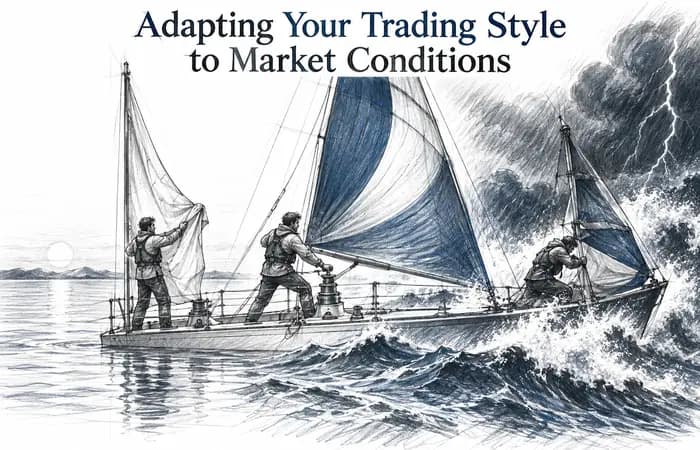
If there's one lesson in trading that eventually becomes clear, it is this: the market is never the same. One week, the market may be trending effortlessly in one direction, and the next, it may be whipsawing like a yo-yo in both directions.
Regardless, many traders will continue to apply the same strategy, hoping to achieve the same consistent results, and that is where they are most likely to go wrong. Professional traders do not just find "one" approach that works; they adapt to changing market conditions.
Learning how to adjust your trading style to suit market conditions is one of the distinctions between amateurs and professionals. In this article, we will look at how to assess the market's mood, which sorts of conditions signal that you need to change gears, and how to adjust your trading style so that you are aligned with what the market is actually doing and not what you want it to be doing.
The Markets
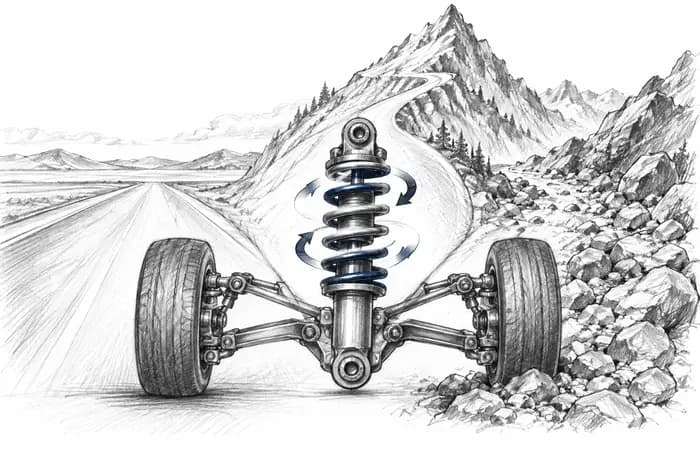
To adapt means recognizing what you are adapting to. In general, markets have three distinct.
• Trending Markets: where price is moving in one direction consistently, either higher or lower, with consecutive higher highs and lower lows, respectively.
• Range-Bound Markets: where price is bouncing in between areas of support and resistance with no clear direction either up or down.
• Volatile or Choppy Markets: where the price is moving very quickly and unpredictably without any clear direction, often because of major news or uncertainty.
Each of these conditions provides a reward for different trading behavior, so recognizing which condition you are in lays the foundation for determining (or adjusting) your trading style.
How to Recognize When Conditions Change
The market seldom gives you. You must observe the signs. The following is what to look out for/here are some signs you must watch for:
• Decelerating momentum following a strong trend generally signals that a range could be upon the market.
• Long consolidations can signal a move-away breakaway or transition created by increased volatility.
• Breaking news or event-driven unrest is often seen in a sudden increase of volatility.
A flexible trader does not resist conditions; they anticipate a changing event. You are not predicting the future; you are waiting for a time to react quickly to events that are unfolding.
Adjusting to Trending Markets
When the markets are trending, always ask yourself, "Where is the momentum?" Trend-following strategies or program strategies will always perform better when momentum is with the price direction.
How to adjust to trends:
• Look to the higher time frame to avoid management of minor pullbacks.
• Use moving averages or trendlines to establish your market direction.
• Let the profits run longer, as well as use a trailing stop instead of using a small target.
Mindset:
The volatility of a trend creates an opportunity to stay in our position; therefore, you must remain patient. The trader who thinks they can outsmart the market trend or close interruptions working against them often loses out on these opportunities.
Adjusting to Ranges
Range-trading markets are quieter, but they are also dangerous to operate in. The price will move consistently in and out of the same price range, often frustrating breakout traders. In this market, you usually revert to scalping or mean-reverting strategies (buying near support, selling near resistance).
How to adjust to ranges:
• Be sure to reduce your size and adjust your stop losses accordingly since the moves will be smaller.
• Be selective; try to avoid entering the position in the middle of the range.
• Adjust your indicators - oscillators such as RSI or Stochastic will show overbought or oversold levels.
Mindset:
Be disciplined. Indeed, this style looks easy. The mistake often follows, being impatient and taking losses, without recognizing essential locations. Trade in quiet areas or near edges, if possible.
Adjusting to Volatile or Choppy Markets
Volatile market signals are often scary to traders - rightly so! News events or change-driven volatility can quickly expand our exposure. However, the good news is that for short-term traders, you can also make money quickly.
How to adjust to volatile or choppy markets:
• Change the time frame; day trades or scalping-type plays (whatever your style) are often better.
• Focus on your risk - smaller position, larger stop-loss, and be quick to exit trades if volatility creates turmoil.
• Be aware of any news event - better not to be trading short before any market-moving news or announcement.
Mindset:
Volatile markets can turn the emotionally sensitive trader's anxiety space. Stay focused on survival or manage emotions to protect capital instead of chasing every sharp move.

Matching Trading Styles to Market Types
Market Condition | Works Best With | Avoid Using |
|---|---|---|
Trending | Trend-following, Swing Trading | Countertrend scalps |
Range-bound | Mean reversion, Scalping | Breakout trades |
Volatile | Short-term Day Trading | Long holds without protection |
The best traders don’t marry one method—they rotate styles or tweak systems slightly depending on the environment. Flexibility, not rigidity, leads to consistency.
Managing Risk: The One Constant
While you change, the management of risk remains unchanged. Whether you plan to trend trade or range trade, you must protect your capital. The market can change on a dime and clean out even the best trades.
Some rules to remember:
• Never risk more than a small percentage of capital to trade.
• Position sizing should be adjusted as volatility shifts; when markets get crazy, trade smaller.
• Have a plan written down so when you are in the heat of the moment, your decisions aren't emotional.
Good traders always think like risk managers first and profit makers second.
Mental Flexibility: The Found Edge
Although technical skills are essential, psychological flexibility may be even more crucial. Many traders understand that the market is shifting, yet don't seem able to change from a style that they used to find profits.
As an example, if you are a swing trader in a choppy, sideways market, it may not make much sense to hold a trade open for days on end. However, you may find scalping just as problematic, only in the reverse—when the market is trending strongly, jumping in and out may cut your profits short with no risk management in place at all.
When you can take your ego out of the equation and adjust without even 1 second of hesitation, you will have made progress through insight and experience.
Some Practical Ways to Build Flexibility
Here are some specific steps to take that are actionable to help you build your flexibility:
1. Keep a log of the market: As you start to develop your thoughts daily, take notes about the market conditions (trend/range/volatility). Over time, you will begin to see patterns.
2. Back test multiple strategies: Have an approach to trading in various markets so you can switch in and out as needed.
3. If you can, use alerts, as well as filters, to help detect when momentum or volatility has shifted.
4. Stay informed, but don't drown yourself in information: Not all information is equal. Focus on quality information—central bank announcements on economic reports, or even shifts in sentiment after the release of economically significant news.
5. At the end of the week, reflect: Ask yourself, "Did I trade what the market gave me—or what I wanted it to give me?"
Overall, one must develop adaptability through awareness and repeated exposure, rather than relying on random trial and error.
Conclusion:
Markets are living, dynamic, unpredictable, and constantly evolving entities. The traders who will survive over time are not those who have found the perfect method and adhered to it for all eternity. Instead, the trader who will survive is the trader who can change/adapt and evolve with the market. When the conditions change, you should too.
Adapt your trading style, manage your risk, and keep your mind flexible; that is how you will continue to be profitable in good markets, volatile markets, and everything in between.
Remember—you cannot control the market, but you can always keep your response in control.
Frequently asked questions
Answers to the questions readers ask most about this lesson.
Comments & Reviews
0 entries
Nothing on the record yet
Be the first to share what happened.
What's Next?
Keep building your knowledge with our structured learning path. Each section builds upon the previous one.