

How to Use Journal Insights to Improve Your Strategy
How to Use Journal Insights to Improve Your Strategy
"Discover how to use trading journal insights to improve your strategy, spot strengths and weaknesses, and build a more consistent and data-driven trading approach."
Wikilix Team
Educational Content Team
12 min
Reading time
Intermediate
Difficulty
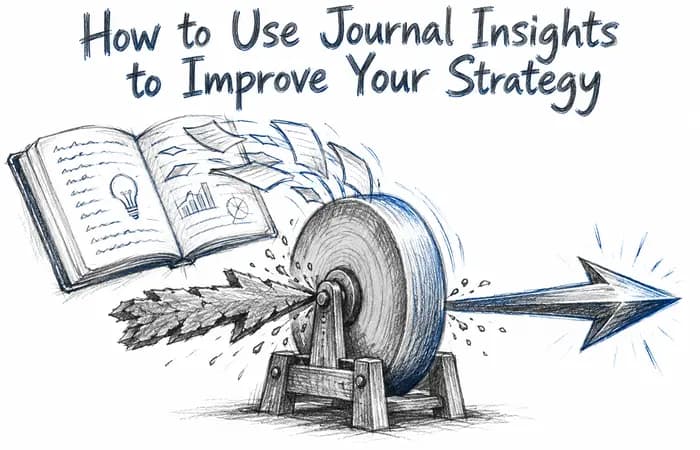
Maintaining a trading journal is one thing; knowing how to utilize it is yet another. A good number of traders record their trades, and after several days or weeks, leave those notes aside as if it were an old notebook on a shelf. The real power of a trading journal comes when you go back through those notes to reflect and use your observations to improve your trading processes.
Your Journal is More Than a Record
Think of your journal not only as a record book. Your journal isn't keeping score; it's teaching you. Each journal entry is a snapshot of your thinking process as you entered the trade, determined how to manage the trade, and handled the result. As you evaluate the entry over: time, you will begin to see patterns you would never notice while engaging in the act of trading.
For example, you might notice your winning trades are generated through trend-following setups while your counter-trend trades resulted in losses. That's a direct signal from your own data of your edge.
Identified What to Double Down on and What not to do
The first way to use your journal is to keep doing what is working:
Go through your past trading history and breakdown your outcomes by situation.
In which situations did you outperform expectations consistently? Was it trading breakouts in the London session?
Was it shorting overbought pairs on the daily?Once you identify the setups that suit your strengths, you can tweak your plan to prioritize those setups more. You don't stop trying new things, but rather give your potential best ideas greater opportunities for success.

Learning From Your Mistakes
Of course, your journal shouldn't solely be about your wins - your journal should also be about your losses. If your journal shows your losses started to accumulate as you traded in those similar opportunities, it's probably time to refine your approach.
You may notice that your losses come when you force a trade right after economic news or you over-leverage your trades when you're "confident" about the set up. There is a difference between being "confident" or "uncertain" and defining an analysis plan with your profit and loss capabilities. Writing it down can convert fuzzy frustrations into definable problems that maybe you can act on and improve.
A simple framework:
Pattern Spotted | Adjustment |
|---|---|
Exiting too early on winners | Try trailing stops to lock profits |
Over-trading after losses | Set a daily trade limit |
Larger losses than wins | Adjust stop-loss placement or position size |
Change Data Into Action.
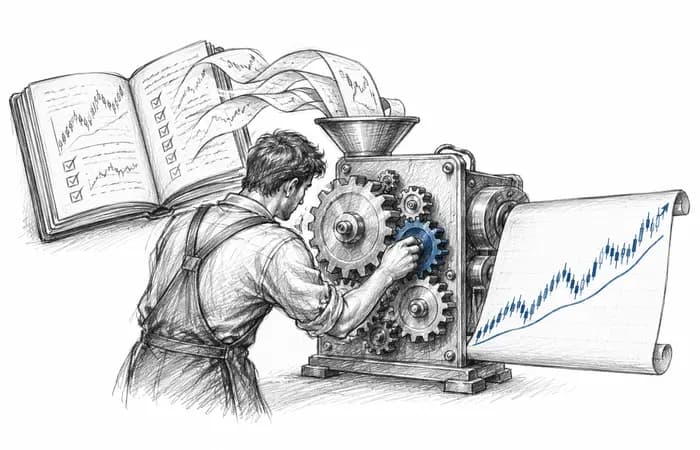
Once you identify a pattern, use the data as something to act on. This could be rewriting existing parts of your trading plan, writing new rules, or eliminating strategies that you see are consistently under-performing.
If, for example, you find in your journal you lose 70% of trades placed at night, you might simply decide to stop trading during the night hours instead of your highest engagement focus hours. At best, you may decide to scale back from scalping after you determine your best exiting trades came from a higher time frame and you may chose to only act in a swing trade capacity in overdue trading rules.
The Psychological Side
Much of what we learn from the journal is not just about our strategy; it is also about psychology.If you record how you felt while trading, you will start to notice the effects of emotions in trading results. Did you exit a trade too early due to fear? Did you ignore your stop because you were overconfident?
Once you recognize these patterns, you can create rules for yourself that honor your emotions. For example, you might decide to take a break after two losses in a row or reduce your risk size after an outsized win. This simply helps to minimize the potential for bad emotional decisions that could have negative repercussions on performance.
Regular Reviews
The hardest part of keeping a journal or a record of trade decisions is implementing it and getting into the habit of doing it. A journal only works when you make an effort to do a regular review after each trading session...no less.
You should set some time on your calendar for a regular review of your trades. This could be each week or once a month where you review trades and start identifying patterns or lessons learned. Don't wait until the end of a year when it feels overwhelming. The more time between reviewing a trade, the harder it becomes to make any sort of adjustments to the trading.
Consider a musician “tuning” their instrument. The more often these adjustments happen, the “more in tune” the musician and instrument remain.
Confidence with Choose Actions and Develop Incentives to Create the Trade
While not often discussed or considered, an additional benefit of using insights from a journal is confidence.
When you clearly know your strengths and have a way of keeping records of your successful strategies, you become much more grounded with your decisions in trading. It is easier to use statements like, “I have seen this setup work dozens of times before,” rather than second-guessing each tactical acumen or decision. That calm confidence or grounded ability helps traders remain disciplined when the market pulls on your patience.
Conclusion
Your trading journal is not simply a logbook of trade outcomes and type of activity or trading you engaged in, it can also be your very own personal coach. In the notes you take today, you could be guiding your trade decisions tomorrow. These journals allow you to identify strengths, learn from mistakes, and administer your adjustments to bun trading into a process of focused systematic improvement as opposed to “random” change based on luck outcomes.
If you want more ideas on how to refine your trading logic formulas by utilizing practical tools, you can find out more in the Learn section of Wikilix. This section contains tons of ideas and resources to help traders like you to use insightful, systematic, and regulated trading decisions to be able to trade despite less confidence with analytical conclusions.
Frequently asked questions
Answers to the questions readers ask most about this lesson.
Comments & Reviews
0 entries
Nothing on the record yet
Be the first to share what happened.
What's Next?
Keep building your knowledge with our structured learning path. Each section builds upon the previous one.