

The Dangers of Overleveraging in Forex
The Dangers of Overleveraging in Forex
"Learn the dangers of overleveraging in forex trading. Understand how high leverage increases risks, causes account wipeouts, and how to trade more safely."
Wikilix Team
Educational Content Team
9 min
Reading time
Advanced
Difficulty
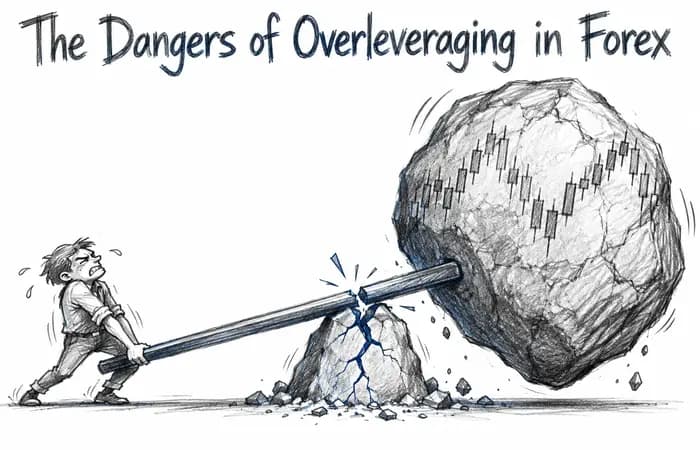
When traders enter the Forex market for the first time, the term "leverage" seems almost magical. To have the ability to control such large positions with only a small amount of your own capital is an exciting thought. Who would not want an opportunity to be able to make large profits with minimal capital?
But this is where many new traders make a critical mistake. While leverage increases your profits, it will also increase your losses just as easily. Overleveraging is one of the top reasons for blown accounts. Usually, a trader does not realize how risky overleveraging until it is too late.
A Definition of Overleveraging
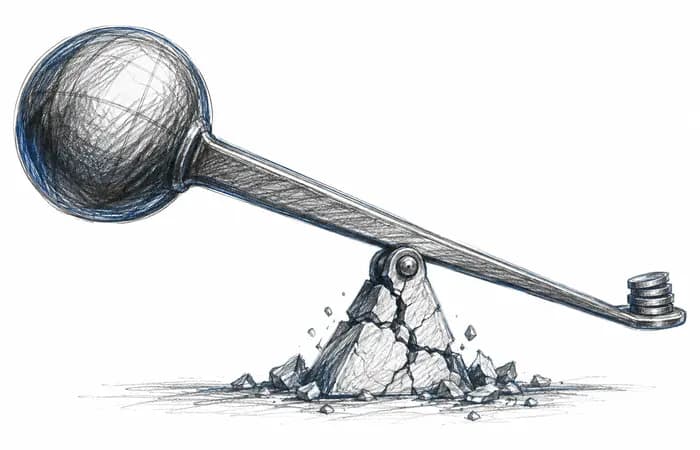
In essence, overleveraging is when you are trading with position sizes that are way too large for your account size. You may feel like you are "maximizing opportunity," but what you are doing is putting yourself at a tremendous risk.
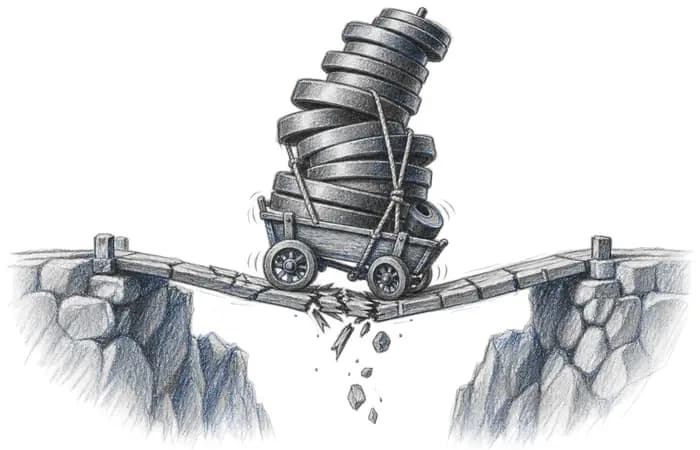
Think of it like stacking a house of cards. It looks beautiful as it gets taller to the ceiling, but with a slight shake, it can also come crashing down. At some point, your account will shake in the market, and if you are overleveraged, it won't take very much for your account to be changed.
Why traders fall into the trap
Most traders that overleverage are not do so because they are irresponsible. Most traders that fall into overleveraging usually do it out of impatience. Because the Forex market moves so rapidly, traders may have the understanding to believe that one orThe mentality tends to be: "If this trade works, I’ll double my account." The other side of that desire is rarely thought about, "What if it doesn't?" The issue with this mentality is that one wrong move can erase months or weeks of work.
A Simple Look at the Math
One of the dangers of overleveraging is how quickly you get to a point where losses are nearly impossible to recover from.
Here's a simple table with a look at how losses can add up:
Loss Taken | Gain Needed to Break Even |
|---|---|
10% | 11% |
25% | 33% |
50% | 100% |
75% | 300% |
As you can see, the larger the loss, the harder it is to recover. Overleveraging makes that worse because your losses are much deeper than if you controlled your risk.
The Emotional Rollercoaster
It’s not just numbers on the screen. Overleveraging takes a toll on your emotions too, when you have too much leverage every tick to the upside or downside feels huge. You are glued to your charts, worrying about the move on the price between durations.
This external pressure leads to impulsive decisions like closing a trade too early, resetting a stop, or doubling down on trades to recover faster. Eventually, your perception of trading stops being a business and resembles gambling. I think we all know how that works out.
Let’s look at 2 simple examples
Trader A has a $2000 account and risks 30–40% per trade in order to grow it quickly. In just one week, he has doubled his money. One bad news headline sends the market in the opposite direction and within hours, his whole account is wiped out.
Trader B also started with $2,000 but is only risking 1-2 percent per trade. He’s growing his account more slowly than Trader A, however, when he does take a loss, it’s a manageable size. After one year, Trader B still has an account, experience that is very valuable to him, and is growing steadily.
The difference isnt intelligence or strategy, its just a matter of risk discipline.
How to Avoid Overleveraging
The good news about overleveraging is that it’s not complicated to stop doing it. You just need to follow a few rules to give protection to your capital and stay long enough to succeed:
Risk small per trade. The consistently recommended amount is 1-2% of your account. It will feel very conservative, but that’s what enables you to be consistent.
Respect leverage. Just because the broker can offer you a lot of leverage, (for example 1:500), doesn’t mean you should use all that leverage. Instead, you should dial your leverage down to where you are comfortable.
Think about the long game. The game of trading is not about doubling your account in one night. The game is about steady and controlled growth over a longer duration of time.
The Big Picture
At the end of the day, Forex trading is not about making a lot of money in the shortest amount of time. It’s about building a skillset, patience, and discipline. The trader who survives is the trader who sacrificially protects their capital, not the trader who chases after the quick fix.
The rush of an overleveraged trade may feel exhilarating, but it almost always results in disappointment and an emptied trading account.
Final Thoughts
Overleveraging has many dangers and it is one of the fastest ways to stop your trading journey. By simply risking small, staying patient, and thinking long-term you give yourself a chance to grow steadily and sustainably.
If you’d like keep learning ways to trade smarter while protecting your account, check out the learn section on Wikilix. It’s a great place to learn more about trading and building the mindset of the disciplined trader.
Frequently asked questions
Answers to the questions readers ask most about this lesson.
Comments & Reviews
0 entries
Nothing on the record yet
Be the first to share what happened.
What's Next?
Keep building your knowledge with our structured learning path. Each section builds upon the previous one.