

Recognizing and Avoiding Investment Ponzi Schemes in Forex
Recognizing and Avoiding Investment Ponzi Schemes in Forex
"Learn how to recognize and avoid Ponzi schemes in forex investments. Identify red flags, protect your money, and understand how these fraudulent schemes operate."
Wikilix Team
Educational Content Team
15 min
Reading time
Advanced
Difficulty
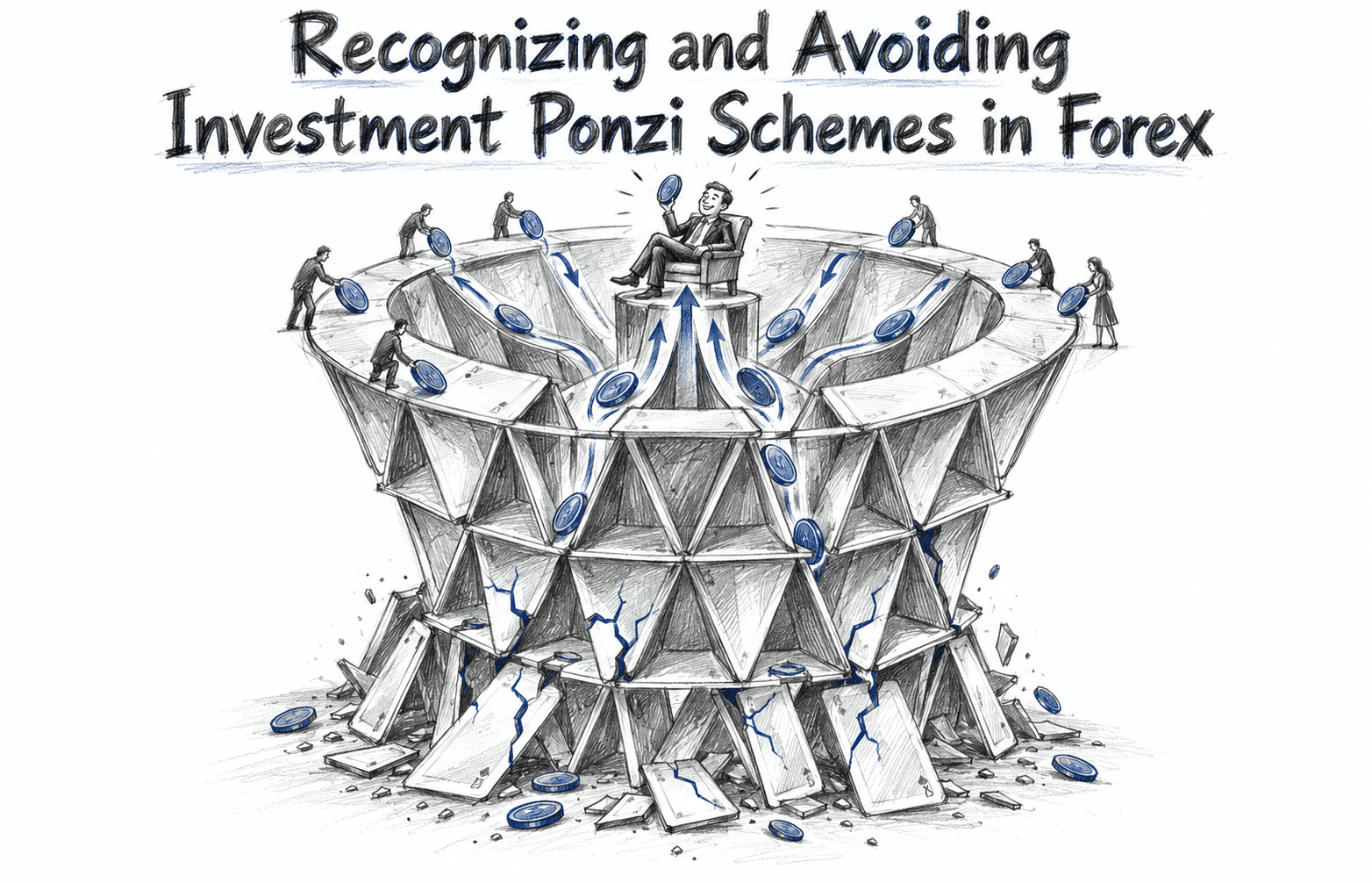
Millions of people around the world participate in the Forex trading environment, as it present very little restrictions and offers infinite amounts of profit potential. Unfortunately though, the Forex trading environment invites many scam artists, especially individuals who know how to set elaborate traps.
One of the more famous potential scams is the infamous Ponzi scheme - an age-old trick with a twist. Ponzi schemes have been around for over 100 years, and continue to take people for a whirl, even in fast-moving markets such as Forex.
So why is that good news? If you understand how Ponzi schemes work, you should be able to quickly detect the signs and pitfalls. Let's break that concept down even further.
So what is the Ponzi Scheme?
The term Ponzi scheme comes from Charles Ponzi, a scam artist from the early 1900's, who took advantage of everyday investors. Ponzi's "business" promised outrageous returns by using postal coupons bought in foreign countries, and taking advantage of the arbitrage from the profit margin on the coupon. Now, when I say Ponzi didn't make outrageous returns, this means he probably made none, and borrowed money from new investors, to pay back old investors.

This is the entire crux of all Ponzi schemes, no return on legitimate profits - merely tracking money to money until they hit a point of devaluation. Rather than use international postal coupons to manipulate a sham, scammer will instead attempt to utilize Forex trading.Normal Characteristics to Recognize
Ponzi schemes often appear to be credible in the beginning - they have a nice looking professional appearing website, paid advertising, and documents that look like licenses. Nevertheless there is a lot of information available to aide you in identifying them should you learn to look.
Overly optimistic stories - If a business is offering "guaranteed profits" or the "10% a week" returns that are often elusive - be suspect. Transparency - Legitimate brokers should attempt to show you how their trades are carried out. Ponzi scheme operators do exactly the opposite and will go to great lengths to conceal information about their transactions. If it feels too easy or too good to be true, it usually is.
How Forex Traders Getting Involved in Ponzi Schemes
Most Ponzi schemes will start out small. Perhaps you hear about thru a "friend of a friend" about an opportunity to "double your investment in 3 months." You invest a little money, and although it is surprising to get returns at first you use this to build trust.
The "returns" are not 'real' - they are either your money returned to you, or someone else's money that has been returned just to build trust. As each additional person becomes involved in the scheme it just increases the amount of money being thrown into the Ponzi scheme until you wake up one day and your "withdrawals" are being denied, the operators are making all kinds of excuses about upgrading computers, and poof - the website just disappears.
The same story every single time with a different name.A Simple Table
To give you more perspective on what to look for, I have put together the following table:
Legitimate Forex Broker | Ponzi Scheme |
|---|---|
Warns that trading carries risks | Promises guaranteed returns |
Provides trading platforms and tools | Avoids showing how trades happen |
Allows easy withdrawals | Makes excuses or delays payments |
If what is offered matches the right column more than what is offered in the left column - it's time to run.
Real-Life Example
There was a trader named Alex (not his actual name), that thought he was part of a small investors' group. He was enticed with a steady, monthly return of 15% from forex trading. During the first 3 months, things were great and on schedule in terms of payouts. He was under the impression that he was all in and encouraged 2 of his friends to join in.
At month 5 his payouts stopped. The administrators of the web group said they were upgrading their site and would get him his money soon - just be patient. Months later, there was no site and everyone lost their money.
Alex soon realized that he was part of a classic Ponzi scheme. His biggest regret? Ignoring all of the blatant signs because the first payouts felt safe.
How to Protect yourself
The best defence against a Ponzi is to be aware. Here are two small actions which can make a large difference:
Validate regulation - Always validate whether the broker or investment company legitimately claims they are regulated by a trusted regulatory authority (FCA, ASIC, CFTC, etc.). Do not take their word for it; check the regulator's site.
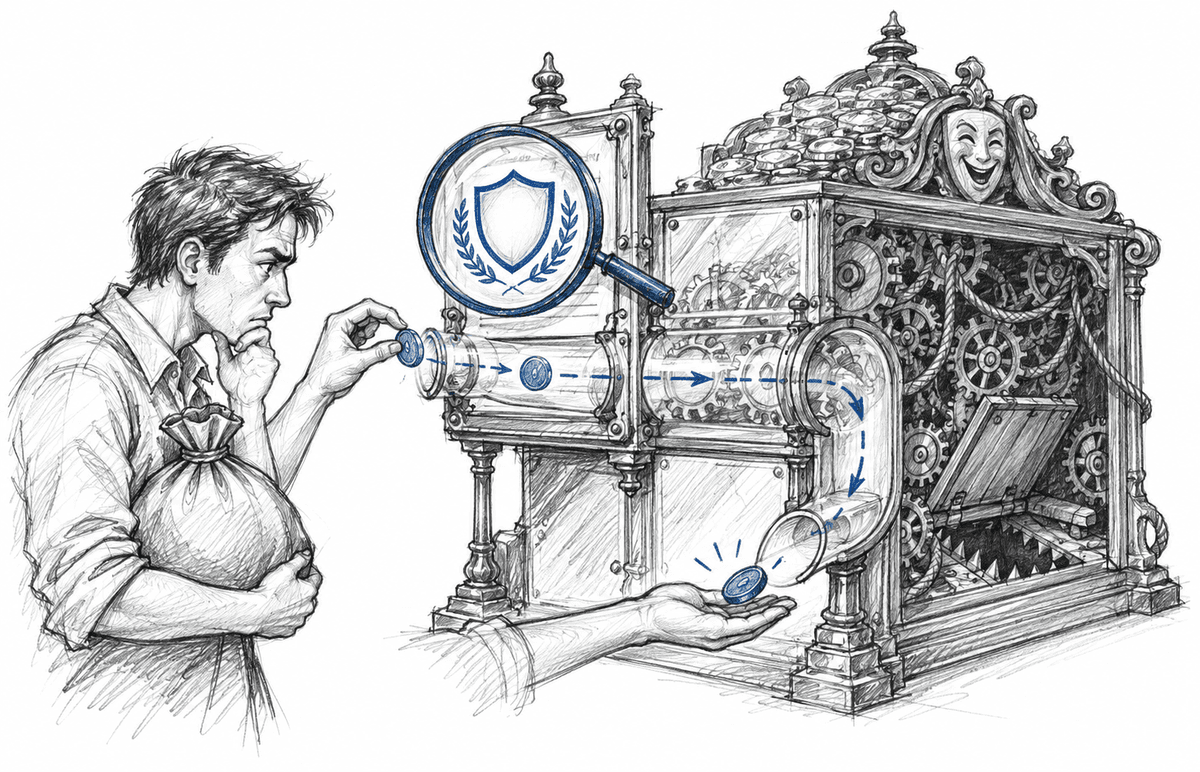
Test withdrawal early - If you invest, try to withdraw a small amount as quickly as possible after investing. A real platform will allow you to make your withdrawal with little to no drama. A Ponzi will either stall you or simply deny the request altogether.
These two very small actions could save you from losing very large amounts later.
Do not let emotions take over
Scammers also know how to play on emotions, using concerns around missing out ("there are only 10 spots") and greed for high profits ("you can make a large profit in 5 weeks"). They tap into camaraderie or common community. Your best antidote is to remain calm and ask the difficult questions.
Remember: real opportunities do not come to an end in the 24 hours you take to really consider something.
The Bigger Picture
Ponzi schemes continue to thrive because people typically want immediate results. Forex trading is often used as bait because of just how exciting and confusing it all is. The reality is much easier - real results take time. Profiting in Forex takes a little skill, some patience, and some risk management. The reality is - there is no magic system or exclusive investment clubs.
Final Thoughts
Having the ability to recognize and avoid Ponzi schemes is fundamentally about sharpening your instincts. If anyone ever offers you a huge guaranteed profit with very little effort, the odds are your about to become a scam victim. Always do thorough due diligence, test things early, and do not allow emotions of getting lucky and taking a shortcut interfere with your sensibility.
If you would like to know more about how to keep trading safe, use trusted brokers, and learn how to build real strategies take a look at the Learn section here on Wikilix. Information is your strongest defence against scams!
Frequently asked questions
Answers to the questions readers ask most about this lesson.
Comments & Reviews
0 entries
Nothing on the record yet
Be the first to share what happened.
What's Next?
Keep building your knowledge with our structured learning path. Each section builds upon the previous one.