

Introduction to Risk Management – Why It Matters More Than Strategy
Introduction to Risk Management – Why It Matters More Than Strategy
"Discover how to review losing trades effectively and turn mistakes into valuable lessons. Improve your trading skills by learning from losses with practical strategies."
Wikilix Team
Educational Content Team
10 min
Reading time
Advanced
Difficulty
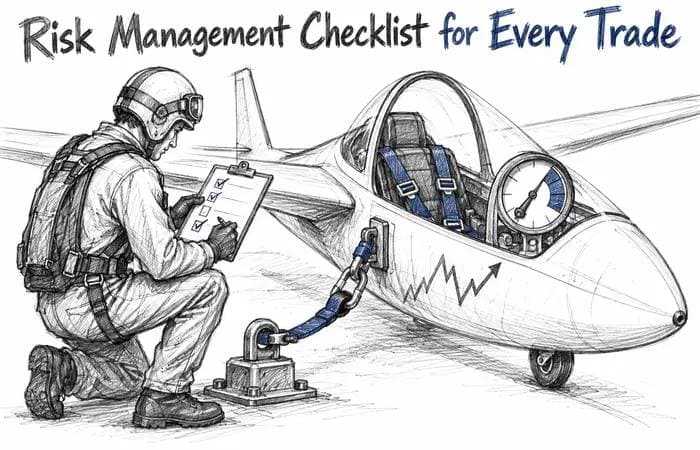
When most traders begin their journey, they spend hours learning about strategies, chart patterns, and indicators. This makes sense- strategy is how you ultimately make money. But here is the cold hard truth- it doesn’t matter how good your strategy is, if you do not have solid risk management in place, your strategy will not keep you in the game for a prolonged time.
Think of risk management as the foundation of a house. The strategy is like the design, paint, and furnishings. Without a sturdy foundation, even the prettiest house will eventually crumble.
Why Strategy Alone is Not Enough
There are lots of traders with solid strategies that technically work but still fail. Why? They risk too much on each trade, don’t use stop losses, or they allow their emotions to convince them to double down on their losers.
The price action in the market is not predictable, and even the best strategy will have losing trades. If you are risking too much and/or ignoring your money management, a couple of bad trades can wipe out months of working hard. Strategy is what helps you win. Risk management is what keeps you alive.

The Basic Premise of Risk Management
Risk management is fundamentally straightforward: protect your capital. Protecting your capital includes limiting the amount you lose in one trade, so you can continue trading tomorrow, regardless of how today went.
One of the most common pieces of advice is to only risk 1-2% of your account on any one trade.While it may seem minor, it will accumulate over time. It also means that a series of bad trades won't have the effect of dropping you completely to zero. The priority should be survival and the secondary priority is profits.
A Quick Illustration of the Math
This is why risk management is so important; you can see how losses compound just like this:
Account Loss | Gain Needed to Recover |
|---|---|
10% | 11% |
25% | 33% |
50% | 100% |
75% | 300% |
if you lose 50% of your entire account, you are not at 50%; you have made your recovery twice as difficult. Risk management prevents you from getting so far into a hole you may not feel you can recover from.
Most traders, and almost all successful and experienced traders, have some very painful stories to tell about costing themselves money because they chose to ignore risk management. Overleveraged, "my buddy bought this (insert financial asset name here), I can't NOT trade this…" going "all in" on a trade because they were absolutely convinced they were right. The result is usually the same… a very ugly loss that wipes out weeks and months of work.
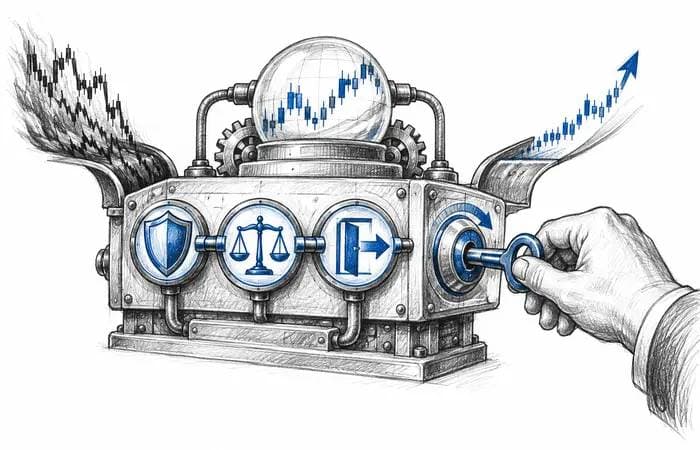
On the other hand, disciplined traders, who properly adhere to their risk management, may lose more trades than they win, but still grow their accounts over time. This is not because they are somehow able to perfectly predict where the market is headed. The difference is comparing losses when they are wrong.
The Psychological Advantage
Risk management is not only about the numbers, risk management involves the mindset. When an individual knows their maximum risk is small and controlled, they trade rationally. No fear or panic influences their decisions.
When there is too much at stake, the trader is controlled by their emotions.You monitor every tick anxiously, have difficulty closing a losing trade, or exit too early due to fear. In short, a lack of risk control renders rational thought almost impossible.
Risk Management in a Real World
So how do you put risk management into practice? Here are two simple but powerful habits:
Always use a stop loss. Instead of hoping to get out of a bad trade, protect your downside prior to entering.
Properly size your positions. Change your trade size so that a potential loss is in your comfort zone—ideally, 1-2% of one’s account.
These sound simple, however, these are the only things that keep accounts alive.
It Is More Important Than Strategy
Here’s the truth that many beginners refuse to believe: a trader with an average strategy and excellent risk management will often do better than a trader with a fantastic strategy and almost no risk management.
In trading, markets are uncertain, and no strategy is going to work 100% of the time. Trading is rarely about a specific strategy, it is about risk management and developing consistency. Good risk management allows you to stay in the game long enough to create a strategy and maximize the benefits of experience. On the contrary, without risk management even the best strategy can fail over time.
Conclusion
Risk management may not feel like the most glamorous aspect of trading, compared to finding the perfect setup, but is the paramount skill that will determine whether or not you will succeed as a trader. Strategies will change, markets will change, systems will change—but risk management will never change.
If you want to be successful in trading, put risk management at the forefront of everything you do. Protect your capital, maintain and manage your emotions, and play the long game.
So if you’re interested in finding out more about practical risk management techniques as well as more lessons about trading, visit the Learn section on Wikilix. It’s a learning resource that will help you build a mindset and skill set which will serve you well, not just today, but into the future for years to come.
Frequently asked questions
Answers to the questions readers ask most about this lesson.
Comments & Reviews
0 entries
Nothing on the record yet
Be the first to share what happened.
What's Next?
Keep building your knowledge with our structured learning path. Each section builds upon the previous one.