

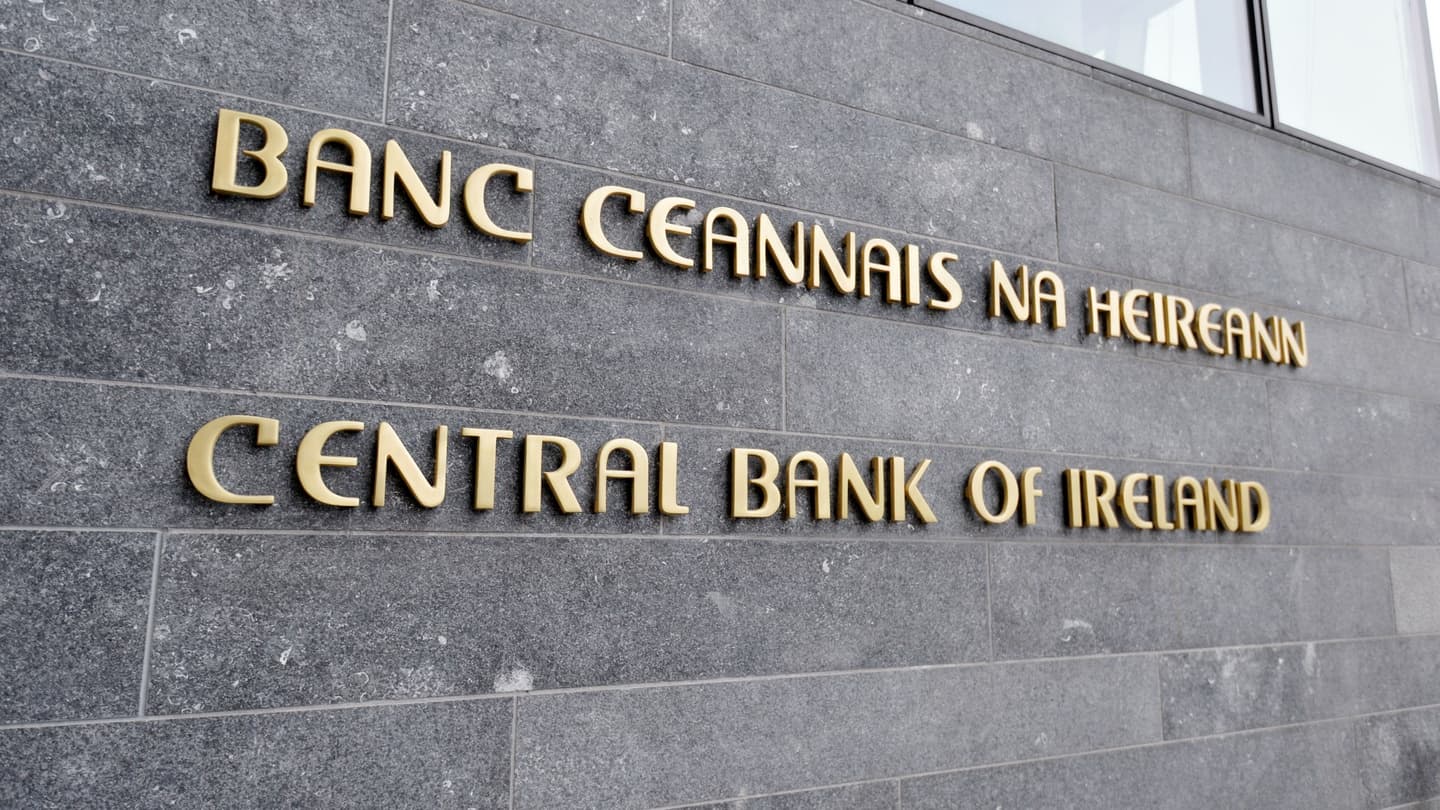
The Central Bank of Ireland’s deputy governor for financial regulation has strongly opposed proposals to introduce a regulatory mandate to promote the competitiveness of the financial sector. Speaking at a Banking and Payments Federation Ireland event in Dublin, Mary-Elizabeth McMunn described the idea as “simply a bad idea” and warned it risks repeating policy errors that contributed to Ireland’s banking crash.
McMunn used the address to outline the Central Bank’s stance on three themes she said dominate the current European debate: capital requirements, competition and complexity. Her remarks come as several major European regulators and policymakers move towards explicitly supporting competitiveness and growth in their frameworks, including the UK’s Financial Conduct Authority (FCA), France’s AMF and the European Commission’s simplification agenda.
Her most pointed criticism focused on proposals, at both EU and domestic level, to grant financial regulators a competitiveness mandate similar to the one the FCA received in 2023 under the Financial Services and Markets Act. McMunn said adding such a mandate, even as a secondary objective, would blur the regulator’s core responsibilities and could have a “corrosive effect on decision-making leading to financial stability issues”. She also questioned how a competitiveness mandate relates to simplification “as opposed to deregulation”.
McMunn explicitly linked her concerns to lessons from the Irish banking crash. Citing the 2010 Honohan report on regulatory failures, she noted that a similar pro-sector mandate “contributed so significantly to the failings of that period”. In her view, the experience underlines the risks of aligning prudential supervision too closely with the goal of promoting the financial industry.
Divergence from European Peers
McMunn’s comments place the Central Bank of Ireland at odds with a number of European counterparts. AMF Chair Marie-Anne Barbat-Layani told the European Commission in September that the European Union’s fragmented supervisory model “hinders competitiveness”, calling for expanded European Securities and Markets Authority powers over cross-border firms. The FCA, meanwhile, has built its post-Brexit reform programme around an explicit secondary objective on growth and international competitiveness.
Capital, Credit and Sector Growth
Addressing capital requirements, McMunn argued that current conditions do not justify relaxation. She pointed to euro area bank credit growth of around 3% and Irish credit growth above 6%, along with capital headroom of roughly 480 basis points in the European Union and 620 basis points in Ireland above regulatory minimums. “Lowering capital requirements is a solution in search of a problem,” she said.
McMunn also highlighted the expansion of Ireland’s financial sector under existing rules. The number of payment and e-money institutions licensed in Ireland increased from 14 in 2016 to 58 in 2025, with safeguarded client funds approaching €12 billion. Total assets in Irish-authorized investment funds rose from €1.7 trillion to €5.3 trillion over the decade. These figures were presented as evidence that growth and market development have occurred without a formal competitiveness mandate for the regulator.