
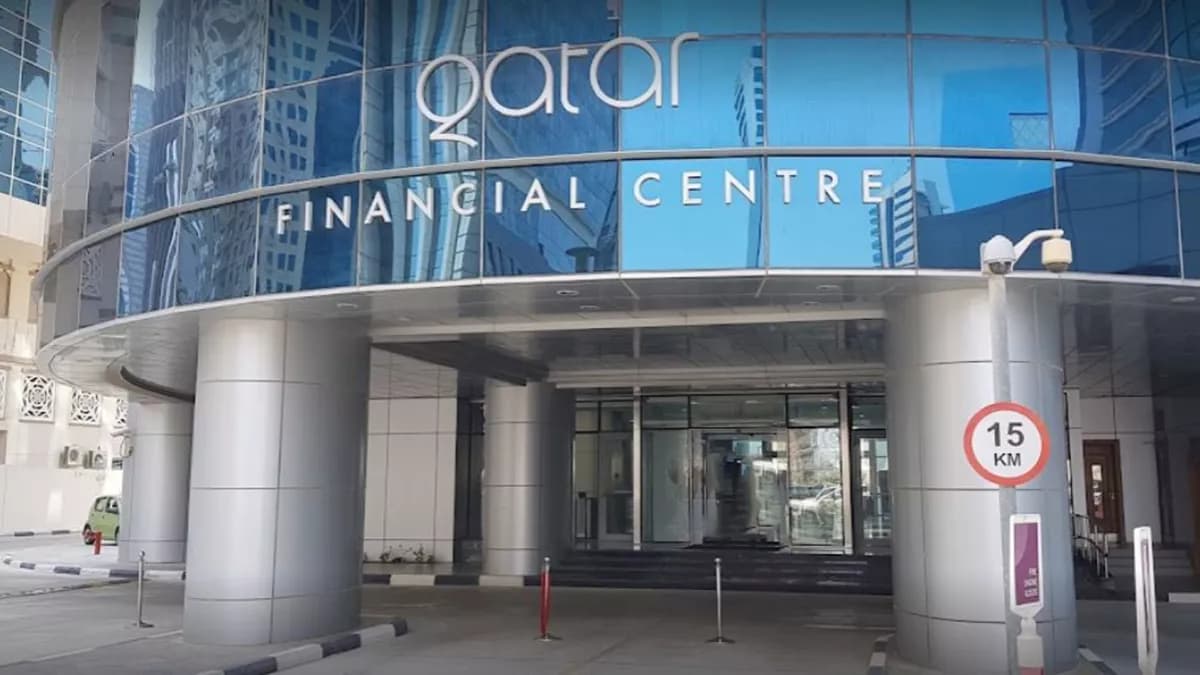
The Qatar Financial Centre (QFC) has announced a relief package for the more than 4,400 firms registered on its platform, aiming to ease operational pressures as the Gulf region absorbs the economic impact of war with Iran. The measures were described by the QFC as part of a broader national effort by the State of Qatar to keep businesses operating amid what it called "evolving regional developments."
The Gulf region has been dealing with economic fallout over the past two months, including damage at the Ras Laffan LNG complex, a brief shutdown of the Abu Dhabi and Dubai stock exchanges in early March, and a sharp swing in Qatar's trade balance. Against this backdrop, the International Monetary Fund, in its latest World Economic Outlook, projected that Qatar's economy could shrink by close to 9 percent in 2026.
Details of the QFC relief measures
The QFC package targets three main pressure points for firms on its platform. Companies will receive more time to file audited financial statements, providing breathing space on compliance obligations. The centre will also adjust tax filing timelines on a case-by-case basis, allowing for tailored flexibility depending on individual circumstances. In addition, startups will benefit from temporary relief on workspace charges.
The QFC noted that these new measures build on its existing offer to international firms. That offer includes 100 percent foreign ownership, 100 percent profit repatriation, and a 10 percent corporate tax applied to locally-sourced profits. The centre said the relief package will be reviewed continuously as conditions evolve.
Regional competitive landscape
The announcement comes as regional financial activity continues to concentrate in the United Arab Emirates. Most regional broker activity has flowed to the UAE, where the Dubai Financial Services Authority and the federal Capital Markets Authority provide two distinct licensing routes for market participants.
The Dubai International Financial Centre (DIFC) has reported rapid growth, registering 1,081 new active companies in the first half of 2025 alone. This brought its total to 7,700 companies and lifted financial services authorisations by 28 percent year-over-year. The centre now houses more than 70 brokerage firms, underscoring the intensifying competition among Gulf financial hubs as they navigate the current regional and economic challenges.