

How to Set Stop Loss Based on a Percentage of Your Account
How to Set Stop Loss Based on a Percentage of Your Account
"Learn how to set stop loss based on a percentage of your trading account. Protect your capital, manage risk effectively, and trade with confidence using this strategy."
Wikilix Team
Educational Content Team
10 min
Reading time
Advanced
Difficulty
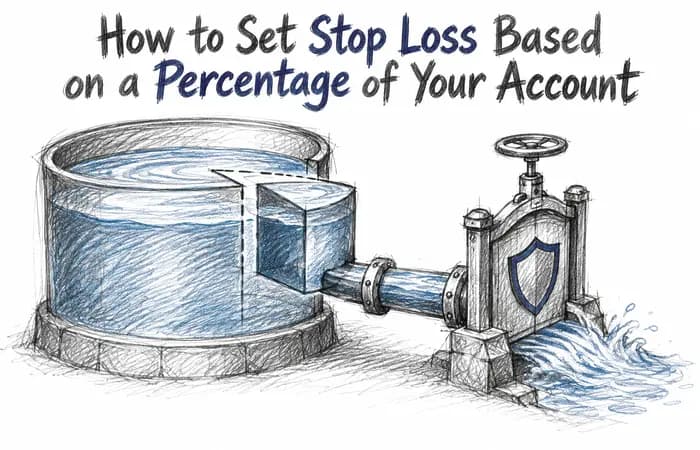
If there's one principle every trader learns, usually through an expensive experience, it's this: First and foremost, protect your capital. The market will always generate various opportunities; you can only take advantage of them if there is money in your account. The stop loss comes into play.
Stop losses should not be set randomly or based on a hunch for trade entry or exit; you should to set them based on a percentage of your account instead, as this will give you consistent, recognizable, and psychologically manageable risk as part of a trading plan.
What Does Percentage-Based Stop Loss Mean?
When you set a stop loss based on a percentage of your account, you are not going to exceed what you "will risk" on a single trade. Most traders will use a 1-2 percent rule.
For example:
If the account is at $5,000 and you will risk the max of 2 percent, the max dollar loss is $100.
If the account is $10,000 and you are still willing to risk 2 percent of your account, your loss is capped at $200.
This helps to ensure that the capital in your account is not lost to one trade or puts you on an emotional roller coaster with account another loss.
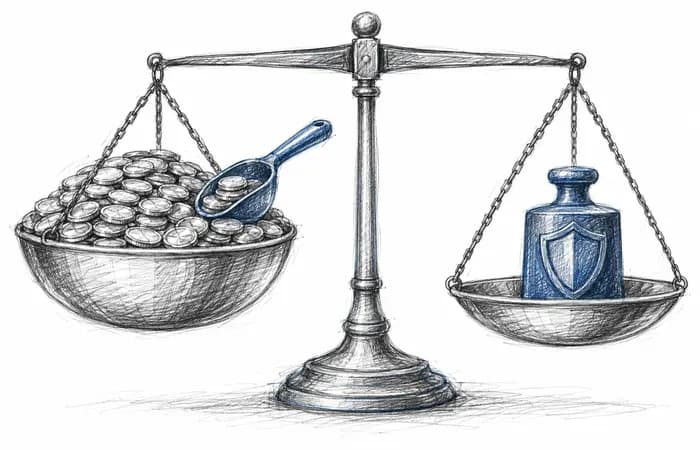
Why It Works Better Than a Guess
Many beginners either don't use stop losses or they use arbitrary stop losses based on chart points. Both situations are even more dangerous. Arbitrary stops could risk too much and you would exert no stop or loss at all at times simply expose your account.
Percentage-based stops work better because they control the risk potential based on the size of your account.
As your account fluctuates in value, your position sizes will automatically adjust, which creates consistency and keeps your losses proportional.
A Practical Example
Suppose you are using a $10,000 account. If you choose to risk 2% per trade, that is $200. Let's say you are trading EUR/USD and your stop loss is 50 pips away.
To determine position size:
$200 ÷ 50 pips = $4 per pip.
This translates to a position of approximately .40 lots in Forex language.
If you are stopped out of this trade, you know for certain your loss is $200, no more, no less.
The Math in Practice
Below is a simple table that shows how account size and percentage risk plays a role in your risk:
Account Size | 1% Risk | 2% Risk |
|---|---|---|
$5,000 | $50 | $100 |
$10,000 | $100 | $200 |
$20,000 | $200 | $400 |
This is clear and easily definable. You will know your worst case prior to even hitting the buy or sell button.
The Mental Game
Trading is just as much about the mental aspect as it is about the analysis. Once you know it is only 1-2% of your account, the pressure is less. Losses are expected, but they can never be catastrophic.
Without this structure, emotions take hold. You may instinctively chase the trade, move your stop loss further, or double down to "get it back." Percentage-based stop loss prevents spiraling before it starts.
Pitfalls to Watch
Traders stumble even with a percentage-based stop loss. Here are some traps to avoid:
Risking too much on a trade.Sticking to 1-2% may seem slow, but it helps protect your long-term survival.
Forgetting correlations. If you trade multiple pairs that are correlated, the total exposure might increase your planned risk.
Moving stops after you are entered. Once you have a stop, do not move it further away just because you decided it may take longer than expected. That undermines the entire reason you did it in the first place.

What works is the consistency
Turning It Into A Habit
Using a percent-based stop may seem mechanical at first, but that's the point. I want to eliminate guesswork and emotions from risk management.
Over time, it becomes second nature. So, before every trade, you will simply be thinking: What size is my account? What's 2% of that? How does that translate to position size? And this is what keeps traders in the game long enough to find success.
A Quick Story
I once knew a trader who had a great trading strategy but did not have a stop-loss rule. He would risk anywhere from 20-30% of his account on a 'sure thing' trade. When he had one of those trades go against him, he would lose months of profits in one night.
But after switching to a percent-based stop, his account may have grown at a slower pace, but at least it was growing. The most important thing, however, was that his account stayed afloat through the market down-turns. His account staying afloat allowed him the opportunity to grow consistently rather than always having to start over.
Final Thoughts
Setting stop losses based on a percentage of your account may not be glamorous, but it is one of the best habits you can develop. It will protect your capital, control your emotions, and create consistency that you need to find success over the long haul.
The market will always be there. Your job will be to keep your account there, as well.
If you would like to learn more practical risk management strategies and tools, check out the Learn section on Wikilix. It is filled with information that can help you trade smarter, protect your capital, and grow with confidence.
Frequently asked questions
Answers to the questions readers ask most about this lesson.
Comments & Reviews
0 entries
Nothing on the record yet
Be the first to share what happened.
What's Next?
Keep building your knowledge with our structured learning path. Each section builds upon the previous one.