
provide high levels of leverage without restriction. This is due in part to many large global regulatory bodies, such as ESMA, ASIC & CFTC, having reduced the allowed retail leverage levels, in some cases by as much as 50% (i.e., dropping the maximum retail leverage level from 200:1 to 100:1) over the past several years. Many established offshore forex brokers have maintained a 500:1 or 1000:1 ratio.
This very high degree of flexibility may be advantageous to very seasoned traders who are experienced in using high leverage strategically; however, beginning or less seasoned traders run the definite risk of losing all of their money with high leverage.
As such, many traders searching for the best offshore brokers focus not only on leverage levels, but also on execution quality, withdrawal reliability, and overall operational stability.
Top Offshore Forex Brokers in 2026 with High Leverage
As such, many traders are searching throughout the world for offshore forex brokers who allow at least 500:1 leverage; however simply being referred to as “best” may not really mean that the broker has the highest combined leverage; however the best defines brokers with a very good combination of functionally stable operations and flexibility associated with types of trading styles will allow the trader to determine whether the broker's operation meets their needs.
Many offshore brokers are legally registered with regulatory authorities in the geographical area they operate within (i.e. Seychelles, Mauritius, etc.) that provide the broker with the authority to offer much higher maximum levels of leverage when compared to suppliers regulated by ESMA, ASIC, or CFTC; however by offering significantly higher levels of leverage than regulated brokers, the trader must understand that they will receive less investor protection when dealing with an offshore broker in comparison to ESMA, ASIC, CFTC, etc.
In order to analyze and determine which offshore forex brokers will work with, a trader should consider the following:
• The total amount of leverage available for each account type.
• The broker's margin call and stop-out levels;
• The extent to which the broker provides negative balance protection to their customers; understanding Negative Balance Protection Explained can help traders assess their downside risk more accurately;
• The speed at which a trader will receive any withdrawals from their trading account; and
• The overall level of transparency that exists regarding the spreads and commissions charged by the broker.
Finally, having high leverage will not matter if the broker does not accurately execute orders or maintain the trader's position within the risk profile (i.e., failure to manage the account).
Related Articles: How Offshore Broker Regulation Works
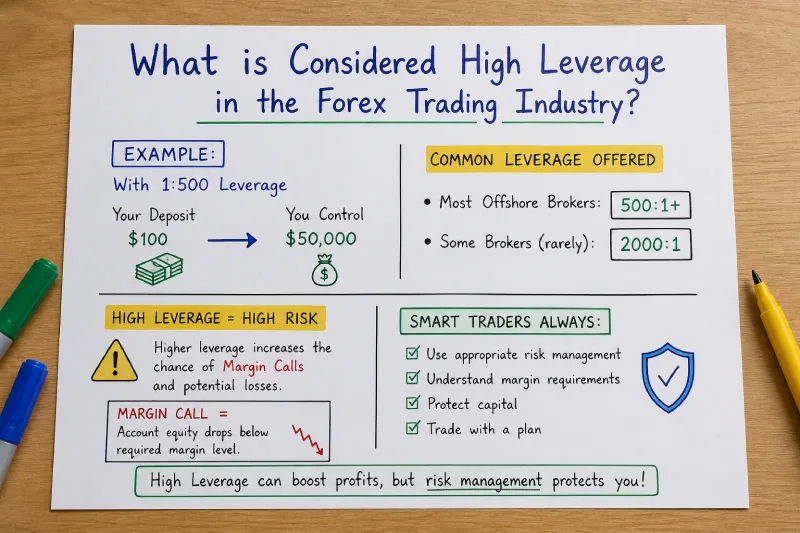
What is Considered High Leverage in the Forex Trading Industry?
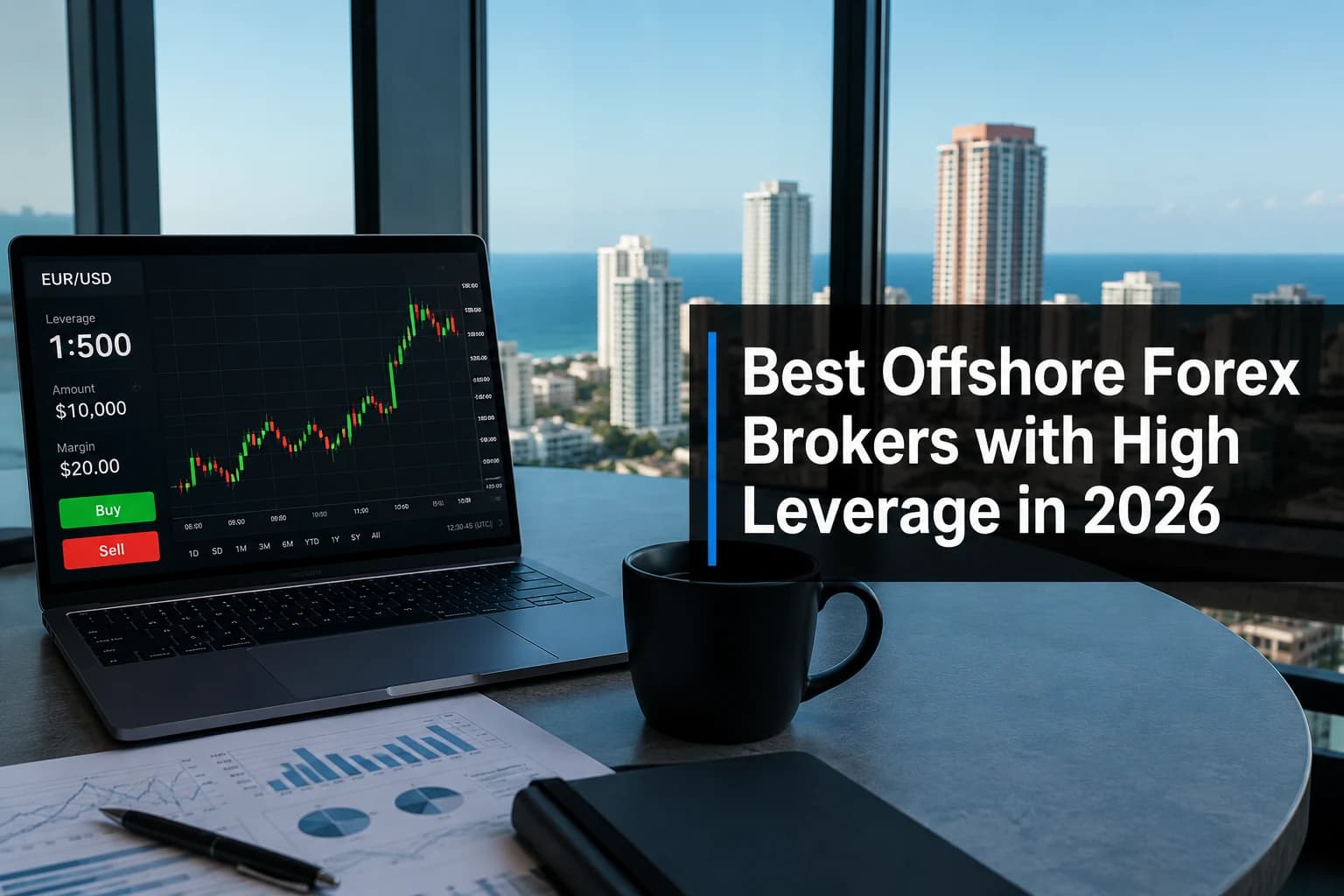
High leverage allows the trader to use a smaller amount of cash to control a much larger position than would normally be required, using only their own equity to open and maintain a position in the forex market. For example, if a trader decided to trade at 1:500 leverage, they would only need to deposit $100 into their brokerage account and control $50,000 in assets in the forex market.
At minimum, most offshore brokers offer 500:1 leverage or higher; however, at times, some offer leverage as low as 2000 (rarely).
While large levels of leverage may seem appealing to the trader due to their potential to generate very large profits, the frequency that a trader may receive margin calls will increase as the number of times that trader trades using both a smaller amount of cash and lower leverage (if high leverage was not greater than what was required of them). Thus, most successful experienced traders employ both higher leverage and appropriate risk management when trading the forex market, especially by understanding What Is Margin Call in Forex? and how it impacts open positions.
Top Offshore Forex Brokers with High Leverage (2026 Overview)
Below is a general comparison of common offshore broker profiles offering high leverage. Always verify the specific entity and conditions before registering.
Broker Type | Typical Max Leverage | Best For | Key Considerations |
Seychelles-regulated brokers | Up to 1:1000 | Aggressive short-term traders | Lower regulatory protection |
Mauritius-based brokers | Up to 1:500–1:1000 | Flexible multi-asset traders | Check withdrawal terms carefully |
Caribbean offshore brokers | 1:500–1:2000 | Small accounts seeking flexibility | Higher risk, limited oversight |
Hybrid global brokers (offshore arm) | 1:500 | Traders wanting brand recognition + high leverage | Must confirm which entity you join |
This table illustrates a key point: leverage availability often depends on the specific entity you open an account with. Some global brokers operate both regulated (low leverage) and offshore (high leverage) branches.
Are Offshore Forex Brokers Safe in 2026?
Perspective plays a vital role in assessing the safety of an offshore broker. Offshore, in and of itself, does not mean unsafe – there are many legitimate offshore trading firms out there with millions of dollars in trading volume being processed on a daily basis. However, generally speaking, the regulation of offshore brokers is usually not as strict as it is in the UK, EU, or Australia.
Traders should assess the following components before entering into an offshore brokerage:
Length of time the broker has been in business.
General reputation of the broker/public feedback from the trading community
Level of clarity of legal documentation
Client funds are segregated from company funds.
Transparency of fees and commissions
A broker that has aggressive marketing techniques and makes unrealistic promises to traders is one red flag that traders should be paying attention to. In addition, leverage should be presented as a tool and not as a guaranteed way to profit.
Related Articles: Best High-Leverage Brokers Outside ESMA
The Advantages and Disadvantages of High Leverage from Offshore Brokers
The advantages of high leverage from an offshore broker include:
Access to as high as 1:500 leverage or higher
Lower capital requirements (less money needed to trade)
Fewer restrictions on products traded
More flexibility in trading conditions
The disadvantages of high leverage from an offshore broker are:
Reduced investor compensation schemes
Increased counterparty risk
Less legal protection in the event of a dispute
Wider spreads in times of volatility
Using high leverage can be attractive to a trader, but it can also place greater responsibility on them.
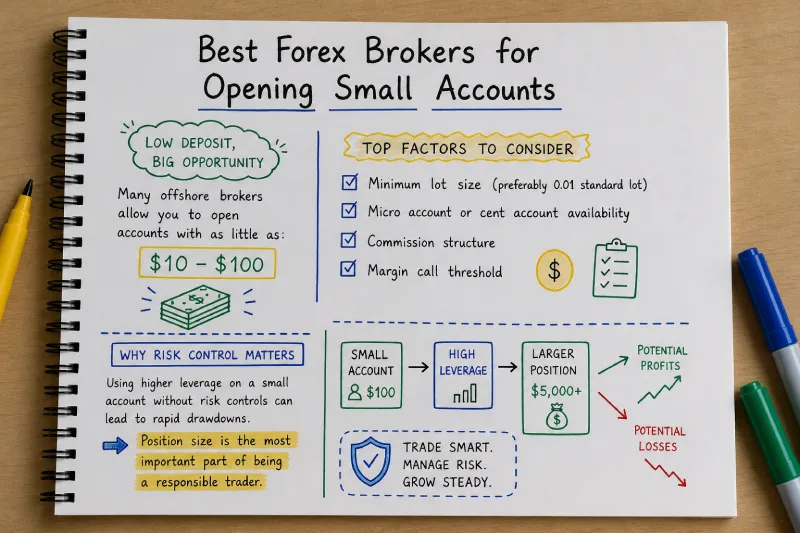
Best Forex Brokers for Opening Small Accounts
Many traders searching for offshore brokers are looking for brokers with low minimum deposits and high leverage. By 2026, many offshore brokers will allow traders to open accounts with as little as $10-$100.
When it comes to small accounts, the top factors to consider are:
Minimum lot size (preferably 0.01 standard lot)
Micro account or cent account availability
Commission structure
Margin call threshold
Using higher leverage on a small account without risk controls can lead to rapid drawdowns. Therefore, position size is the most trying part of being a responsible trader.
Quality of Execution is More Important Than Maximum Leverage
It is easy for traders to get caught up in “1:1000 leverage” when reading advertisements that use that leverage ratio. However, the real question is how well does that broker’s execution perform in the following areas:
Slippage: during major news events
Stability of spread changes (Asian and US trading sessions)
Order execution speed
Up-time of the server
When comparing the best offshore forex brokers 2026, traders should prioritize regulation transparency, withdrawal reliability, and consistent execution quality over marketing claims alone.
How to Evaluate Offshore Forex Brokers
There should be a structured evaluation process that a trader follows before opening a forex account with an offshore FOREX broker. This structured evaluation process should include the following steps:
Verify the offshore broker's regulatory registration.
Confirm whether the offshore broker provides negative balance protection.
Review how quickly funds are withdrawn from the offshore broker and whether there are any fees associated with the withdrawal.
Test the responsiveness of the offshore broker's customer service.
Place a small deposit as part of the test to withdraw funds.
Traders should be cautious of any offshore broker that pressures them to deposit quickly or promises guaranteed returns, as learning How to Avoid Forex Scams is essential when dealing with offshore entities. Leverage should be used as a risk-management tool, not as a shortcut to guarantee profits.
Risk Management When Utilizing High Leverage
It is extremely rare for professional traders to use high leverage. Rather, they:
Manage their risk by limiting their risk to 1-2% of their account equity.
Consistently use minimum stop loss orders.
Change their position size instead of increasing their leverage.
Avoid over-trading in times of volatility.
Leverage can amplify results, but discipline ultimately determines a trader's willingness to take on risk.
Conclusion:
The very best offshore forex brokers with high leverage in 2026 are not defined solely by the level of leverage they offer. As highlighted in Wikilix Broker Reviews, reliability, transparency, and execution quality are far more important factors.
Offshore brokers often provide greater flexibility than onshore regulators. For experienced traders who understand margin and risk, high leverage can be a useful advantage, but for beginners, it can quickly amplify losses.
If you plan to trade with an offshore broker, proper due diligence is essential. Verify company details, test the withdrawal process, and treat leverage as a risk management tool—not a way to multiply returns. Long-term consistency and sustainability should always be the priority over chasing high leverage.