
Worldwide, there is a marketplace for Forex Trading; however, this does not mean that a trader anywhere in the world can access every Broker, which is why many traders ask, Is Forex Trading Legal in My Country?
For example, traders that trade out of the United States must comply with some of the strictest financial regulations in any country in the world; therefore, not all Brokers that can offer services through Forex will qualify as a US-based broker; thus creating a limitation on the number of Brokers that US traders can utilize to trade Forex. However, while the number of available Brokers may be limited, it creates a much higher level of protection and transparency than other parts of the world.
The US trader is looking for a Forex Broker with competitive spreads and leverage comparable to other Global traders. Also, the US trader must work only with Brokers that are fully compliant with US regulations; therefore, only a very few Brokers can legally offer Forex trading services to the US trader.
That said, it is important to know how to properly evaluate Broker firms that legally offer Forex trading services to US residents.
In this Guide, we will review the US regulatory environment. We will discuss the features traders should look for in Brokers. We will also cover which Brokers are considered the best Forex Brokers for the decade-like period of 2026.
Understanding the US Forex Regulatory Environment.
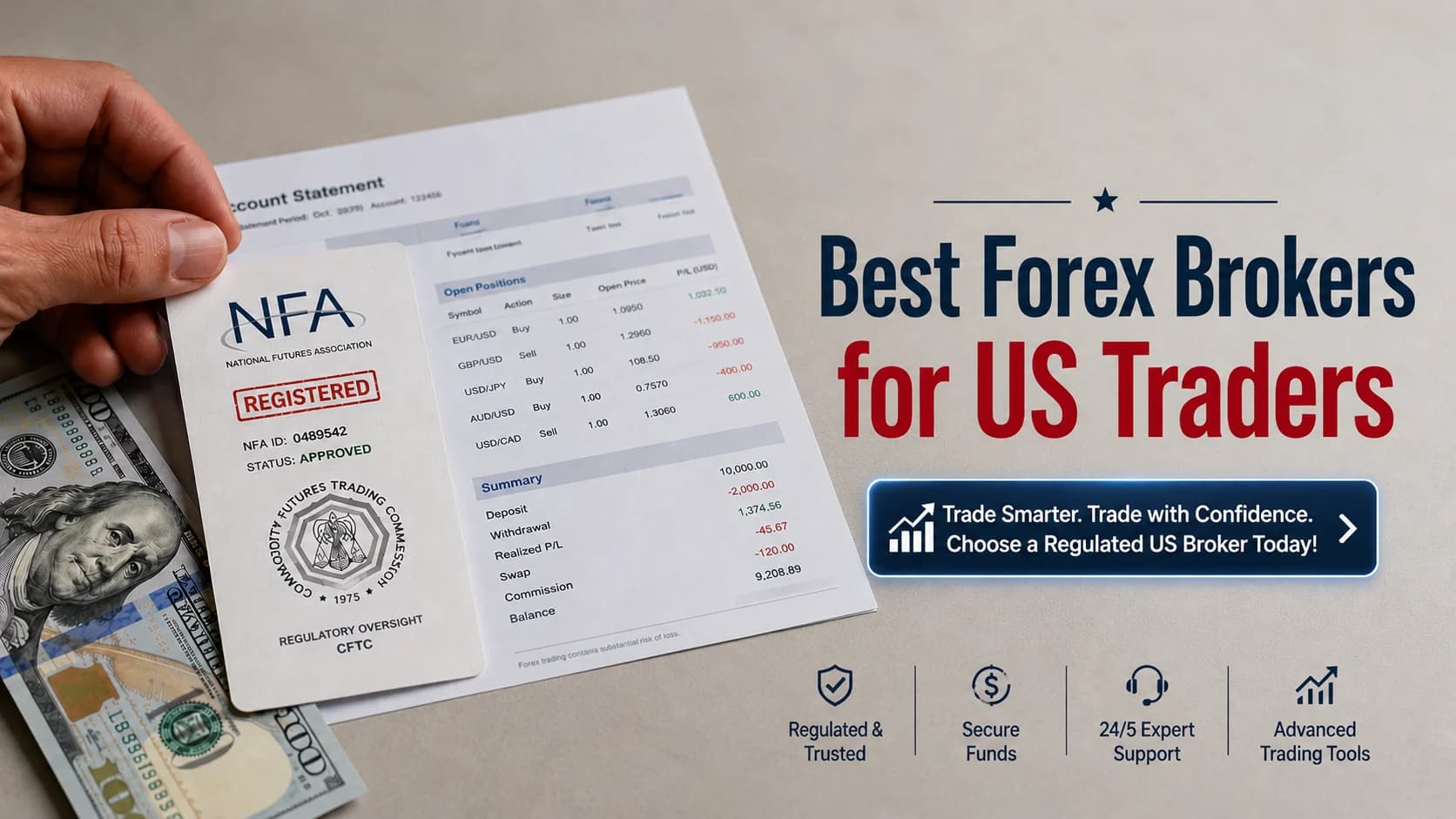
US Forex retail brokers are regulated by some of the strongest financial regulators. Two main agencies oversee them: the Commodity Futures Trading Commission (CFTC) and the National Futures Association (NFA).
Both agencies enforce several rules to protect Retail traders. These rules include minimum capitalization for Forex brokers, financial reporting transparency, and supervision of trading.
Another Majorly important rule is the Maximum Leverage Amount Allowed by the US Regulatory Agencies. In the U.S., Retail Traders can only use a maximum Leverage of 50 to 1 for major currency pairs and 20 to 1 for minor currency pairs. This is much less than what Offshore Broker Trading partners offer. However, Lower Maximum Leverage Requirements aim to reduce the Risk that Retail Traders will experience.
US regulatory agencies require Brokers to follow the FIFO Rule and prohibit Hedging within the same Accounts. This complicates matters and can make trading difficult for some, but these rules help maintain a Controlled and Transparent Trading Environment.
Related Articles: Best Brokers for Nasdaq Trading
Things US Traders Should Consider When Choosing a Forex Broker
When choosing a forex broker in the US, traders should prioritize a few key factors instead of being persuaded by advertising.
Regulatory Compliance
Regulatory compliance should be considered the number one component of any broker that can be trusted (and the only component that matters). If a broker is a legitimate trader’s broker, they will be registered with the CFTC, be a member of the NFA, and have access to the NFA’s registry.
Trading Costs and Spreads
Traders should consider all trading costs—average spreads, commissions, and rollover fees—across several brokers rather than focusing only on a broker’s advertised minimum spread.
Trading Platforms
There are many different trading platforms available. Most brokers in the US provide their clients access to one or more reliable (and reputable), widely used trading platforms such as MetaTrader 4 or their broker-developed proprietary platform.
However, there are significant differences across trading platforms that can affect a trader’s experience. For example, how reliable the platform is (when it works correctly), how effective its charting tools are, and how well it performs on mobile (on the fly) significantly influence a trader’s overall trading experience.
Execution Quality
Execution speed and accuracy are equally important in Forex. A broker establishes itself as a trader’s broker when it consistently delivers rapid, accurate execution for each trader, thereby enabling a better trading experience.
Deposit and Withdrawal Reliability
With reliable brokers, the deposit and withdrawal process is clear and correct. Before opening an account, a trader should understand the processing times, payment methods, and any fees associated with depositing and withdrawing funds.
Best Forex Brokers for US Traders (2026 Overview)
Although the number of brokers serving US clients is limited, several well-known firms consistently rank among the most trusted choices in the industry.
Below is a comparison of some commonly recognized brokers serving US traders.
Broker | Regulation | Platforms | Key Strengths |
IG US | CFTC, NFA | Proprietary Platform, MT4 | Strong research tools and global reputation |
OANDA | CFTC, NFA | Proprietary Platform, MT4 | Transparent pricing and reliable execution |
FOREX. com | CFTC, NFA | Proprietary Platform, MT4 | Competitive spreads and advanced tools |
Interactive Brokers | CFTC, NFA | Trader Workstation | Multi-asset access and professional features |
TD Ameritrade (thinkorswim FX) | CFTC, NFA | thinkorswim | Strong analytics and education resources |
Each of these brokers operates under the strict supervision of US regulators and has established a reputation for transparency and operational stability.
Advantages of Trading Forex with US-Regulated Brokers
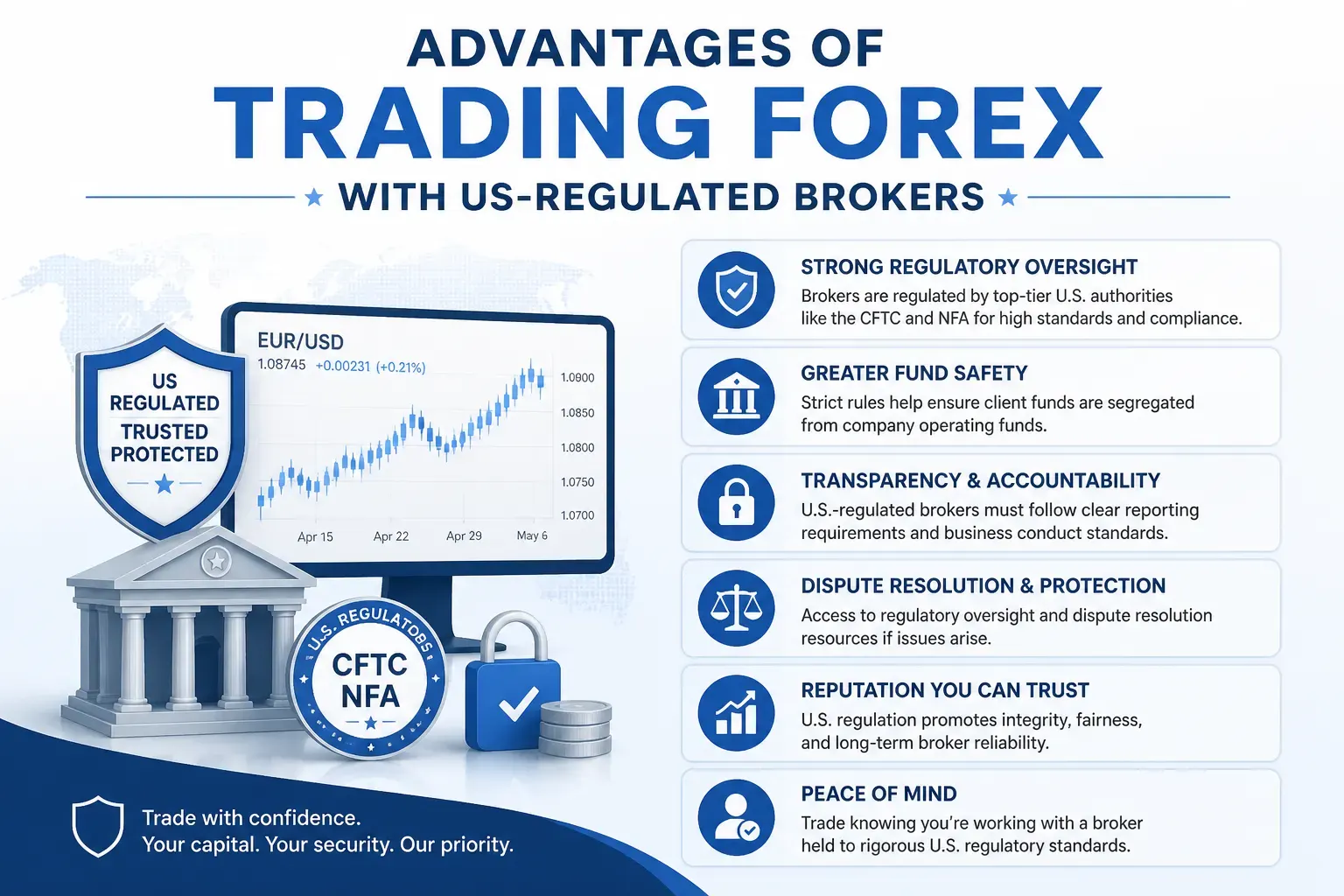
Although US traders face several disadvantages compared to traders in other parts of the world, trading with a regulated US broker does offer certain benefits.
One of those benefits is protection for client funds, including mechanisms covered in Negative Balance Protection Explained. US brokers must set aside substantial amounts of their own money in reserve, while clients' funds must be kept separate from the broker's operating capital.
Additionally, US brokers are under the scrutiny of high-level regulatory bodies. The National Futures Association, for example, conducts regular oversight of broker operations through audits and reviews of client complaints.
US brokers also have a unique advantage in terms of transparency. Specific requirements must be met regarding how prices are quoted, how trades will be executed, and how regulatory disclosures must be made.
For traders who want to be comfortable with their brokerage and are looking for a long-term, safe brokerage relationship, the protections offered by US regulation are often worth the restrictions on leverage and overall trading flexibility.
Limitations for US Traders
While traders in other countries can take advantage of many different leveraged options, U.S. traders are limited in the leverage they can use due to strict regulations.
Offshore brokers may offer leverage ratios as high as 1:500 or even 1:1000 when permitted to do so. However, US regulations restrict leverage to much lower levels.
Another limitation imposed on US traders is the FIFO rule. The FIFO rule requires traders to close out open positions in the same order in which they were opened. This limit creates problems for traders who need to maintain multiple positions on a single currency pair or for those with trading strategies that rely on holding positions across multiple currency pairs.
Compared to other countries, the number of brokers available to US traders is much smaller, largely due to the higher regulatory capital requirements that US brokers must maintain.
Although the limitations on leverage and flexibility may seem restrictive, they are intended to create a safe and secure trading environment for retail traders in the United States.
How Can a US Trader Verify a Broker?
Before entering into a trading account with any broker, US traders should complete a quick broker verification checklist. The first step is to verify the broker's NFA ID number and confirm their registration on the NFA's website.
Traders should also review the broker's legal paperwork, such as client account agreements and risk disclosure statements. This paperwork will give the trader a good indication of the broker's trading terms and conditions, fees, and dispute-resolution methods.
Testing brokers with demo accounts can also prove useful for traders. Many brokers offer free demo accounts that allow traders to evaluate the trading platform and its ability to execute trades.
Finally, as a rule of thumb, traders should start with a small deposit with the broker, then test the ability to withdraw a small amount before making a larger deposit.
Key Trading Platforms Available to US Forex Traders
U.S. forex traders have access to several key trading platforms that provide them with a great deal of information about the markets they will be operating in. These platforms will differ from one broker to another, but many U.S. brokers offer platforms that are similar.
One of the most popular platforms, MetaTrader 4 (MT4), is widely regarded by traders around the world as being the most user-friendly. It offers many features, including customizable charts and the ability to automate trades with advanced programming skills. The MT4 platform is also known for its large community of users who create indicators and scripts that others can use.
In addition to standard forex platforms, many brokers have developed proprietary platforms specifically for their brokerage model. These platforms often have additional features not found on standard forex platforms, including research tools, news feeds, and improved mobile trading capabilities.
For professional traders, platforms that allow access to multiple asset classes or provide advanced analytical tools are often preferred, especially when trading through the Best Brokers for Indices Trading. An example of a platform like this is Interactive Brokers' Trader Workstation.
Ultimately, the platform a trader prefers will depend on their trading strategy and technical preferences.
When choosing the right Broker
Choosing a reputable forex broker is a multifaceted task and should involve reviewing a range of factors rather than focusing on a single feature.
When choosing a broker, begin by evaluating a broker’s regulatory compliance and reputation. A broker’s regulatory framework provides the foundation for a secure trading environment.
Next, you should review the trading costs associated with each of the brokers you are considering, including spreads, commissions, and swap rates.
Third, you should review the reliability of the broker's trading platform and how well it executes trade orders during periods of high volatility.
Fourth, you should review the types of customer support, educational resources, and accounts available to you from the broker.
By carefully evaluating the factors above, traders can find a broker that aligns with their specific trading style and long-term goals.
Conclusion
Finding the Best Forex brokers for U.S. traders is a different process than it is for traders in many other parts of the world. Due to strict U.S. regulatory requirements, there are only a limited number of brokers available to traders; however, this limited number creates one of the safest environments for retail traders, which is why many rely on Wikilix Broker List to compare available options.
U.S. traders should focus on finding a broker with a good reputation, regulation by the appropriate authority, high trade execution quality, and a long track record of reliability, rather than on the leverage offered or the promotional claims made by the broker.
Brokers like IG, OANDA, FOREX.com, and Interactive Brokers are all well-regarded and have been consistently monitored by U.S. regulators. These brokers have built a solid reputation and a large community of traders.
Ultimately, the best forex broker for a trader will depend on their trading style, platform preferences, and risk appetite. Traders should research each broker they are considering and start slowly and cautiously to build a solid, long-term trading strategy in the U.S. forex market.