
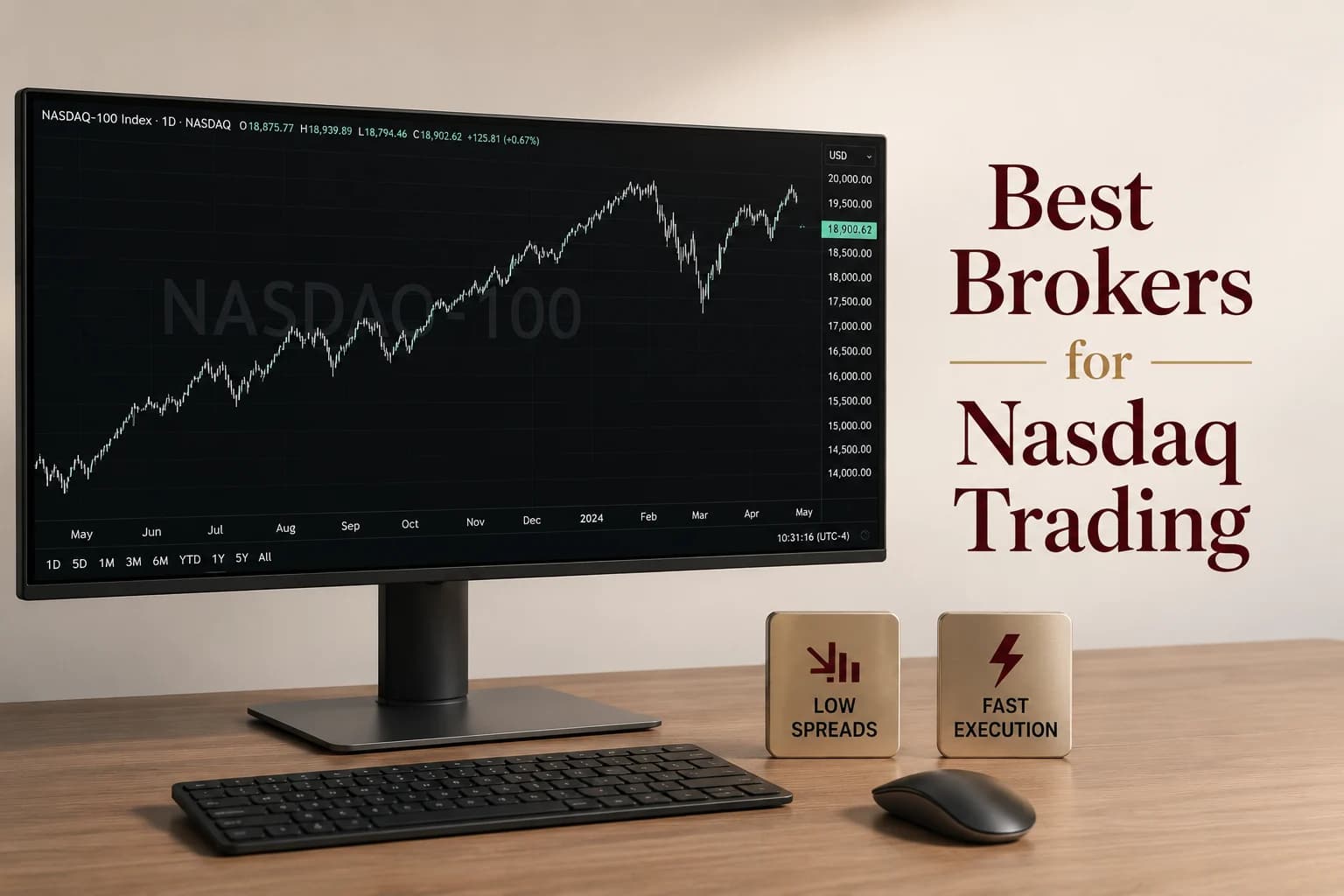
Because the Nasdaq is one of the most closely watched stock indices in the world, its volatility and growth potential have attracted significant attention from traders seeking both short-term trading opportunities and long-term investments. In addition to being an index, the Nasdaq is often seen by traders as a reflection of the momentum of the world technology sector.
When tech companies perform well, the Nasdaq tends to lead the broader market higher; conversely, during periods of economic uncertainty or interest rate fluctuations, the Nasdaq tends to surge, providing great trading opportunities.
For a trader to profit from trading the Nasdaq, predicting the market's direction alone is not sufficient. The broker you select plays an important role in execution speed, trading costs, spreads, and the overall reliability of the platform used to execute trades. Some brokers have very good access to the Nasdaq, either through CFDs, futures, or direct stock trading, while others are less competitive due to execution costs or speed.
This guide provides an overview of the Best Brokers for Nasdaq Trading, how traders can determine which features a broker should emphasize, and a few brokers known for competitive trading conditions on Nasdaq-related instruments.
What Does it Mean to Trade on the Nasdaq?
Before selecting a broker, it is essential to understand how trading works on the Nasdaq. The Nasdaq is both a stock exchange and an index that tracks many of the largest technology companies. The best-known index for traders to follow is the Nasdaq-100. This index includes 100 of the largest non-financial companies by market capitalization listed on the Nasdaq stock exchange.
Traders have several ways to gain exposure to the Nasdaq market. Many traders use CFDs to speculate on the price movements of an asset without owning it, as explained in What Is a CFD? Complete Beginner's Guide. Due to their leverage for short-term traders and being able to trade in both rising and falling markets, CFDs are popular.
Another way to gain exposure to the Nasdaq is through futures contracts and/or ETFs that track the Nasdaq-100 index. It is recommended that long-term investors (e.g., retirement funds) purchase individual technology stocks listed on Nasdaq.
Each of these approaches offers distinct advantages for gaining exposure to the Nasdaq, but the broker you select will ultimately determine how efficiently and easily you can access these markets, since broker features like execution speed, spreads, and platform reliability have a direct effect on your trading experience and outcomes.
Related Articles: What Is Margin Call in Forex?
Key Features to Look for in Nasdaq Brokers
Every broker offers different trading conditions, and each trader must consider multiple key factors to ensure proper broker selection.
Tight Spreads
The spread is the difference between the asking and bidding prices for an instrument. Because active traders frequently trade on the Nasdaq, tight spreads are essential to keep total trading costs low when making large numbers of trades.
Execution Speed
The Nasdaq index can move quite dramatically at times, such as during the U.S. market session or around major economic announcements. A broker with a quick execution is essential to ensure that a trader's order is filled close to their expected price.
Stable Trading Platform
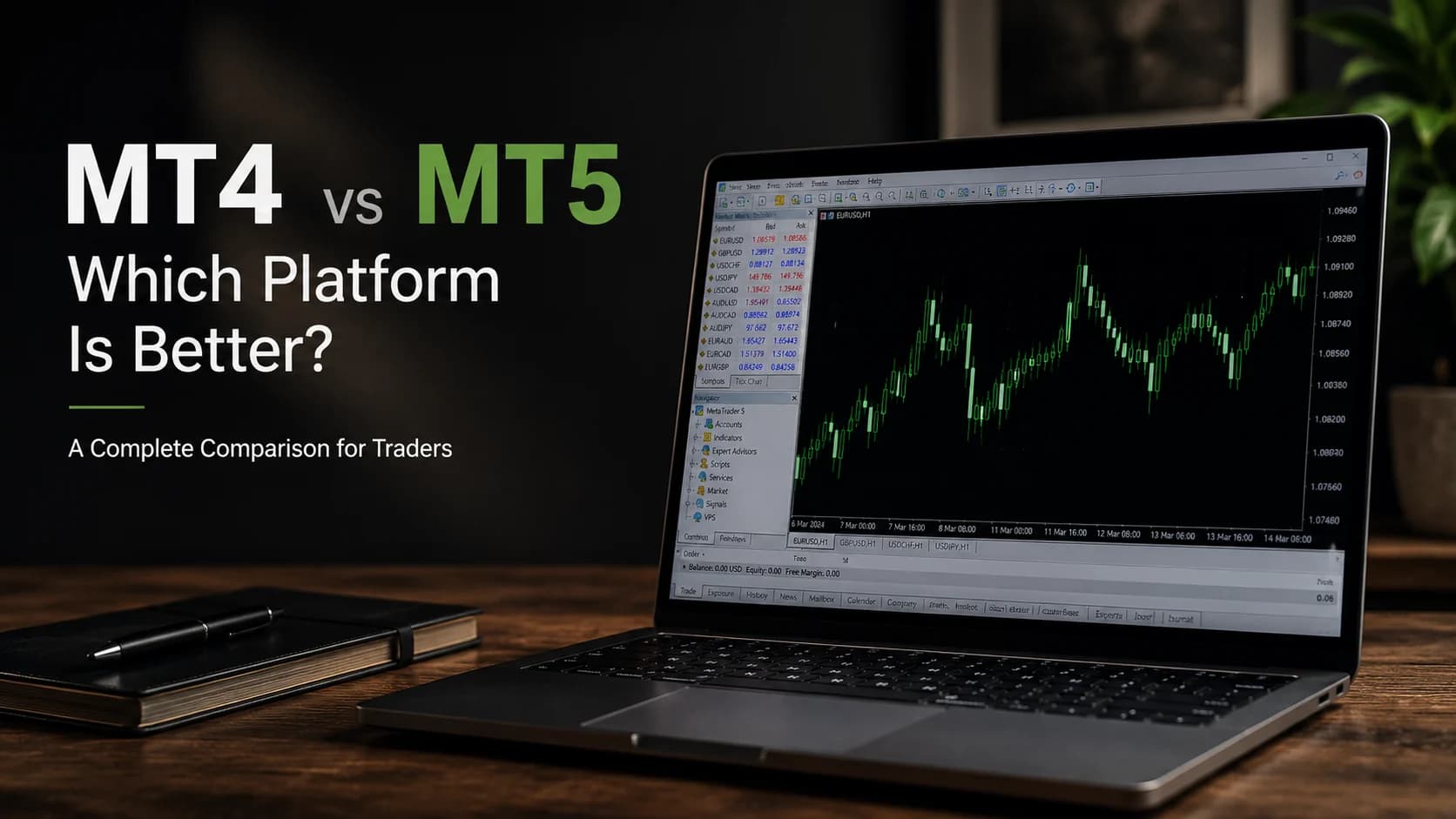
Most professional traders use platforms such as MetaTrader 4, MetaTrader 5, or cTrader. These platforms offer the most advanced charting tools, technical indicators, and automated trading capabilities.
Access To U.S. Market Hours
Since the Nasdaq is closely connected to the U.S. stock exchange, traders must ensure they receive reliable pricing during active U.S. market hours and during any extended market hours.
Transparent Fees
In addition to spread fees, many brokers charge commissions or overnight swaps, which is why traders often compare Spread vs Commission: Which Costs Less. A trader has to know how to calculate what they will pay to do business to better understand their true trading costs on the Nasdaq.
Related Articles: How to Compare Forex Brokers: Full Checklist
Examples of Popular Brokers For Trading the Nasdaq
Some of the more commonly used brokers for Nasdaq traders are those that offer a competitive environment. The table below compares the typical brokers used by traders purchasing instruments directly related to the Nasdaq.
Broker | Platforms | Nasdaq Trading Type | Key Features |
IG | IG Platform, MT4 | Index CFDs | Strong regulation and advanced research tools |
Pepperstone | MT4, MT5, cTrader | Index CFDs | Tight spreads and fast execution |
IC Markets | MT4, MT5, cTrader | Index CFDs | Low latency trading environment |
Saxo Bank | SaxoTraderGO | Stocks, ETFs | Professional-grade trading tools |
eToro | eToro Platform | Stocks, ETFs | Social trading and copy trading features |
Each of these brokers offers different advantages depending on whether the trader prefers short-term trading through CFDs or longer-term investment through stocks and ETFs.
Reasons Why Execution Speed Is Important for Trading on Nasdaq
Execution speed is essential for Nasdaq traders, an index composed primarily of technology companies, because it is highly responsive to economic data, earnings announcements, and shifts in the technology sector.
When major companies report their earnings, or when a Central Bank announces an Interest Rate Change, a trader’s Nasdaq Price can move quickly within seconds. Traders who use a broker with slow execution speed may also suffer from slippage, which occurs when the price at which a trade is executed differs from the expected price.
Professional Brokers spend a significant amount of money on Trading Infrastructures to decrease latency and increase the speed of order execution. These characteristics are important and valuable to Day Traders and Scalpers who depend on tight market entries.
Volatility and Other Opportunities Available to Trade on the Nasdaq
The Nasdaq Index exhibits larger price swings than many other indices, creating both significant risks and enticing opportunities.
Technology Companies are frequently affected by Macro-Economic Factors (i.e., interest rate changes, inflation, and technological innovations). Depending on these factors, Nasdaq could experience significant price movements during both Bullish and Bearish market cycles.
For short-term traders, this volatility offers excellent opportunities to make quick profits. However, this type of market also requires above-average risk discipline, or one can incur large losses.
Many traders use Technical Analysis tools, such as support and resistance levels, Trend Lines, and Moving Averages, to identify potential Trading Opportunities in the Nasdaq.
Related Articles: Forex vs Stocks: Which Is Better for Traders?
Managing Risk While Trading Nasdaq
There is a good opportunity to make money trading the Nasdaq; however, risk management must be built into this type of trading, and before entering any position, all Nasdaq traders must identify the amount of risk they are willing to take.
One of the most popular ways to assess your risk is to set a maximum percentage of your trading account at risk per trade. This approach will assist them during periods of market uncertainty.
Also, Stop Losses—a type of order that automatically closes a trade at a predetermined price point to limit losses—are an important component to use when trading the Nasdaq. They are used to protect a trader against market movement by automatically closing out a trade if the market goes against the trader by a predetermined amount.
Another method of managing risk is to avoid excessive Leverage. Leverage magnifies profits, but it can also magnify losses if an unexpected market development occurs.
Trading Tools & Technology
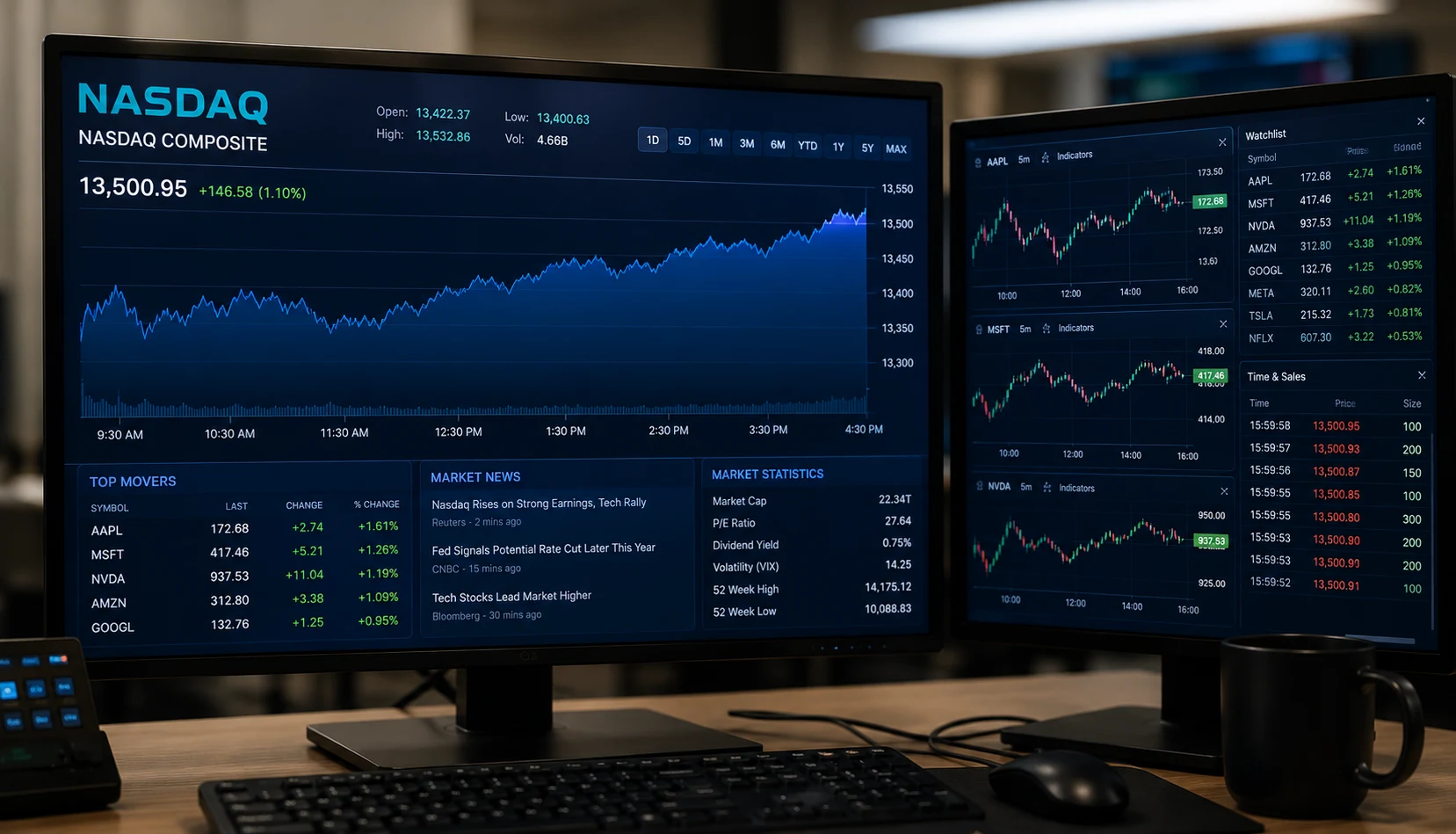
In today's brokerage, there are many features available to you. The price fluctuations of the Nasdaq can be interpreted through the following tools and resources:
• Advanced Charting Software
• Technical Indicators
• Economic Calendars
• Real Time News
Most brokers also offer mobile trading applications so that traders can view the Nasdaq on their phones, enabling traders to stay connected to the markets during trading hours.
Algorithmic Trading is also on the rise and is a great way to create automated trading strategies that analyze Nasdaq price fluctuations and execute trade orders in accordance with predetermined criteria.
These technologies will continue to shape the way retail traders engage with financial markets.
Conclusion
In evaluating brokers for trading the Nasdaq, review and compare the following areas:
• Spreads
• Speed of Execution
• Reliability of the Trading Platform
• Overall Transparency
• Overall Transparency
The Nasdaq Index allows traders to capitalize on the relationship between technology and innovation and provides opportunities amid extremely volatile price movements. The broker you choose will impact your ability to succeed when trading on the Nasdaq; thus, a reputable broker will provide quick execution, competitive pricing, and access to effective trading tools, allowing you to react promptly to market moves, which is why many traders rely on Wikilix Broker Analysis for deeper insights. Ensure your broker has a transparent fee schedule and a reliable platform.
Finally, your broker should align with your trading philosophy and strategy, given your trading experience and risk tolerance. By choosing the right broker and applying sound risk management principles, you will find yourself trading one of the most dynamic indices in the world.