

Newcomers to the financial markets often have only one question in their minds when they get started: Which should I trade, Foreign Exchange (Forex) or Stock? Millions of traders worldwide are drawn to both markets in search of opportunities to profit from price changes. Although both markets operate in ways that allow them to be freely traded worldwide, there are major differences between them.
Some traders prefer Forex because it operates 24 hours a day, 7 days a week, offers high liquidity (the ability to buy or sell), and is generally considered more volatile than other markets. Other traders prefer stocks because they have transparency and long-term growth potential. You don't just choose one of these markets based on which one is "better"; you consider what fits into your style, risk tolerance, and your financial goals.
In this article, we will provide a detailed overview of the key differences between Forex and Stock trading, covering Market Structure, Volatility, Capital Requirements, and Trading Strategies. After reading this article, you should have an idea of where you will fit in as a Trader.
Understanding the Forex Market
The forex, or foreign exchange market, is the largest financial marketplace on the planet, where currencies (like the euro to U.S. dollar, the British pound to U.S. dollar, and the U.S. dollar to Japanese yen) are bought and sold. Forex trading takes place globally through over-the-counter (OTC) markets, facilitated by networks of banks, brokers, and other financial institutions, as well as retail customers.
One of the key characteristics of the forex market is its extreme liquidity: with trillions of dollars' worth of trades executed each day, orders nearly always get executed quickly, and the spreads between the bid and ask prices are typically very tight. Because of this, forex is an attractive market for short-term traders such as scalpers and day-traders.
An equally important characteristic of the forex market is its high daily trading volume, which enables traders to trade even when they are otherwise occupied. Many forex brokers allow traders to open accounts with a minimum deposit and offer leverage, enabling traders to access large positions without a major investment of capital. Because leverage can provide traders with higher returns on their investments, it can also increase the risk of their trading efforts; therefore, proper risk management practices are critical to successful trading.
Forex trading is 24 hours per day from Monday to Friday through the four major financial trading sessions around the world: Sydney, Tokyo, London, and New York, as explained in Forex Trading Sessions Explained. Thus, there is a continuous cycle of trading activity available to forex traders almost every hour of every day.
Related Articles: Best Brokers for Nasdaq Trading
Understanding the Stock Market
Company ownership is what the stock market represents. Traders purchase shares of a company by buying its stock, thereby taking a position in that company. Shares of stock are usually sold on centralized exchanges, such as the New York Stock Exchange (NYSE) or NASDAQ.
Unlike the forex market, the stock market has set trading hours based on the exchange you are trading on. For example, most U.S. stock markets have set hours and usually open for about 6.5 hours each trading day.
Traders and investors trade thousands of stocks across thousands of industries. Traders and investors analyze a company's earnings, economic statistics, and industry trends to determine whether its stock price will rise or fall.
Additionally, stocks have the potential for long-term growth for investors who purchase them. In fact, many investors keep their shares for long periods, sometimes years or decades. Investors can realize capital gains and dividends as their stocks appreciate. Thus, the stock market is quite attractive to long-term investors and those building portfolios.
On the other hand, stock exchanges require a much higher level of fundamental analysis of companies than other investments. In addition to evaluating a company's financial statements, traders/investors need to analyze earnings reports and assess how the company is managed.
Key Differences Between Forex and Stocks
Although both markets involve speculating on price movements, their structure and trading conditions differ significantly. Understanding these differences can help traders choose the environment that suits them best.
Feature | Forex Market | Stock Market |
Market Size | Largest financial market globally | Smaller compared to forex |
Trading Hours | 24 hours per day (Monday–Friday) | Limited exchange trading hours |
Instruments | Currency pairs | Shares of companies |
Liquidity | Extremely high | Varies depending on stock |
Leverage | Often high | Typically lower |
Analysis Style | Technical and macroeconomic | Fundamental and technical |
Entry Barrier | Usually lower | Often requires larger capital |
This comparison highlights that forex trading often suits short-term, high-frequency strategies, while stocks tend to attract investors and swing traders focused on company performance.
Liquidity and Market Size
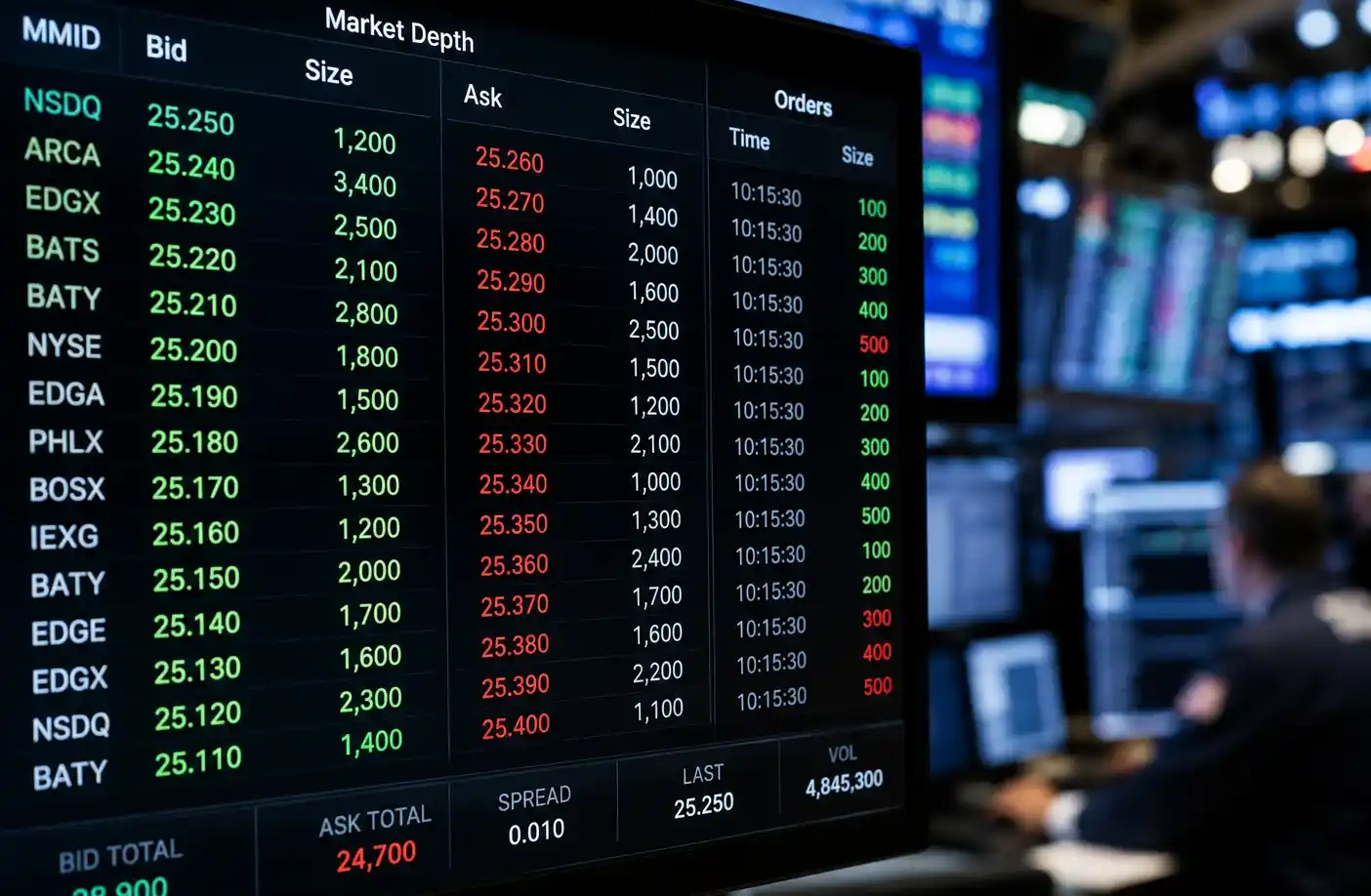
Liquidity is defined as the ease with which assets may be purchased or sold with minimal effect on price.
The forex market dominates the field worldwide because it has the largest daily trading volume (over $3.2 trillion) and is therefore the most liquid. As a result of this high liquidity, forex offers traders tight spreads and fast order execution, thus benefiting active traders.
While all stock markets are still quite liquid, there is considerable variation from company to company. Generally, larger companies (such as Apple and Microsoft) enjoy high liquidity; however, smaller companies (such as A&P) tend to have greater price variability and may execute orders more slowly.
Thus, for traders who rely on rapid entry and exit (i.e., getting in and out) in the forex market, it is most consistently liquid for day and active trading.
Volatility Creates Trading Opportunity
The asset's volatility directly affects the trading opportunities, as it can generate potentially high returns from price movements.
The forex market typically experiences moderate volatility and continuous fluctuations in currency values before, during, and after major macroeconomic announcements, as well as during overlaps of the London and New York trading sessions.
On the other hand, volatility in the stock market typically stems from quarterly earnings releases, significant corporate news, and broader economic changes, underscoring the potential for large price fluctuations. Therefore, by developing a trading strategy that capitalizes on the seasonal nature of increased activity during these events, traders may be able to generate large profits; however, they also run the risk of significant financial losses unless they carefully analyze the risks associated with each event.
Related Articles: Best Brokers for Indices Trading
Capital Requirements and Leverage
One significant difference between forex and stock trading is the amount of capital required to trade in each market. Forex trading allows traders to trade with lower initial capital than in stock trading. Many brokers offer leverage ratios to allow traders to control positions much larger than their original investment.
In stock trading, leverage is usually lower than in forex trading. In addition, while stock traders can sometimes use only 50% of their equity to purchase stock, certain minimum equity requirements may be imposed by brokers and regulatory agencies for pattern day traders or frequent day traders in the United States. When utilizing leverage in forex trading, there is a corresponding risk that if the market moves against the trader, they will lose their entire investment. Therefore, traders should use responsible position sizing and solid risk management practices when trading forex.
Trading Strategies in Forex vs Stocks
Many Forex Traders use technical analysis, including charting, indicators, and price patterns, as one of their primary tools. Examples of trading strategies include scalping, day trading, and swing trading.
Many stock traders use both technical and fundamental analysis when making trading decisions, analyzing company earnings, economic conditions, and industry trends.
Forex trading frequently centers on macroeconomic fundamentals such as interest rates, inflation data, and central bank policies. Conversely, stocks are generally affected more by company-specific events and performance metrics.
This distinction allows traders who prefer to analyze global economic trends (largely driven by macroeconomic fundamentals) to achieve their goal in Forex, and those who wish to research individual companies to feel more comfortable trading stocks.
Which Market Is Better for Beginners?
How traders trade forex or stocks depends on their trading style, which may range from aggressive to conservative, as well as their risk tolerance and investment goals.
Forex trading is highly attractive to new traders because it has a very low entry point and is accessible 24 hours a day, allowing them to practice their strategies regularly at high frequency.
Forex can involve very high leverage, which can increase risk for those who are not disciplined.
In stock market trading, trades are generally conducted in a more regimented manner, with greater compliance and oversight, resulting in greater transparency through centrally traded exchanges. Long-term investors are rewarded with dividends and capital appreciation as a company grows.
Traders should carefully assess their individual risk profile, the amount of money they have to invest, and their preferred trading style before deciding whether to trade forex or stocks.
Conclusion
There is no definitive answer when comparing forex and stock trading, as both markets have their own distinct advantages and disadvantages, which is why many traders rely on The Broker Reference when evaluating their options.
The forex market is favored by many active traders due to its high liquidity, 24/7 global accessibility, and suitability for fast-moving markets, making it an excellent choice for traders looking for quick short-term trades.
Alternatively, stock trading offers long-term capital growth by investing in a company and is ideal for traders who enjoy fundamental analysis of a company's activities and the broader economy.
Many experienced traders often use both markets for different trading strategies. In the end, the best method for you will depend on how you prefer to trade, your trading goals, and how well you manage the risks associated with trading on either market.
The first step to making sound trading decisions and building a successful career as a trader is to understand the strengths and limitations of each market type.