
Over the past decade, Forex Trading in the Middle East has experienced explosive growth; cities like Dubai, Abu Dhabi, Riyadh, Doha, and Kuwait City have seen unprecedented numbers of traders entering global markets. With increasing access to fast internet, a wide variety of modern trading platforms, and an ever-growing number of investors seeking to invest internationally, there has never been more interest in Forex Trading in the region.
There are a variety of reasons why finding the best Forex broker for you can be a challenge in the Middle East. The two most notable issues are that each country has independent regulatory requirements and a banking system that differs from those of other countries in Europe and North America.
In addition, many traders in the region want access to an Islamic Forex Account that complies with Sharia Law. Therefore, a broker that is a good fit for the European or Asian trader may not necessarily be a good fit for the trader in the Middle East.
Another element you must consider when selecting a broker is to what extent you can trust the Forex Broker you are working with, because all online trading is dependent upon your ability to make your deposit to the international company. Therefore, you need to have 100% confidence that the Forex Broker you choose to work with is regulated by a respected regulator and has an environment that provides an optimal amount of transparency in which to trade.
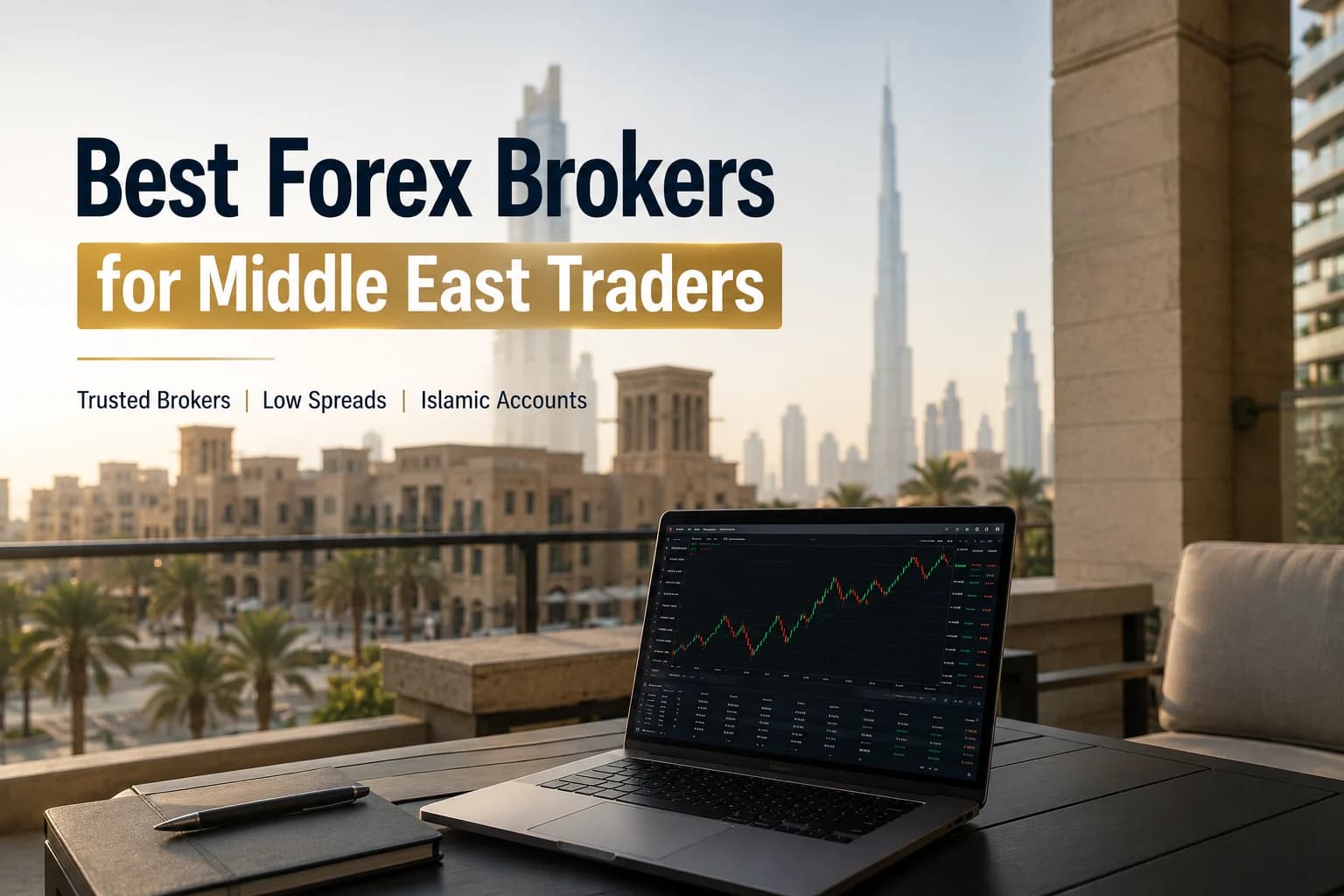
The purpose of this guide is to provide you with a directory of the best Forex brokers for traders in the Middle East for the year 2026 and to outline some of the attributes that lend themselves to these brokers being an optimal choice for the traders in the Middle East. This guide will also provide information to help you determine which broker is a good fit for you.
Why Broker Selection Matters for Middle East Traders
The Forex market in the Middle East is rapidly becoming a prominent emerging market in the Global Forex marketplace. Dubai has become the heart of this development and is emerging as an international centre for Financial Services, attracting brokers and investment firms from around the world.
While tremendous growth has occurred in the Forex Market in the region, many unique challenges exist for traders when selecting a Forex Broker.
The first problem traders in the region face is that each Middle Eastern country has its own regulator, which must be taken into account when evaluating a Forex broker's services. For example, in the UAE, the majority of well-established, regulated Forex Brokers are regulated by local regulatory bodies.
As such, in most of the Middle Eastern countries, regulated Forex Brokers from both the local country and international brokers are available for trading but there typically is no local broker available; therefore, it is the traders responsibility to ensure that he/she does adequate research into the Brokers regulatory status in any country from which he/she wants to open an account and trade.
The second issue for traders in the Middle East is that many require a swap-free account. An Islamic Forex Account is a way for Muslim traders to trade in accordance with Sharia Law.
The third issue related to deposit and withdrawal methods should also be considered. The local payment option, along with available bank applications and digital wallets, should be carefully researched and reviewed, as they may affect the trader's overall experience, particularly if he has to use multiple methods to withdraw funds from a brokerage account.
Brokers that have successfully provided trading services to traders in the region have local operations and offer flexible trading terms.
Related Articles: Best Offshore Brokers with High Leverage
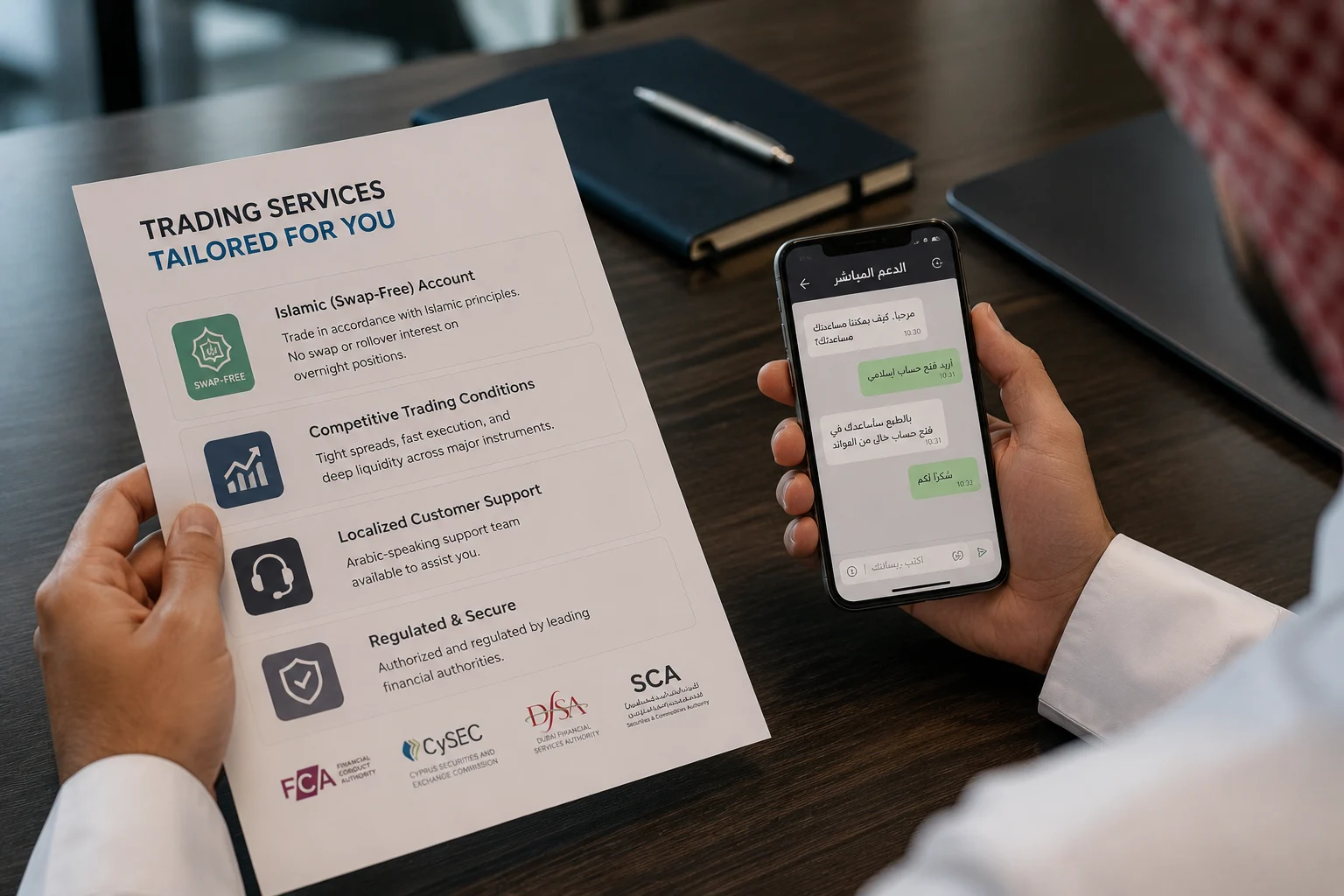
Characteristics of the Best Forex Brokers in the Middle East
Not all Forex brokers meet the needs of traders throughout the Middle East; however, reputable Forex brokers tend to share key attributes that make them easier to work with and more dependable for their Middle Eastern customers.
Regulation
Reputable Forex brokerage firms often operate under a solid, established financial regulatory body. Notable examples of well-known financial regulatory bodies include: the Dubai International Financial Centre (DIFC), the Securities and Commodities Authority (SCA), the United Kingdom Financial Conduct Authority (FCA), and the Cyprus Securities and Exchange Commission (CySEC). The regulation of a brokerage firm creates transparency, protects clients' funds, and ensures clients are treated fairly when executing transactions.
Islamic (Swap-Free) Accounts
Many Forex traders in the Middle East seek to trade on an account that complies with Islamic law. Under an Islamic account, the trader does not pay or receive any swap fees on overnight positions; however, the trader still trades under industry-standard trading conditions. To attract traders from the Middle East, most of the best-known international brokers currently offer this option.
Competitive Trading Conditions
Low spreads, fast order execution, and dependable liquidity are necessary for traders employing scalping or day-trading strategies. The best forex brokers offer tight spreads on major currency pairs and very little slippage in fast-moving market conditions.
Localized Customer Support
Access to customer support in the trader's native language and in a location within the trader's vicinity significantly increases the trader's ability to contact a broker successfully. When brokers provide Arabic-speaking customer representatives and local office locations, traders throughout the Middle East can easily access them.
Related Articles: How Offshore Broker Regulation Works
Best Forex Brokers for Middle East Traders in 2025
Many Forex brokers in the Middle East have built solid reputations, provide regulatory assurance, offer swap-free Islamic accounts, and offer access to competitive trading conditions.
The following table summarizes popular Forex brokers in the Middle East.
Broker | Key Advantages | Islamic Account | Regulation |
Exness | Tight spreads, fast withdrawals, strong presence in MENA region | Yes | CySEC, FCA, Offshore entities |
XM | Low minimum deposit, wide range of instruments | Yes | CySEC, ASIC |
ADSS | UAE-based broker with regional offices | Yes | SCA |
Pepperstone | Advanced trading platforms and deep liquidity | Yes | FCA, ASIC |
AvaTrade | Strong regulation and educational resources | Yes | Central Bank of Ireland, ASIC |
These brokers are frequently chosen by traders in the Middle East due to their ability to combine reliable regulation with flexible trading conditions.
Popular Trading Instruments in the Middle East
Middle Eastern traders typically gravitate toward instruments relevant to their respective economies; therefore, while foreign currency pairs still represent the most widely traded asset classes globally, the most traded instrument by far in the M.E. is Gold (XAU/USD).
Gold has traditionally played an important role in the financial systems of M.E. nations and continues to act as a hedge against inflation within these economies. Traders in M.E. also have an affinity for oil (Brent Crude and West Texas Intermediate), as several M.E. economies are heavily reliant on energy markets. Therefore, fluctuations in crude oil prices often create large trading opportunities for traders in M.E. Outside of commodities, traders in M.E. have also continued to trade the EUR/USD, GBP/USD, and USD/JPY, as these remain highly liquid trading instruments.
Payment Methods for Middle East Forex Traders
When selecting a broker, the types of funding options available to traders are among the most important factors. As such, most traders in the M.E. will seek brokers that offer multiple deposit and withdrawal options for their clients. Some common forms of depositing and withdrawing funds from a broker include:
• International bank transfers
• Credit and debit cards
• Online or digital wallets (e.g., Skrill, Neteller, etc.),
• Cryptocurrency (e.g., USDT)
Crypto funding options have become much more popular over the past few years due to their ability to allow for much faster deposits and fewer banking restrictions on international transactions, especially among traders searching for the Best Brokers Accepting USDT Deposits.
However, all traders should always check with their broker, via their secure client portal, on how to deposit funds before making a deposit to avoid compromising their funds and account information.
Choosing a Forex Broker In the Middle East
Selecting a suitable broker requires much more than just looking at the spread or leverage. Before starting to trade, there are many variables for traders to understand to properly evaluate a broker before opening an account.
Verify the Regulatory Authority
Finding out whether your broker has the authority to operate is the most important step before deciding on a broker to open an account with, following the process outlined in How to Verify a Broker's License. Regulatory authorities provide additional protection and increase transparency.
Know the Trading Fees
Even small differences in spread and commission can affect your profitability over time. It's important to compare trading costs with different brokers so you can manage your total trading costs.
Test the Trading Platform
Most brokers offer demo accounts that let traders practice live trading to see how quickly their trades are executed, the value of charting tools, platform reliability, and the like. Be sure to use your demo account to ensure you'll be happy with the execution and tech support before making an actual deposit.
Determine If You Can Withdraw Your Funds
Withdrawal times and reliability are two of the most important indicators of a broker's trustworthiness.
In Summary
Forex trading in the Middle East has been growing as retail traders gain increased access to global finance. Cities such as Dubai have developed into financial centres, and the number of retail traders in the region is growing. This has led to increased demand for trustworthy brokers, which is why many traders rely on Wikilix Broker Analysis to evaluate their options.
To compare the top forex brokers for traders in the Middle East, there are many factors to consider: Regulated, Islamic accounts, excellent conditions, alternative funding sources, etc. Traders in the Middle East typically have a better experience with brokers who provide regional support and offer a wide array of services to meet their specific needs.
Before making your selection, you should evaluate the four areas mentioned above. Evaluating these areas can help minimize risk and increase the probability of long-term success.
Moving into 2026, as the forex market continues to develop, brokers that emphasize advanced technologies, transparency, and regional access will likely remain the preferred choice of traders throughout the Middle East.