
Before making a deposit with a broker, pause to ask yourself one question: Have I verified their license?
Many traders think that displaying the regulator’s logo on a broker’s website is sufficient. It is not. The existence of fake license numbers, cloned company names, and misleading regulatory claims is more widespread than many people realize, so checking whether a broker has a license is not just a technicality but rather one of the most crucial steps in protecting your capital.
This guide will provide detailed instructions on verifying whether your broker is licensed, searching for the license in regulatory databases, and identifying warning signs to avoid falling prey to false claims, following best practices on How to Avoid Forex Scams.
The importance of verifying a broker’s license before you invest
Regulation of financial markets creates trust in the financial services industry. Licensed brokers are required to abide by strict requirements, including:
• Client fund segregation
• Minimum capital requirements
• Financial reporting
• Risk disclosure standards
• Anti-money laundering policies
With unregulated brokers, you have no legal recourse.
It is important to keep in mind that not all regulatory bodies enforce the same rules regarding investor protection; some are much stricter than others and impose more severe penalties for violations. Therefore, it is necessary to verify a broker’s license rather than simply assuming he or she has one.
How to Determine Whether a Forex Broker Is Regulated
To verify a broker’s license, you need three things:
Legal name of the company
Broker licence number
The regulatory authority that issued the broker’s licence
Do not rely solely on the brand name when determining whether a broker is regulated; brokers may operate under multiple brands in different jurisdictions.
For example, one broker may claim to be regulated in the UK but open your trading account with a different offshore entity. Always verify who you are opening your trading account with.
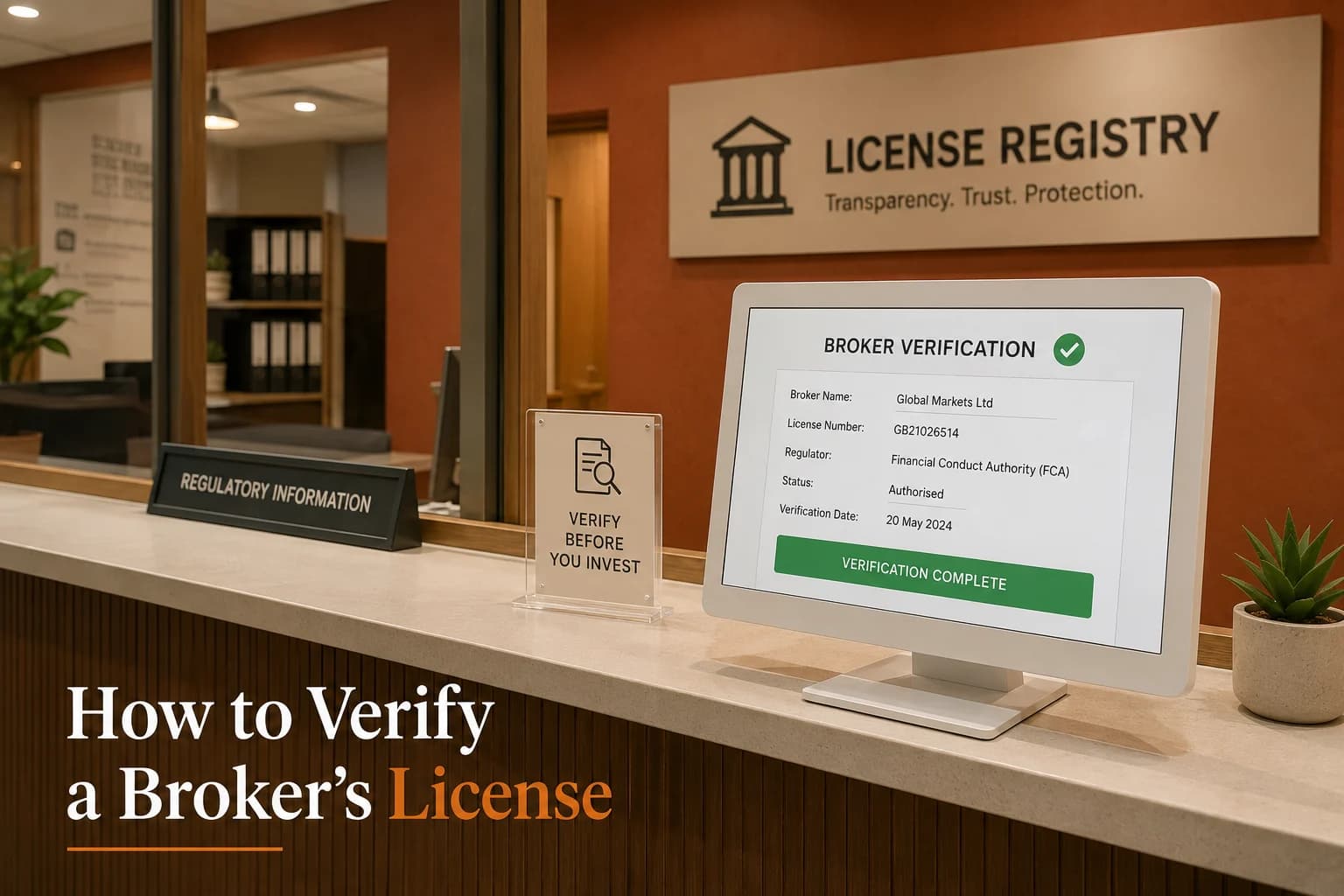
A Step-By-Step Guide to Verifying a Broker’s Licence Number
Step 1: Find the broker’s license info on their website.
Look for the legal entity name, registration number, regulator, and physical address at the bottom of the website or in the About Us section.
Absence of clear information or vague details on a broker’s website is a strong warning sign. Treat this as a serious caution and reconsider proceeding.
Step 2: Go to the Official Website of the Regulator
Visit the official websites of each financial watchdog directly (not via links provided by brokers).
The major regulators are:
• F.C.A. (Financial Conduct Authority - the United Kingdom)
• ASIC (Australian Securities and Investments Commission - Australia)
• C.Y.S.E.C. (Cyprus Securities and Exchange Commission - Cyprus)
• C.F.T.C. (Commodity Futures Trading Commission - the United States)
• D.F.S.A. (Dubai Financial Services Authority - United Arab Emirates)
Use the search tool on the regulator's site.
Step 3: Search by the License Number and Name of the Company
First, look for the license number, then check:
• If the name of the company matches exactly
• If the status of the license is "Authorized" or "Active."
• If the Company's website's address matches the Broker's website address
• If permission to deal with Forex or Derivatives is among the company's permitted activities.
If any part of the above is not an exact match, further investigation is required.
How to Identify a Fake Claim of Regulation
Fraudulent brokers often do the following:
• Use the logos of regulators without permission
• Use license numbers belonging to different companies
• Take the name of a legitimate regulated firm and change it slightly
• Provide license numbers with small changes
The most common method used by scammers is "firm cloning," which involves copying legitimate, regulated firm details while altering the contact information, as detailed in Clone Broker Scams Explained.
Always check against:
• The official regulator's domain name
• The regulated telephone and e-mail numbers assigned to your firm
• Any warnings that the regulator has put out.
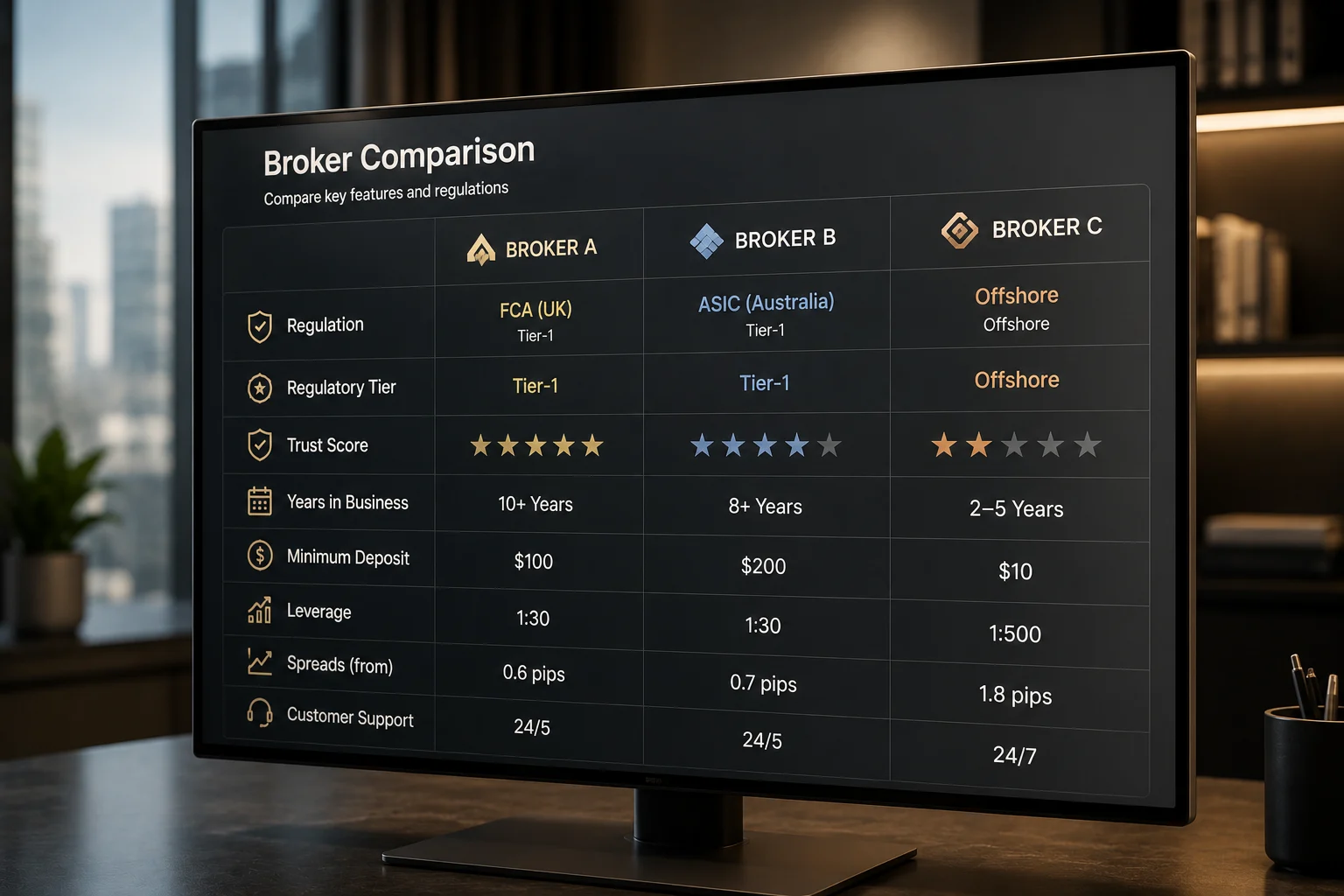
Related Articles: Warning Signs of Fake Brokers
Tier-1 vs Tier-2 vs Offshore Regulators: What’s the Difference?
Not all licenses offer the same level of protection. Below is a simplified comparison:
Regulator Tier | Examples | Investor Protection Level | Compensation Scheme | Enforcement Strength |
Tier-1 | FCA, ASIC, CFTC | High | Often available | Strong |
Tier-2 | CySEC, DFSA | Moderate | Sometimes available | Moderate |
Offshore | Seychelles, Vanuatu, Mauritius (FSC) | Limited | Rare | Limited |
Tier-1 regulators generally impose stricter capital requirements and reporting standards. Offshore regulators may offer lower operational costs for brokers but provide reduced investor safeguards.
Understanding the tier level helps you evaluate risk more accurately.
How to Use Financial Regulator Databases Properly
Before using a regulatory database, it is important to verify the following items:
Verify the entity’s status
Verify any past disciplinary action(s)
Review the entity’s license permissions (i.e., is the firm permitted to retail trade).
Verify whether the firm is permitted to offer retail trading.
Most regulatory bodies maintain “warning lists” which identify firms that may be engaged in unethical, fraudulent, or illegal acts. Do not deposit any funds into any firm on such a list.
Additionally, verify whether the regulatory body oversees retail derivatives. For example, if only asset management is licensed, this does not mean the firm may be permitted to offer foreign exchange brokerage services.
Indicators of a possible illegitimate broker
The following items may indicate that the broker may not be legitimate:
No license number displayed anywhere.
If the license number is only a generic registration certificate (not a financial regulator license);
Are you being pressured to deposit quickly?
There is inconsistent legal information.
The domain used is newly registered.
There are multiple conflicting addresses.
If the broker does not clearly identify the entity where you opened your account, it may also be an indicator that the broker is not legitimate.
Legitimate financial institutions can be validated through their business practices and transparency.
What to do if a broker’s license can’t be verified
If you cannot verify the broker’s license via the verifying database, do
Do NOT deposit any funds into the broker.
Contact the regulatory body and verify the broker's status.
Check official warning lists for investors.
Check the regulatory body for enforcement or disciplinary notices regarding the broker.
If the broker is unregulated, you may not have any way of pursuing your legal remedies for any disputes that may arise.
Even experienced traders will want to avoid unnecessary counterparty risk.
Related Articles: Global Forex Regulation Overview
Red Flags of an Unregulated Broker
Verifying the broker’s license is only one step in performing due diligence on a brokerage firm. Additional steps include:
Client fund segregation policies;
Compensation scheme;
Withdrawal procedures;
Company financial transparency
Length of time the company has been in business.
While regulation will help you mitigate risk, it will not eliminate it. A well-regulated, long-established broker that provides accurate reporting is likely to pose less risk than an unregulated one. Professional traders take broker verification as seriously as they take trading analysis.
Conclusion
You must verify a broker’s license as part of performing due diligence; you cannot skip this step, a process often emphasized across wikilix.
The only way to validate a legitimate license is to confirm it through the official regulatory agency’s database where the broker is registered; the details (company name, registration number, and permitted business activities) must match exactly. If they do not, you cannot rely on logos, marketing materials, or advertising to confirm legitimacy.
By following a systematic verification process, understanding regulatory tiers, and identifying warning signs of illegitimate brokers, you can significantly reduce the risk of fraud and capital loss.
In trading, true risk management starts not with stop-loss placement, but with choosing the right counterparty. Always verify before you deposit money.