
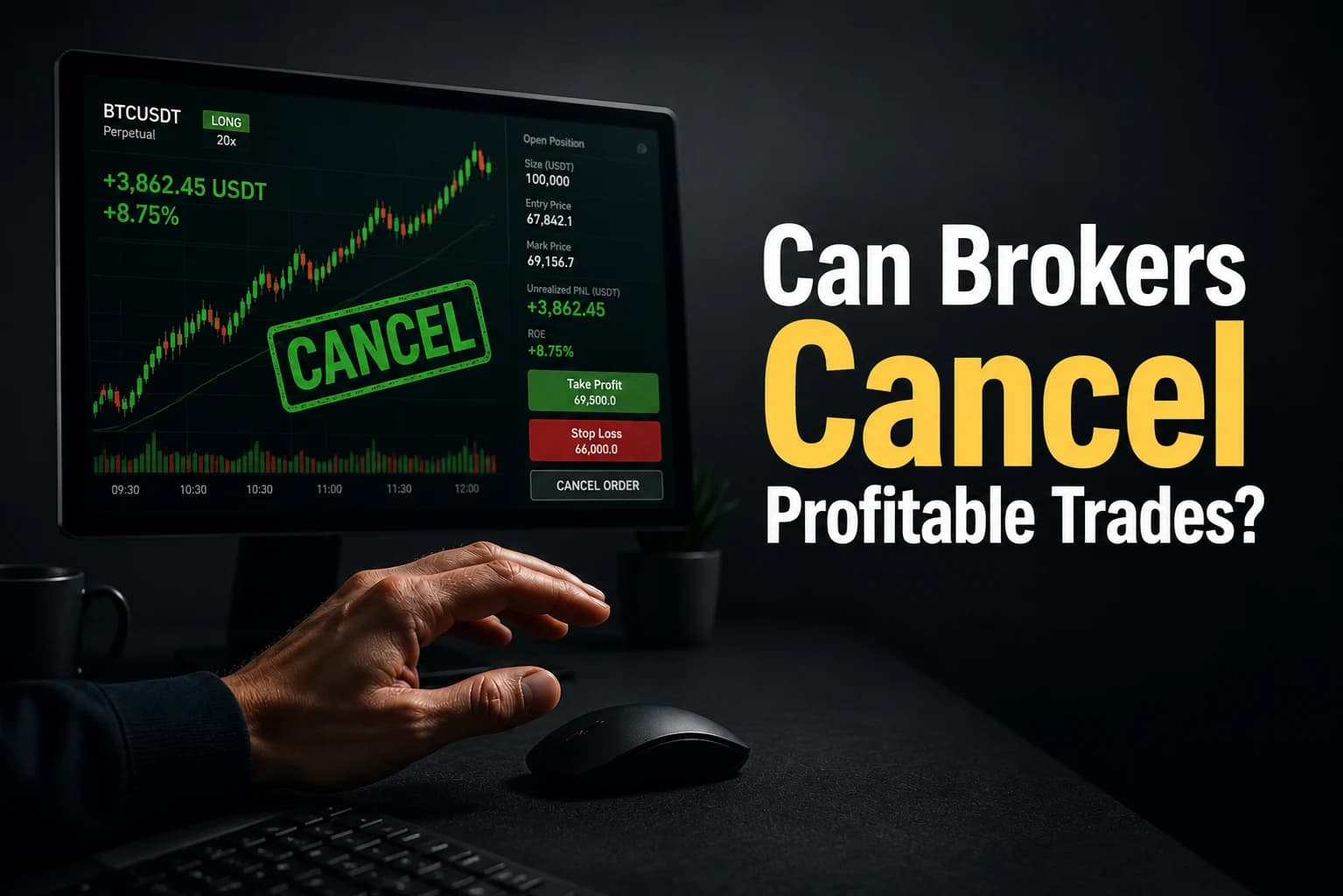
One of the most frustrating issues for traders is having a profitable trade cancelled or changed by a broker. Can brokers cancel profitable trades? The potential to cancel a winning trade can create confusion and, in some cases, suspicion about the operation of trading platforms as a whole.
The answer is not a straightforward yes or no. In most typical markets, brokers cannot arbitrarily cancel a trade because it is profitable to the trader. However, under certain conditions (usually outlined in the broker's terms and conditions), specific trades can be adjusted or cancelled.
These situations are often due to technology errors, pricing anomalies, system failures, or violations of trading rules. Traders who want to protect their trading experience from potential misunderstandings with their broker need to understand the situations in which this can occur and how to avoid them.
In this article, we will discuss whether brokers can cancel profitable trades, examine legitimate reasons for trade cancellations, and guide traders on how to prevent trade disputes.
Related Articles: How to Avoid Forex Scams
How Trading is Executed
Before we talk about cancelled trades, let's go over how online trades happen.
When a trader places an order through a trading platform, it is sent to the broker’s execution system. Depending on the broker's execution model, the order may be matched internally, passed to liquidity providers, or processed through electronic networks.
In most circumstances, once a trade has been executed and confirmed, a binding agreement is formed between the trader and their counterparty.
However, because trading relies on technology and data feeds, exceptional situations may arise requiring a trade correction.
Typically, these situations are defined in the brokerage trading agreement and by regulatory requirements.
Legitimate Reasons Brokers May Cancel Trades
Although traders may worry about brokers cancelling profitable trades unfairly, there are several legitimate scenarios where trade adjustments may occur.
Situation | Explanation |
Pricing errors | Incorrect price data caused by technical issues |
Platform malfunction | System failures affecting trade execution |
Liquidity provider errors | Incorrect quotes from external liquidity sources |
Market data glitches | Abnormal price spikes due to faulty data |
Rule violations | Strategies that violate broker policies |
These situations are generally rare, but they are recognized across financial markets as possible reasons for trade corrections.
Related Articles: Warning Signs of Fake Brokers
Pricing Mistakes and Trade Cancellation
Pricing mistakes, also known as trading mistakes, are among the main reasons trades are cancelled.
A trading mistake occurs when the execution price displayed on the trader's platform (market price) differs from the price actually being executed (true market price) due to a software issue. An example of this is a brief spike in a stock's trading chart that does not reflect the true market price. If a trade is executed during this time, it will be started at the wrong execution price.
In these cases, brokers typically adjust/cancel the trade to reflect the actual market price.
This type of trading problem occurs frequently across other (not only retail) platforms and markets and is commonly called a "misquote" in the trading industry due to software issues.
Technical Problems with Platforms/Systems (Platform Malfunction) are another example of events that may cause trades to be cancelled.
Online trading platforms rely on many types of sophisticated technical systems (servers, price feeds, and order routing). When technical problems occur, abnormal conditions often arise, making it impossible for the trader to complete a proper transaction with the platform.
The following technical problems could create unusual trading circumstances. For example, a trader's broker may be unable to confirm the existence of an order or the price at which the client wishes to buy or sell.
In addition, if a broker is unable to execute an order for you, they would have to review all affected trades and provide either an adjustment to you or a true account balance adjustment.
Even though these types of mistakes do not occur very often, the vast majority of trading agreements include language on how to handle them.
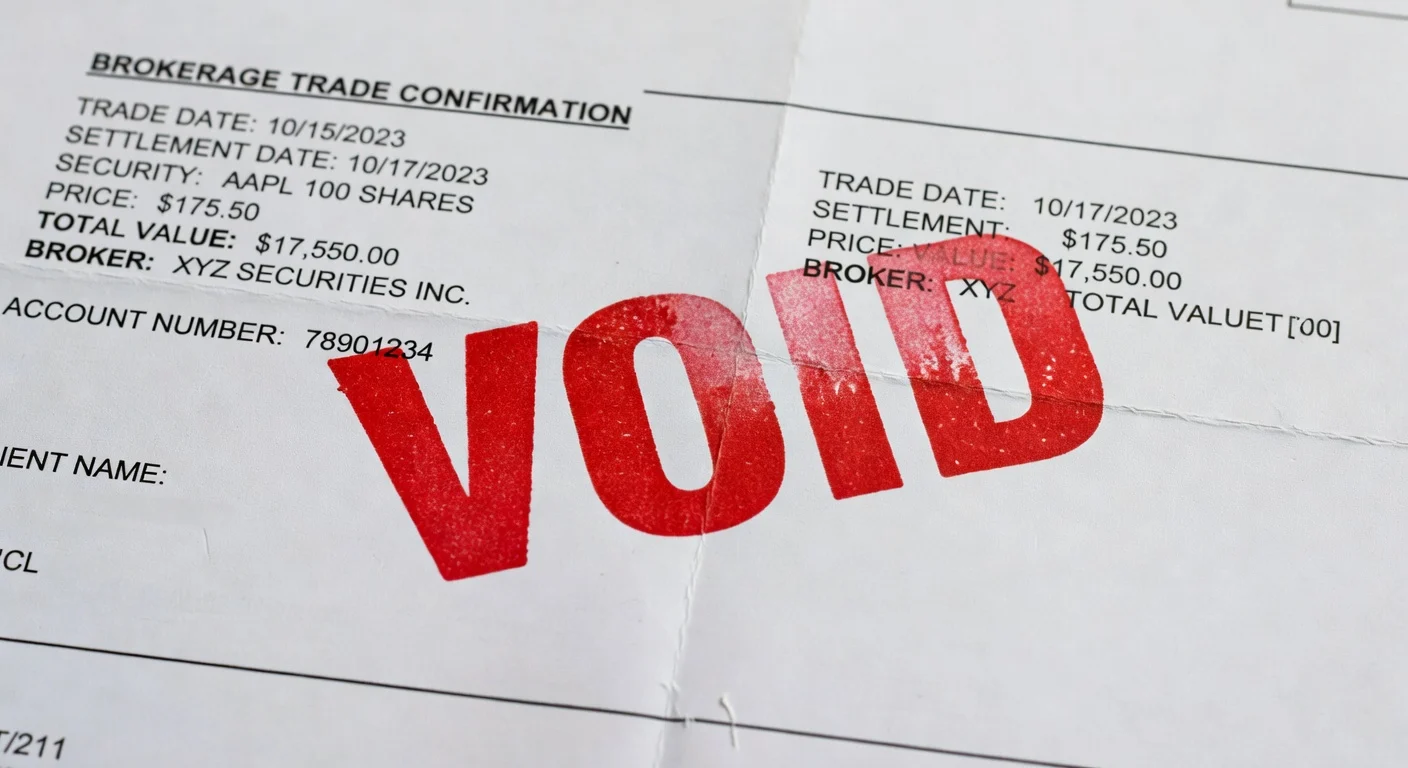
Liquidity Provider Issues
Brokers use third-party liquidity providers (e.g., banks & financial institutions) to execute client orders. If a liquidity provider sends incorrect price data or decides not to honour an executed trade for any reason, such as technical difficulties, the broker may need to correct the transaction.
As intermediaries between retail (trader) and third-party liquidity providers, brokers must maintain complete and accurate records of all transactions. If that record is changed, a reputable broker will typically document the change and provide an explanation in the operating agreement.
Related Articles: What Happens If a Broker Goes Bankrupt?
Violations of Trading Rules
Most brokers will also terminate any trades that result from violations of the specific trading rules defined in their contracts. This includes certain forms of trading strategies that are prohibited.
Examples of these prohibited strategies would be:
- Using latency arbitrage
- Taking advantage of price feed delays
- Manipulating or abusing a trading platform
If a broker finds that a client's trades are executed through unauthorised means, the broker will cancel those trades in accordance with the terms of service. Therefore, it is essential for traders to understand the broker's trading rules before attempting to execute any specialised trading strategies.
Regulatory Oversight
A broker must adhere to strict regulatory guidelines for executing trades and resolving disputes. Brokers that operate under the regulatory jurisdiction must also disclose the following :
- How or when trades may be adjusted or cancelled
- What terms govern trade adjustments
- What terms govern trade cancellations
The regulatory agencies that oversee broker operations provide a level of accountability that prevents brokers from cancelling trades arbitrarily or unfairly. If a trader believes that a broker has acted improperly, the trader may file a complaint with the regulatory body or with a dispute resolution entity.
This means there is an additional level of security for traders in this structure.
How Traders Can Secure Themselves
While there are typically very few circumstances in which a legitimate trade will be cancelled, there are many steps traders can take to reduce their risk of having to dispute a trade.
One of the best ways for traders to avoid trade cancellations is to choose a broker regulated by a reputable agency, ensuring transparency and accountability, as outlined in How to Verify a Broker's License.
It is essential for traders to thoroughly review their broker's trading agreement to understand how to manage adjustments or corrections. Traders should monitor market conditions and major announcement schedules, as price fluctuations can result in price disparities. Maintaining accurate records of trades and account activity is also important to safeguard against potential disputes.
Brokers Are Cancelling Profitable Trades
Traders often believe profitable trades are cancelled unfairly. In fact, regulated brokers use strict systems to ensure trades are executed fairly.
Damage to a broker's reputation and possible disciplinary action by regulators would occur if the broker cancels any trade that generates a profit for the trader without a valid reason.
Disputes arising from brokers cancelling trades with traders are very uncommon, except in cases of technical issues, and are unlikely with reputable brokers.
Understanding how a trade platform operates will help a trader distinguish fact from fiction.
Underlying all these issues is the critical need for transparency in the trading process
One of the most important components of building trust between brokers and traders is transparency. A trustworthy broker will openly communicate the reason(s) for trade error correction(s) to their clients, both before and during the trade error correction process.
Many trustworthy brokers provide detailed trade execution reports that inform traders how their trade(s) were executed in the marketplace. The transparency allows the trader to understand the situation that necessitated correcting the trade error.
Related Articles: How Regulators Protect Forex Traders
Conclusion
As previously noted, the debate regarding brokers' authority to cancel profitable trades generates significant anxiety for most traders and has given rise to various myths and truths. Generally, brokers cannot cancel trades solely because they are profitable for the trader. However, in certain unusual circumstances—such as pricing errors, execution restrictions based on account entry, or violations of trading conditions—trade adjustments may occur.
Trade adjustments are usually governed by trading agreements and regulatory requirements designed to provide a fair marketplace.
Traders can reduce the risk of trading disputes by selecting reputable, regulated brokers, understanding the provisions in trading agreements, and ensuring good order, as emphasized by The Broker Authority. The success of fair and efficient online trading markets relies on transparency, regulation, and technological systems that ensure trust and reliability.cal systems.