
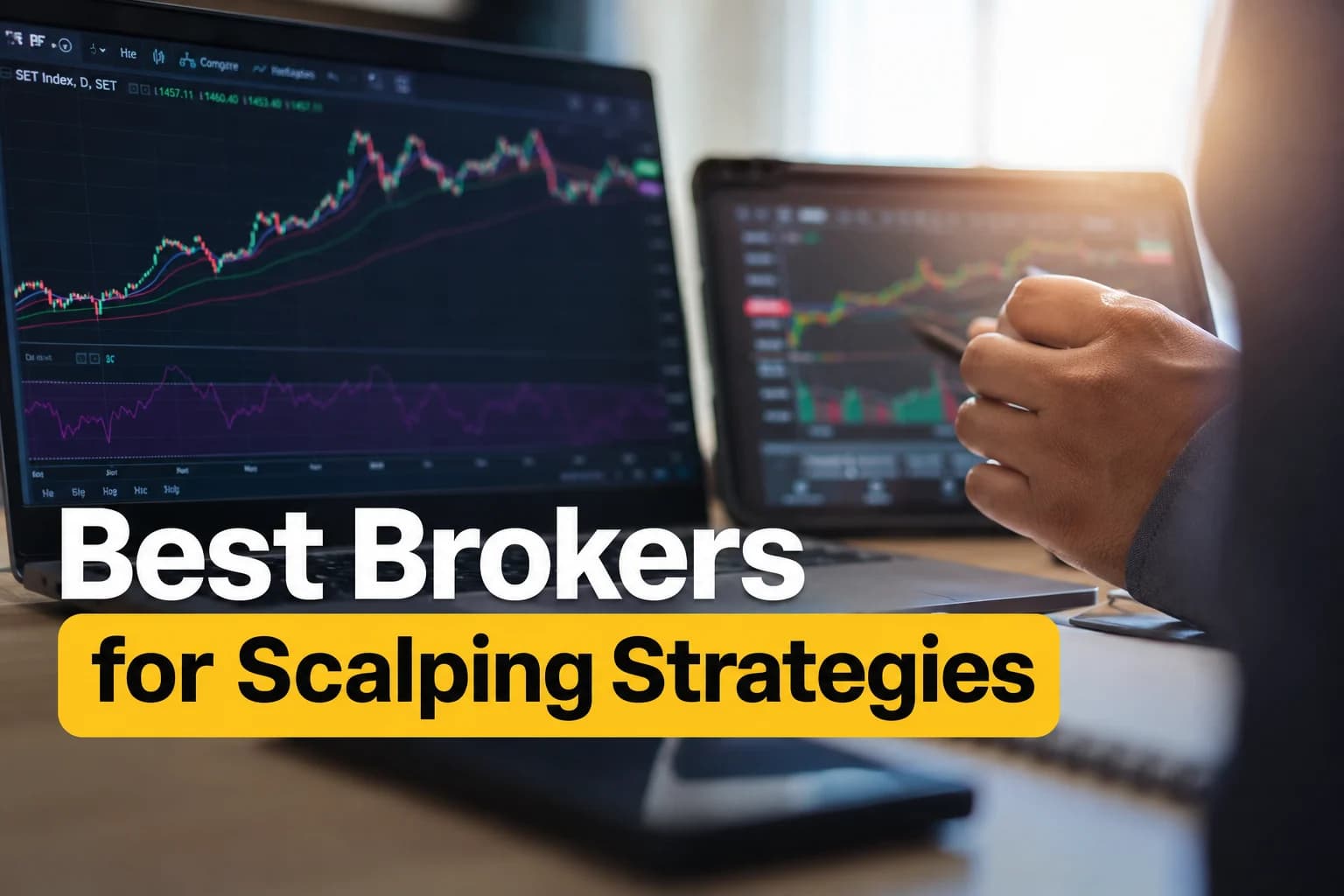
Scalping is a type of trading in financial markets characterized by fast, high-intensity trading. Traders who use this method generally do not hold their trades for hours or days like traditional traders would; instead, they aim to capture small price moves in just a few seconds or minutes. While small gains may not seem like much individually, if they are made continuously, they will produce large profits over time.
Although speed and technical analysis play an important part in scalping, the broker that you use has a large impact on whether you can successfully use this strategy. A scalping style will not work regardless of how good the trading strategy is if your broker has slow execution times, wide spreads, or does not allow short-term trades.
To a scalper, every pip counts. Even a few milliseconds of additional time or a slightly larger spread can make a difference in the outcome of a trade. For this reason, scalpers will carefully research and choose a broker that provides fast order execution, tight spreads, an excellent trading platform, and transparent pricing.
This guide will provide an overview of the Best Brokers for Scalping Strategies, describe what scalpers should look for in a broker, and list several brokers that offer trading environments conducive to high-frequency trading.
Related Articles: Daily Drawdown vs Maximum Drawdown Explained
What Is Scalping in Trading?
Before diving into broker selection, it's important to clearly define what scalping is in the context of trading.
Scalping is a very short-term trading strategy that focuses on capturing very small price movements. Scalpers usually enter and exit trades within seconds to minutes, rather than waiting for a larger move in the market trend.
A trader using the scalping approach may aim to take just a few pips per trade. A scalper typically takes many small trades and relies on the number of successful trades to accumulate increasing profits.
The scalping method of trading is widely used in highly liquid markets, such as Forex and major stock market indexes. Super-fast price movements and very tight spreads are two characteristics of high-liquidity markets that scalpers exploit.
The scalping trading style relies on technical analysis, order flow, and intraday price chart patterns to inform scalpers' trading decisions, rather than traditional fundamentals.
Why Broker Choice Is Critical for Scalpers
Scalpers depend on the speed of their trades and the accuracy with which they fill their orders. Swing and long-term traders can handle slower fill times when markets are moving quickly, as they can handle wider spreads, but scalpers cannot.
Scalpers need fast fills because, if they fill their orders slowly in a fast market, they may not get them at the price they expect.
Another factor to consider is the difference between spreads; since a scalper enters and exits frequently, the price impact can cause significant losses, which is why many traders compare Spread vs Commission: Which Costs Less?
Many brokers have their own scalping or high-frequency trading policies that may require minimum trade time, restrictions on specific strategies, or other requirements. Scalpers will want to find brokers with deeper liquidity, ECN-style execution, and transparent pricing, which is why many traders look for the Best ECN Forex Brokers in 2026.
Key Features to Look for in a Scalping-Friendly Broker
If you’re going to scalp the market, you will need to find a broker that has the following characteristics:
1. Low Spreads:
Because the entire premise of scalping is to enter and exit rapidly on small price fluctuations, scalpers are looking for brokers that can offer raw spreads as close to 0 pips as possible.
2. Rapid Execution & Low Latency:
Scalpers need their orders executed rapidly, and they should use brokers with sophisticated trading infrastructure (hardware) and strong liquidity connections to meet execution times in the millisecond range.
3. Scalping Policy:
Some brokers grant express permission to scalp, whilst others discourage scalping through high-frequency trading policies. A trader should confirm that their chosen broker allows scalping before opening an account.
4. Reliable Trading Platform:
Scalpers need to use professional-grade trading platforms with robust charting capabilities, such as MetaTrader 4, MetaTrader 5, and cTrader.
5. Good Liquidity:
A broker with deep liquidity can quickly fill customer orders at competitive prices during periods of high market volatility.
Popular Brokers for Scalping Strategies
Many brokers offer environments suitable for scalping. The table below lists some popular brokers for scalpers.
Broker | Platforms | Execution Type | Key Features |
IC Markets | MT4, MT5, cTrader | ECN | Raw spreads and ultra-fast execution |
Pepperstone | MT4, MT5, cTrader | ECN | Low latency and institutional liquidity |
Tickmill | MT4, MT5 | STP/ECN | Tight spreads designed for active traders |
FP Markets | MT4, MT5, cTrader | ECN | Deep liquidity and competitive commissions |
Fusion Markets | MT4, MT5 | ECN | Extremely low trading costs |
These brokers are often chosen by traders who rely on short-term strategies due to their competitive pricing and efficient execution infrastructure.
The Importance of Execution Speed
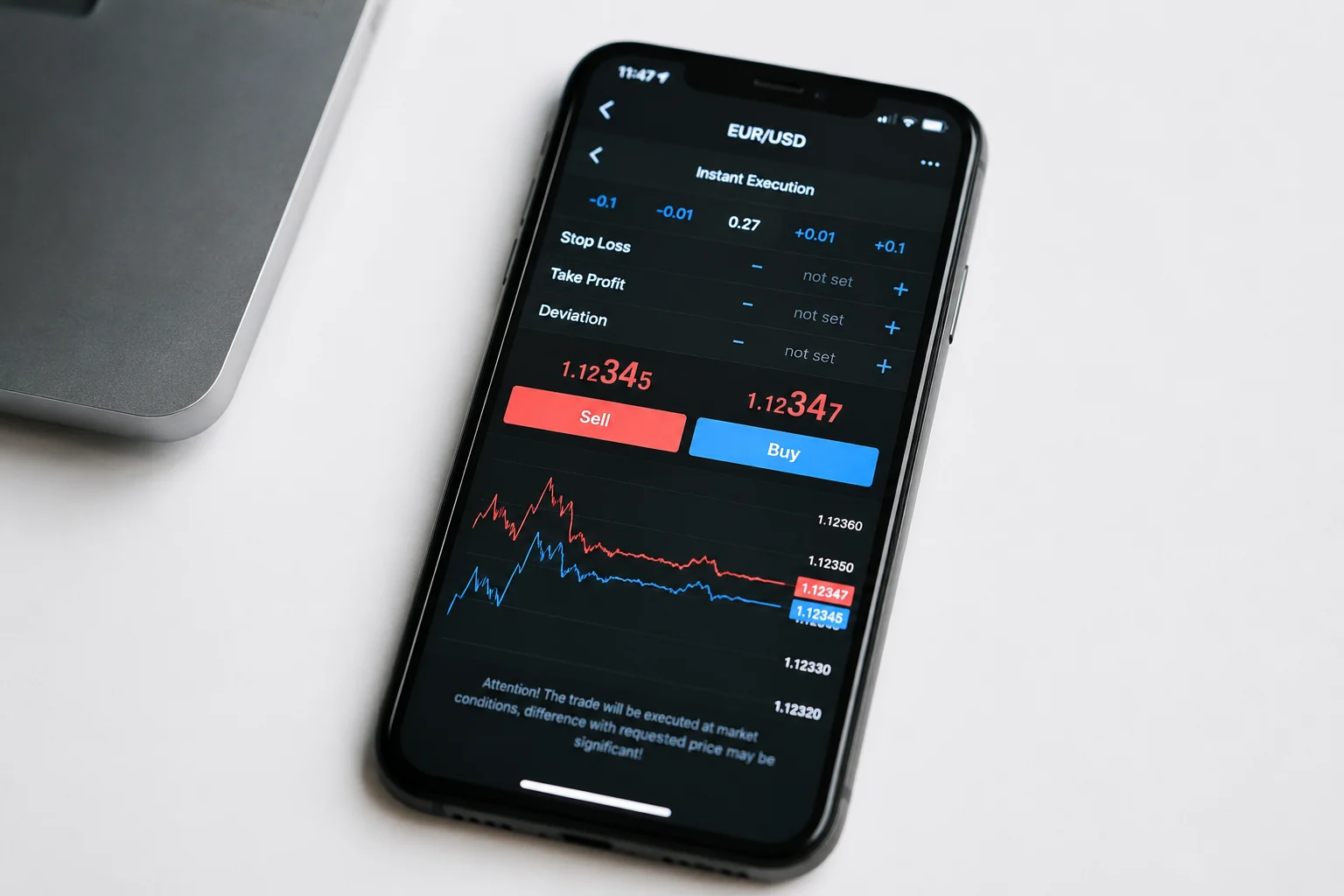
As a day trader, timing is everything. The volatility and speed of financial markets are significantly affected by major economic news events that occur on any given trading day. If you're trading with a broker whose execution times are slow, you may not receive the price you anticipated receiving when placing your order, as well as when actually executing the trade, resulting in slippage between your anticipated execution price and the executed price of your trade.
Slippage is inevitable in fast-moving markets and is generally less of an issue with brokers that have established a superior infrastructure.
Generally, professional scalpers choose brokers whose data centres are geographically close to the large financial exchanges where the majority of trading activity takes place, to ensure latency and execution timing are optimized.
Related Articles: How to Compare Forex Brokers: Full Checklist
The Profitability of Scalping with Respect to Transaction Costs
A significant portion of a trader’s scalping profitability comes from transaction costs. Since most day traders make many transactions daily, a trader with a fixed transaction fee for each trade could pay a sizeable amount in fees.
For example, if a trader completes 30 trades daily and pays 3 pips per trade (1 pip equals 1/100th of 1%), they would pay 12,600 pips in transaction costs over a year.
Many day traders would therefore prefer to trade with brokers who offer raw spreads and low commission rates, enabling transparent pricing and minimizing their total trading costs by avoiding per-trade transaction costs.
To maximise their chances of success and implement a scalping strategy, day traders must fully understand their broker's pricing structure, including spreads, commission rates, and other fees, so they can calculate their total transaction costs over time.
Managing Risk for Scalping Traders
For scalping, there should be an established, clearly defined risk management plan to help the trader manage their capital and protect their profits.
Many successful scalpers follow a rule that limits their risk to a certain percentage of their total trading account per trade, helping keep their capital in check during periods of poor market performance. Utilizing stop-loss orders is also very important to a scalper, especially when traders understand What Is Margin Call in Forex?
Because their profit targets are small, a single uncontrolled loss can quickly wipe out the profits from several winning trades.
Technology and Automated Scalping
Technology greatly shapes how traders use scalping strategies. Today, many scalpers use automated trading systems (also referred to as trading algorithms, expert advisors, etc.) to analyze market data and execute trades much faster than they could without technology.
In addition, automated scalping systems are particularly advantageous because they enable traders to respond to market prices in real time.
While automated trading can be effective for many traders, these systems must be connected to an online brokerage firm with robust trading technology (e.g., reliable servers, minimal downtime).
As the use of trading technology continues to grow and evolve, the combination of an automated trading system and an efficient online broker's infrastructure is becoming increasingly important for scalping traders.
Conclusion
When selecting a broker for scalping strategies, traders must evaluate several factors. These include the quality of spreads, execution speed, platform reliability, and overall trading costs, which is why many traders turn to Wikilix Broker Analysis for deeper insights.
When choosing a broker for scalping, traders should understand that it is a very demanding trading style that relies on a specific process to execute efficient, precise trades.
As a result, even a small difference in trading conditions can significantly impact a trader's overall results.
Brokers that offer raw spreads, quick execution, ample liquidity, and transparent prices are typically best suited for scalping traders.
While finding a broker is important, it is also important to note that long-term success with scalping will require the trader to exhibit consistent discipline, effective risk management, and a well-developed trading plan.
By selecting an appropriate broker and consistently applying their trading principles, scalpers can capitalize on numerous opportunities in today's financial markets.