
Exchange-Traded Funds (ETFs) have rapidly become the primary form of investment for today's investors and traders over the last ten years. ETFs provide market participants with access to whole sectors, indices, commodities, or strategies in a single trade, providing the diversification of mutual funds and the flexibility of stocks. The worldwide demand for ETFs has exploded and will likely continue to grow rapidly through 2026 as investors seek to create diversified investment portfolios efficiently and cost-effectively.
The broker that you select to trade ETFs can greatly affect your trading performance. Factors that affect your overall ETF trading experience include the types of fees charged, available markets, the quality of the broker platform, and the number of research tools and regulatory protections provided. Some brokers focus on low-cost ETF investing, while others offer a high-quality platform conducive to trading.
Throughout the rest of this guide, we will look at the Best ETF Trading Brokers for 2026 and explain what characteristics make ETF brokers suitable for ETFs, and what features ETF traders should be aware of when choosing an ETF trading platform.
Related Articles: What Is a Pip in Forex?
Unique Attributes of ETF Trading
Exchange-Traded Funds are investment funds that trade like individual company stock on regulated exchanges; therefore, instead of owning one company's stock, you can invest in a portfolio of different types of assets by investing in ETFs (which may include stocks, bonds, commodities, or cryptocurrencies). This open-market exchange option to trade ETFs has fueled the rapid rise in popularity and growth of ETFs worldwide.
Some of the reasons ETFs have grown so quickly and worldwide are:
1) Diversification of Investments: Investing in a single ETF gives the ability to gain exposure to many different assets, reducing the risk associated with any individual stocks and creating symmetric or balanced portfolios
2) Low Management Fees: ETF management fees are generally lower than those associated with traditional mutual funds because most ETFs are index-based and not actively managed, allowing for economies of scale in terms of operational costs.
3) High Liquidity: You can buy and sell ETFs on an exchange (as you can with stocks), allowing you to purchase and sell ETFs at prevailing market prices, just like other stocks.
4) Flexibility of Use: Depending on the needs of the trader, you can use an ETF for long-term investment, or short-term trading; for example, you can use an ETF to invest using a buy-and-hold strategy for hedging, through sector rotation, or for short-term speculation.
Key Factors When Choosing an ETF Trading Broker
Training across various brokers has revealed differences in overall ETF trading experiences; therefore, investors should not only consider multiple factors before selecting their broker/platform but also how these factors affect their trading experiences over time.
Commission Structure
ETF investors need to evaluate brokers to understand their commission structures: some offer commission-free ETF trading (a huge benefit), while others charge per-trade commissions (which can impact total returns/holdings over the course of their ETF trading with that broker). The longer an investor trades ETFs with per-trade commissions through a broker who charges them, the more it potentially adversely affects the investor's return (via cost caps).
Types of Available Markets/Exchanges
When selecting a broker/platform, investors should consider how many ETFs are available across larger exchanges (i.e, NYSE, NASDAQ, EEX, etc.). The more available to investors, the greater their potential to diversify their portfolios across all major world markets.
Advanced Trading Tools/Platforms
Pro/advanced traders regularly use advanced charting tools, market scanners & analysis dashboards to execute trades. Having access to the advanced tools described above will improve the ETF investor's overall trading experience.
Related Articles: What Is Margin Call in Forex?
Investor Protection/Regulatory Compliance
The efficiency of practicing due diligence (research) on any given broker/platform by checking for regulatory compliance prior to executing a trade with said broker/platform is one of the most important factors in selecting a broker; especially if you want a higher level of investor protection regarding your cash/assets and for greater transparency in that broker's operations (i.e. the better off an investor feels with the level of protection received will provide them comfort when executing trades).
Availability of Educational /Analytical Resources
Most good brokers will provide ETF screening tools, research reports, market analysis, and portfolio analysis tools for investors to use as sources of information when making informed investment decisions.
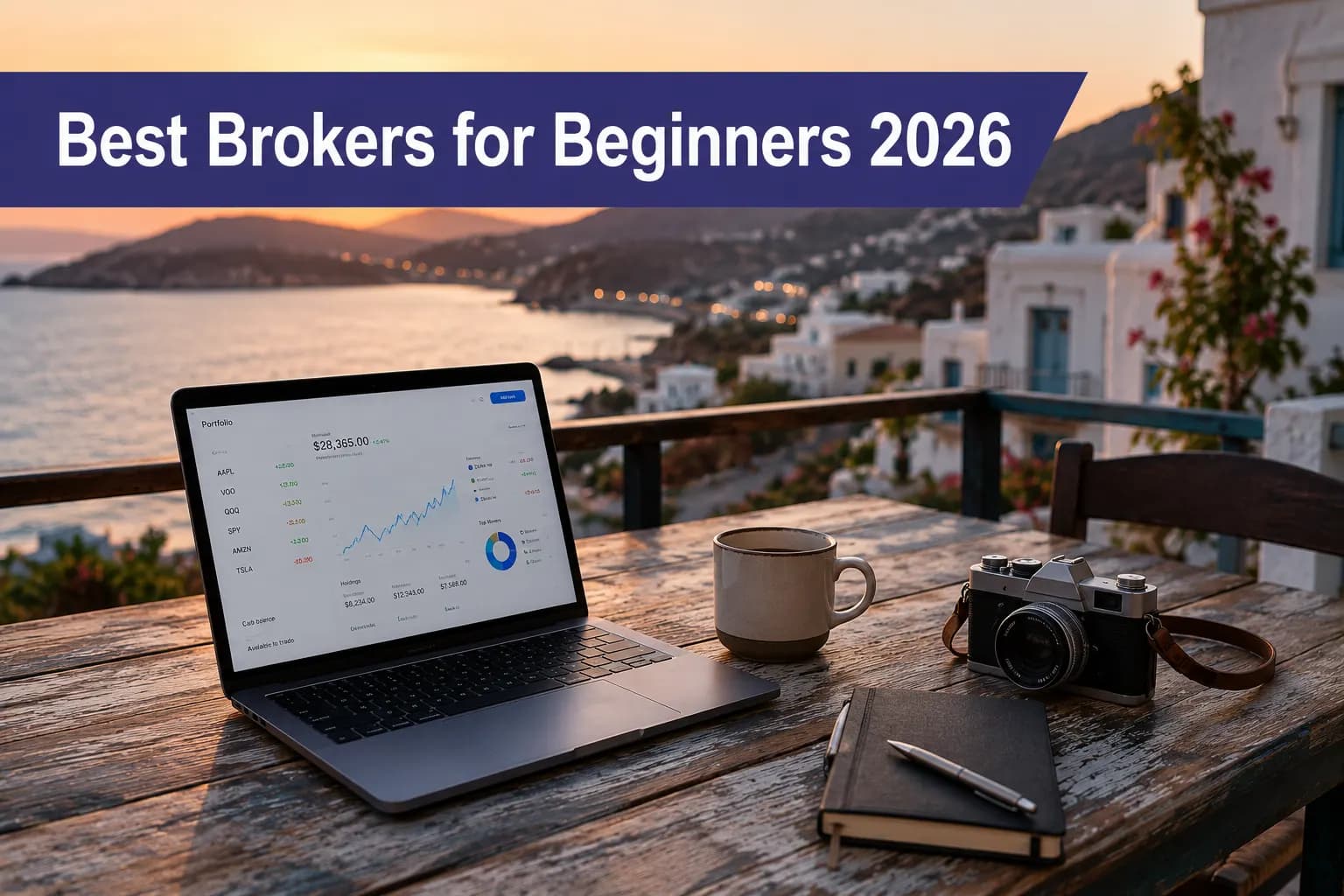
Best Brokers for ETF Trading in 2026
Training across various brokers has revealed differences in overall ETF trading experiences; therefore, investors should not only consider multiple factors before selecting their broker/platform but also how these factors affect their trading experiences over time.
Commission Structure
ETF investors need to evaluate brokers to understand their commission structures: some offer commission-free ETF trading (a huge benefit), while others charge per-trade commissions (which can impact total returns/holdings over the course of their ETF trading with that broker). The longer an investor trades ETFs with per-trade commissions through a broker who charges them, the more it potentially adversely affects the investor's return (via cost caps).
Types of Available Markets/Exchanges
When selecting a broker/platform, investors should consider how many ETFs are available across larger exchanges (i.e, NYSE, NASDAQ, EEX, etc.). The more available to investors, the greater their potential to diversify their portfolios across all major world markets.
Advanced Trading Tools/Platforms
Pro/advanced traders regularly use advanced charting tools, market scanners & analysis dashboards to execute trades. Having access to the advanced tools described above will improve the ETF investor's overall trading experience.
Investor Protection/Regulatory Compliance
The efficiency of practicing due diligence (research) on any given broker/platform by checking for regulatory compliance prior to executing a trade with said broker/platform is one of the most important factors in selecting a broker; especially if you want a higher level of investor protection regarding your cash/assets and for greater transparency in that broker's operations (i.e. the better off an investor feels with the level of protection received will provide them comfort when executing trades).
Availability of Educational /Analytical Resources
Most good brokers will provide ETF screening tools, research reports, market analysis, and portfolio analysis tools for investors to use as sources of information when making informed investment decisions.
Comparison Table of Top ETF Brokers (2026)
Broker | Commission Structure | ETF Selection | Platform Quality | Best For |
Interactive Brokers | Low commissions | Very large global selection | Advanced professional tools | Active and professional traders |
Charles Schwab | Commission-free ETFs | Large US ETF selection | Strong research tools | Long-term investors |
Fidelity | Commission-free ETFs | Extensive ETF library | User-friendly platform | Beginner to intermediate investors |
eToro | Commission-free ETF trading | Moderate selection | Simple social platform | Social trading investors |
TD Ameritrade | Commission-free ETFs | Very wide selection | Professional thinkorswim platform | Active ETF traders |
ETF Trading Strategies Investors Use
Exchange-traded funds (ETFs) can offer a wide array of investment opportunities tailored to individual investment goals and risk tolerance.
A passive investment strategy is a commonly adopted technique for trading ETFs. In this case, an investor purchases one or more ETFs that follow an index (such as the S&P 500) to create a diversified portfolio for the future.
Another technique used by ETF traders is sector rotation. As the economy goes through cycles of booms and busts, ETF traders can rotate through different sectors over time by allocating all their capital to a single sector (by purchasing ETFs linked to that sector).
Investors often use a momentum strategy for short-term ETF investments, similar to techniques explained in How to Read Forex Charts for Beginners. For example, technical analysts often identify ETFs that are trending up (or down) using market information and charts (such as trendlines and chart patterns), then execute trades based on those indicators.
When markets are volatile, some investors may look to hedge their exposure by purchasing inverse ETFs (to protect against downside risk) or volatility-based ETFs (to protect against overall market movements). Other related securities may also be purchased for similar reasons.
Benefits of Trading ETFs with a Good Broker
Using a reputable broker can improve an investor's overall experience when trading ETFs.
Another factor affecting your trading experience is that commissions will be lower with a broker that charges lower commissions. Over time, differences in commission fees can add up to a significant increase in profits for traders.
In addition to lower transaction fees, another advantage of using a technology-focused broker is that they will have analytical tools available to you. These analytical tools will help you identify trading opportunities faster and manage risk.
Regulatory supervision and oversight offered by a good broker will also help reduce an investor’s worries about the safety of his or her funds, similar to protections discussed in Negative Balance Protection Explained. This will also provide additional assurance that all activities conducted by the broker are carried out transparently.
Access to research tools and information is another added benefit of trading with a good broker. The more high-quality research and educational resources an investor has access to, the better equipped he/she will be in developing long-term trading strategies.
Risks and Considerations of Trading ETFs
While ETF products provide a relatively efficient way for an investor to invest their money, they do carry a degree of risk.
ETF market prices can be affected by the inherent volatility of the overall financial markets. Therefore, if financial markets suddenly become unstable, investors may also see their ETF prices fluctuate rapidly. In particular, leveraged ETFs can greatly (and sometimes exponentially) increase or amplify the volatility of equity markets.
Another consideration when trading ETFs is liquidity. Generally, larger ETFs have higher liquidity and trading volume than smaller ETFs, so their trading volume may appear lower than it really is.
Trackability risk is another factor investors must consider when trading ETFs. Tracking error is the difference between an ETF's market price and the Index-Based market price; therefore, investors can expect greater return volatility due to tracking error.
When investors better understand how ETFs and their associated risk factors can affect ETF performance, they can more effectively manage ETF investments.
Related Articles: Best Prop Firms for Beginners
Final Thoughts
Exchange-traded funds are a relatively simple, low-cost, and flexible way for all types of investors to gain access to global financial markets. ETF traders can select from a variety of ETFs with different strategies to build long-term diversified portfolios or pursue short-term trading strategies.
Choosing a broker will be one of the most significant factors in determining your experience as an ETF trader, a process often simplified by using The Broker Reference. Before choosing a broker, an investor should complete their due diligence by evaluating the following factors:
Commission Costs,
The Available ETF Markets,
The Brokerage’s Trading Platform,
Regulatory Protection,
Research Tools and Research Provided by the Brokerage.
As of 2026, some of the top brokers being used by ETF traders are Interactive Brokers, Charles Schwab, Fidelity, eToro, and TD Ameritrade. Each of those brokers offers unique advantages to traders depending on their level of experience and investing style.