

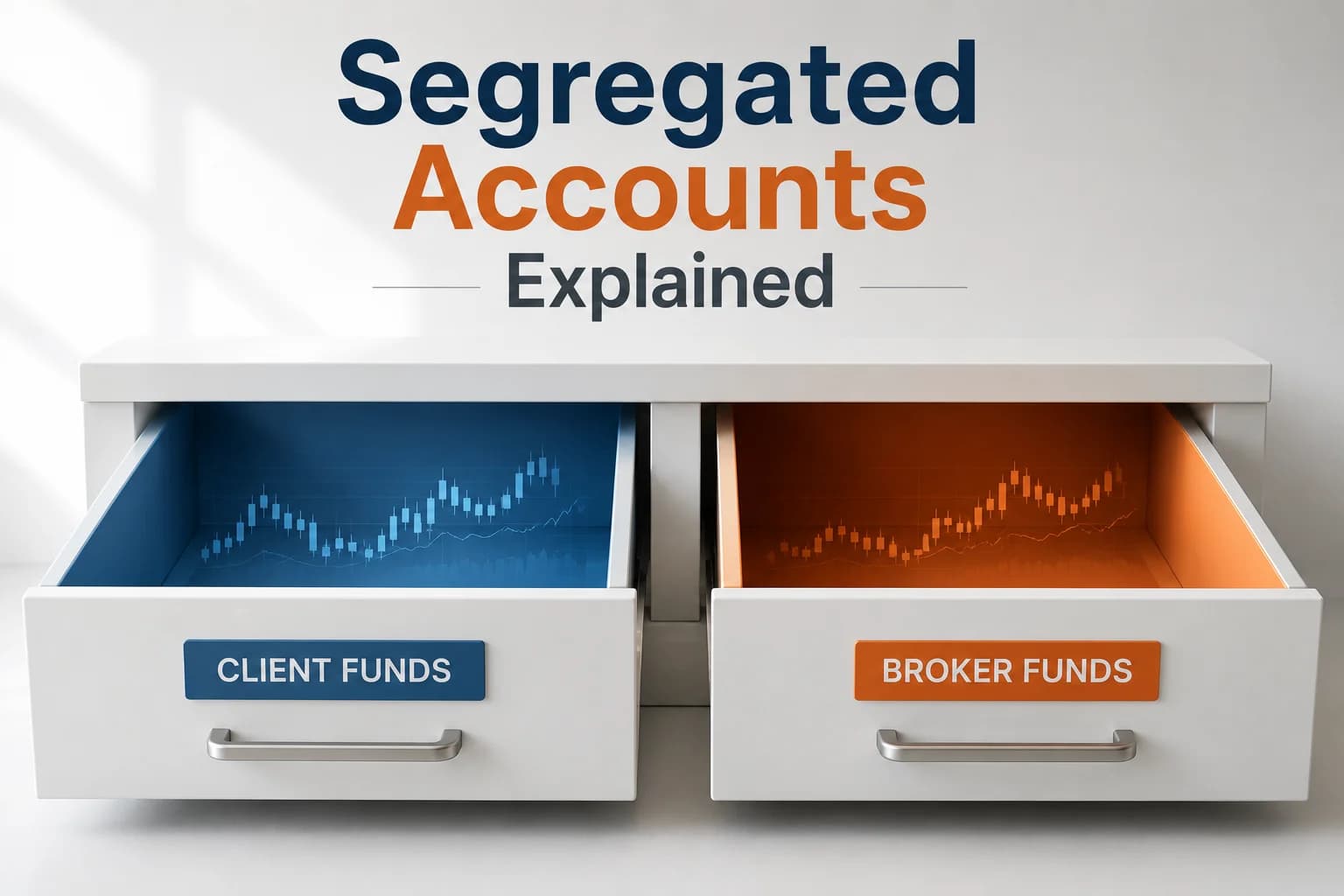
The first thing traders should know when they put cash into an online broker is: "How and where does my money actually reside?" Although many traders seem focused only on spreads, leverage, and trading platforms, the safety of clients' funds is just as important as trading conditions. This is why segregated accounts play a significant role in protecting traders’ deposits.
Segregated accounts are an integral part of current regulations governing financial institutions and are intended to protect clients from losing their deposits. In simple terms, under the relevant regulations, brokers must keep client funds separate from their own operating funds. Therefore, any claim that goes against a broker's operational finances is not a claim against client deposits.
For traders, this additional layer of protection and transparency provided by segregation ensures clients' deposits are fully protected in the event the broker is unable to fulfil its regulatory obligations.
In this guide, we will provide a comprehensive overview of segregated accounts: what they are, how they operate, why financial regulators require them, and how clients can verify whether a broker has properly segregated client deposits.
Related Articles: How to Verify a Broker's License
What is a Segregated Account?
A segregated account is a separate bank account maintained by a financial institution to keep the client's funds completely separate from the institution's operating capital.
When a trader deposits cash with a broker, the funds are placed in accounts created and designated solely for client funds. Therefore, the broker is not allowed to co-mingle the client's deposit with its own operational or business accounts.
In summary, the broker cannot use client deposits for any purpose other than covering clients' trading debts (except as required by law).
The ultimate purpose of a segregated account is to ensure that the client's deposit is always visible and protected within a dedicated account.
Why Segregation of Funds Is Important
Segregation is an important element of trust between the trader and the financial institution.
Brokers can use client deposits as working capital without segregation requirements, putting traders at unnecessary financial risk if the company has financial problems.
Using segregated accounts reduces traders' risk by separating the company's funds from their own.
In many countries, regulators require brokers to store client funds with a reputable bank and to maintain strict accounting policies to ensure transparency.
For traders, this protection is one of the most critical factors in assessing a broker's credibility.
How Segregated Accounts Function
Traders will transfer their money into the trading account; then the broker transfers it to a separate, designated client trust account (CTA) held by a regulated financial institution, which is classified as a trust account. The custodian of the trust accounts will usually be a major bank and will hold client funds exclusively.
The broker will have internal accounting systems to maintain accounts for each client. The total amount of client funds, however, will remain in the segregated bank account. In the event the broker requires working capital, it must use corporate funds and cannot create a creditor note against client funds to which it would otherwise be required to repay. This system keeps client funds separate from the broker's funds and safeguards them.
Segregated vs Non-Segregated Accounts
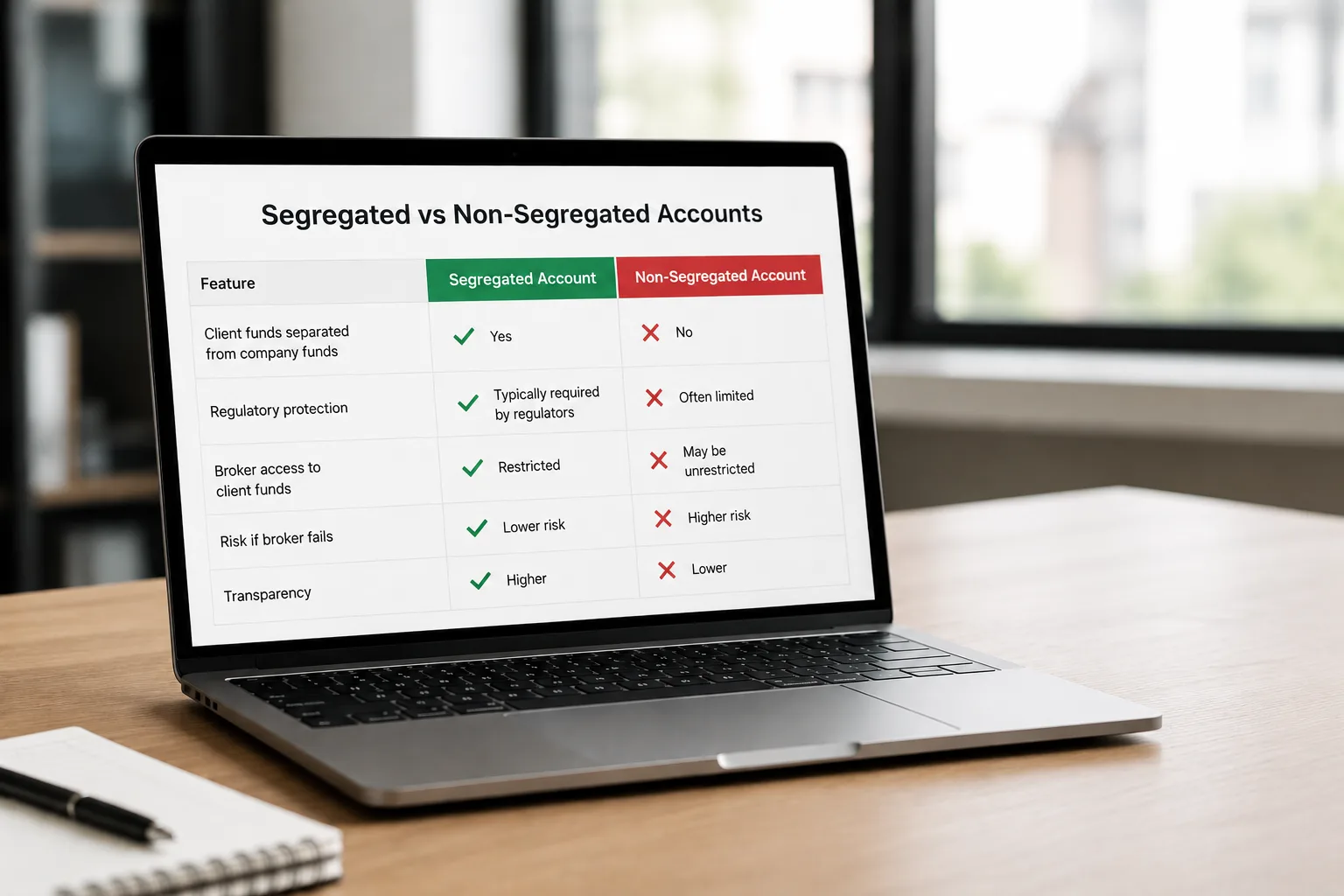
The difference between segregated and non-segregated accounts is significant. The following table highlights the key distinctions.
Feature | Segregated Account | Non-Segregated Account |
Client funds separated from company funds | Yes | No |
Regulatory protection | Typically required by regulators | Often limited |
Broker access to client funds | Restricted | May be unrestricted |
Risk if broker fails | Lower risk | Higher risk |
Transparency | Higher | Lower |
This comparison illustrates why segregated accounts are considered a key indicator of broker reliability.
Related Articles: How Offshore Broker Regulation Works
Regulatory Requirements for Segregated Accounts
Around the globe, numerous financial regulators aim to ensure that, where brokers are concerned, "segregated accounts "are maintained in order to protect the investor as well as to keep the market transparent.
Regulatory authorities have issued many rules governing how a fiduciary maintaining segregated accounts should operate to protect clients and foster confidence in the financial system.
Aspects of regulatory authorities may require brokers to:
- Keep client funds in separate trust accounts.
- Ensure that they keep accurate records of all client assets (balances).
- Conduct regular reconciliation of their own and the client's accounts.
- Utilise reputable banking institutions for the retention of client funds.
Thus, if a broker misappropriates/uses client funds for his own purposes, segregation of client funds protects clients from loss and ensures their confidence in the financial system.
What Are the Implications of a Broker's Insolvency?
One reason regulations require brokers to maintain segregated accounts is to protect investors and their accounts if the broker becomes insolvent, as discussed in What Happens If a Broker Goes Bankrupt.
If a broker is financially unable to pay its debts or is liquidated through the court system, client funds maintained in "segregated" accounts by that broker may be treated differently. "Because" client funds are held in "segregated" accounts, the assets are completely outside the company's assets.
Therefore, creditors of the broker normally cannot access assets held in "segregated" accounts, as those assets belong to the investor, not the broker.
In a regulated jurisdiction, if a broker goes out of business and follows all the requirements for "segregated "accounts, then the clients can be located more easily, and the associated assets will be returned.
Although segregation may not provide total protection against all investment problems, it is a mechanism that considerably increases the investor's opportunity to recover their assets.
Provide Layers of Protection For Investors
Segregated accounts are frequently used alongside various other investor protection mechanisms.
Most jurisdictions have programs that provide compensation to investors if a broker becomes insolvent and that permit investors to recover some (or all) of the assets held in the broker's books.
Segregated accounts and compensation programs provide additional levels of protection to investors.
Related Articles: Negative Balance Protection Explained
How Traders Can Verify Segregated Accounts
Traders should check if brokers have separate accounts for their customers before signing up to trade. Regulated brokers typically include this information on their websites and in legal documents, so a trader can confirm a broker's regulatory license & the requirements imposed by the financial authority where the broker is located.
In addition, brokers usually disclose the banks where they hold their customers’ funds, thereby enhancing transparency.
Traders need to take the time to verify this information so they do not end up working with an unregulated or untrustworthy broker, and to recognize Warning Signs of Fake Brokers.
Withdrawal Limits on Segregated Accounts
While segregated accounts give traders a layer of protection, they do not eliminate their trading risks. For example, if the broker fails to keep adequate records, the broker may not be able to properly account for the client’s funds.
Also, a trader cannot prevent their market losses by trading through a segregated account.
Brokerage regulation will vary significantly across regions; therefore, the protection a trader receives from a broker’s compliance and regulatory environment will also vary. Consequently, there are multiple factors for traders to consider when evaluating brokers, including broker reputation, regulatory environment, and operational transparency.
The Role Regulation Plays in Protecting Client Funds?
Regulatory authorities require brokers to segregate client funds from their own funds. Regulatory authorities conduct audits and review financial statements to ensure that brokers comply with established requirements for protecting client funds. Regulatory authorities ensure that brokers maintain accurate accounting records for all client financial transactions and adhere to established operating procedures. In fully regulated equity markets, brokers must report on the status of their clients’ funds on a periodic basis. Trust in the trading environment has decreased due to regulatory oversight.
Conclusion
For traders who want to protect their funds when trading with an online broker, understanding what segregated accounts are is a critical part of that process.
Brokers must maintain a separate account for client deposits or funds from the broker's operating account (in a segregated fashion). This provides two benefits: it limits the potential for misuse of deposits and, if the broker goes bankrupt, allows the trader to recover their deposit.
Segregation is not a complete elimination of risk, but it is an important layer of protection and transparency in financial markets.
Segregated accounts are a necessary element of a safer trading environment when they are combined with regulatory oversight and investor compensation programs, as emphasized by The Broker Authority.
As a trader evaluates potential brokers, verifying that client funds are held in a segregated account should be one of the first steps before opening a trading account.