
While numerous traders place a lot of focus on where they will enter a trade, the chart patterns, and technical indicators to determine those points, it appears that fewer focus on the costs associated with holding a position overnight. One of these costs is the swap rate (also referred to as overnight financing of a position or rollover) and can significantly influence a trader’s overall profit or loss on a trade, depending on the trader's position and the currencies being traded.
Swap rates can increase or decrease a trade's profitability, depending on the direction of the position and the two currencies being traded. Consequently, when a trader holds a position for just a few days or even a couple of weeks, these costs can have a major impact on the trader's overall performance.
A short-term trader may not even realize that swap rates are charged for holding a position overnight, but for long-term and swing traders, it is critical to understand how they are calculated, how brokers apply them, and ultimately how they will impact each trader's long-term trading strategy.
What Are Swap Rates in Trading?
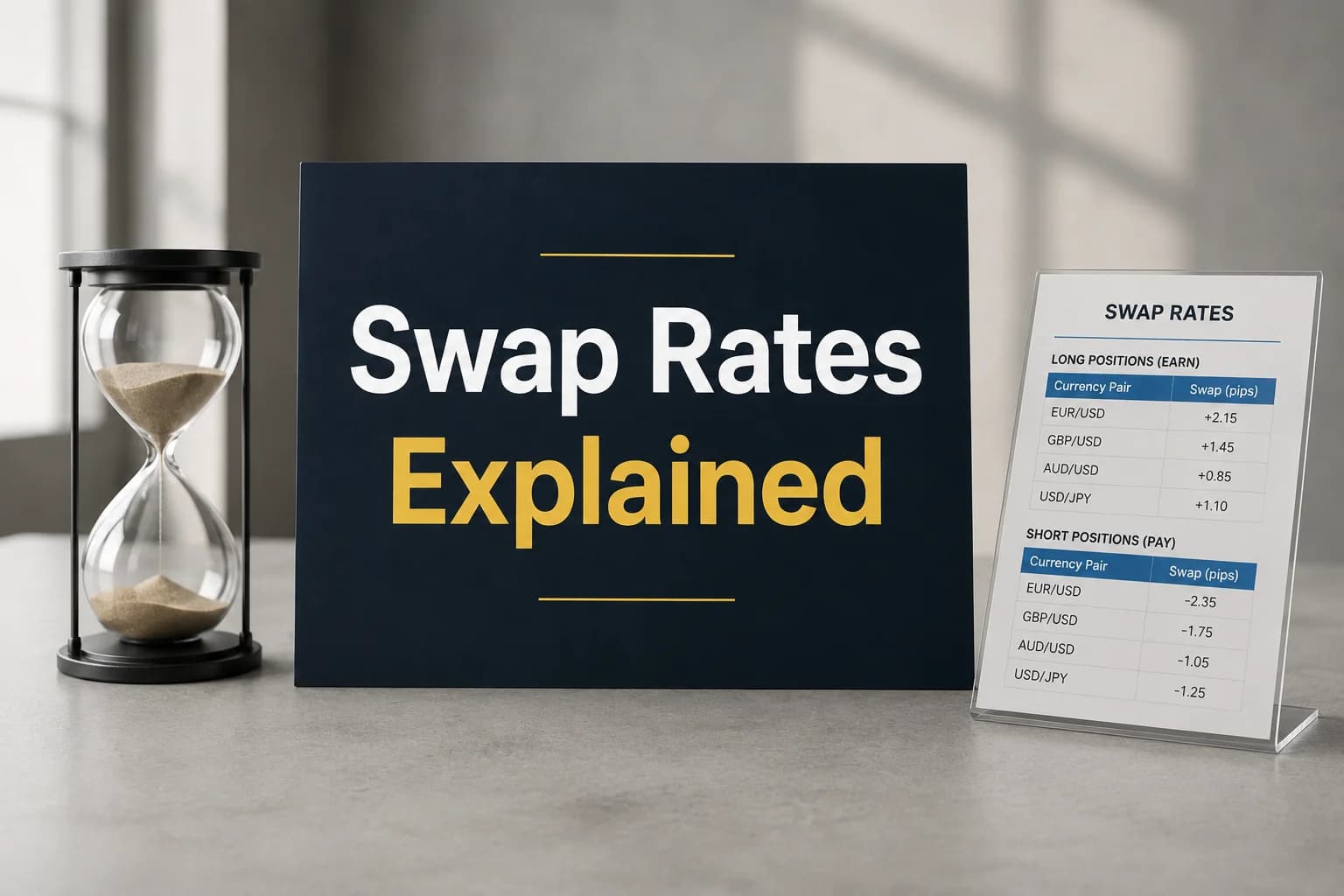
The swap rate in forex refers to the fee or payment charged to the trader when a trading position is held open after the trading day closes. The swap rate (usually expressed as a percentage) reflects the difference between the two interest rates for the currencies being traded.
In the forex market, each currency has an associated interest rate set by its central bank. By opening a currency pair trade, a trader is essentially borrowing one currency and buying another. Because of this borrowing relationship, the trader may or may not pay an interest rate based on the difference between the two currencies' interest rates.
If you buy a currency with a higher rate, you get a positive swap rate. If you buy one with a lower rate, you pay a swap rate.
Related Articles: Best ECN Forex Brokers in 2026
Why Do Swap Rates Exist?
Swap rates exist because currency trading in forex is highly leveraged, meaning a trader needs financing to keep their positions open after the end of the trading day.
When a trader holds a position after the close of trading, the broker rolls it forward to the next trading day, which is called a rollover. When brokers roll positions forward, an interest adjustment must be made to the trader based on the interest rate on the currencies involved in those transactions. Swap rates represent the broker's cost of rolling over a position and then charging the trader interest on the financing.
While swap rates are most commonly associated with forex, they may also be charged on a financing basis for CFD trading of indices, commodities, and even cryptocurrencies.
How Swap Rates Are Calculated
Swap rates change based on the spread between the two currencies in a pair. The spread relates to eligible item rates and interest, even though both currencies are quoted at the same rate.
An example: when a trader buys a Currency with a higher interest rate and sells a Currency with a lower interest rate, the differential will yield positive swaps.
Brokers factor in other considerations, such as liquidity providers and internal financing costs, when determining the swap outcome.
Below is a simple example illustrating how a swap outcome may occur in the market.
Trade Direction | Interest Rate Difference | Swap Result |
Buy higher-rate currency | Positive interest difference | Trader receives swap |
Sell higher-rate currency | Negative interest difference | Trader pays swap |
Similar interest rates | Small difference | Minimal swap charge |
In practice, brokers publish swap rates directly on their trading platforms, allowing traders to see the expected overnight cost.
Related Articles: Forex Broker Comparison Hub – 2026 Edition
The Role of Central Bank Interest Rates
Central banks play an important role in shaping the swap market. There are two interest rates associated with each currency from two separate countries: the official central bank's reference rate and the rate at which the currency is traded. Both impact how much a person will pay or be compensated when they borrow or lend that currency.
When central banks raise or lower interest rates, the difference between the two currencies' interest rates changes. Thus, changing the value of the swap between those currencies when trading in the foreign exchange market.
If Country A raises interest rates and Country B keeps lower rates, holding Country A's currency is likely more favorable in a swap.
Because central banks set interest rates, the value of swaps can be positively or negatively affected by macroeconomic events and policy decisions outside the trading industry.
In Currency Swaps on Wednesdays
The forex market operates 5 days per week, but in addition to calculating swaps for open positions during the weekdays, brokers must also account for weekend financing.
To account for weekend financing, brokers will charge a triple swap fee on Wednesdays only. The triple swap covers Thursday (the day after the Wednesday on which the swap calculation is applied), Saturday, and Sunday.
When the forex market closes (trading stops) for the weekend, a trader's interest remains unchanged. Therefore, by using a triple swap calculation on Wednesday, the broker will accurately compensate the trader for interest earned or paid on positions held overnight.
Swap-Free Trading Accounts
Some brokers offer swap-free accounts (also known as Islamic trading accounts) for traders who are unable to participate in interest-related financial transactions due to religious beliefs.
When using a swap-free account, brokers may charge an administrative or fixed overnight fee; they will not charge a traditional swap. It is important for an individual to review the broker’s policy to ascertain what, if any, alternative costs are associated with these accounts, as outlined in How to Compare Forex Brokers: Full Checklist.
Influence of Swap Rates on Trading Strategies
In certain trading strategies, swap rates can have a significant impact. For example, carry trades are trades in which traders aim to profit from positive interest rate differentials by going long or short. Carry trades are made when a trader adds or removes a position to capture a higher rate of return over time. At this point, traders will typically close their position by offsetting their long position with a separate short position.
When traders make carry trades, they incur only costs associated with opening and closing their positions, not financing costs when they keep their positions open overnight.
When selecting trade duration and currency pairs, backward-framing traders and long-term traders should consider swap rates.
When traders are aware of their swap expenses, they can optimize their overall trading strategy and avoid unexpected fees, as discussed in Spread vs Commission: Which Costs Less.
What can Impact Swap Rates?
Swap rates are variable in nature and can change from period to period.
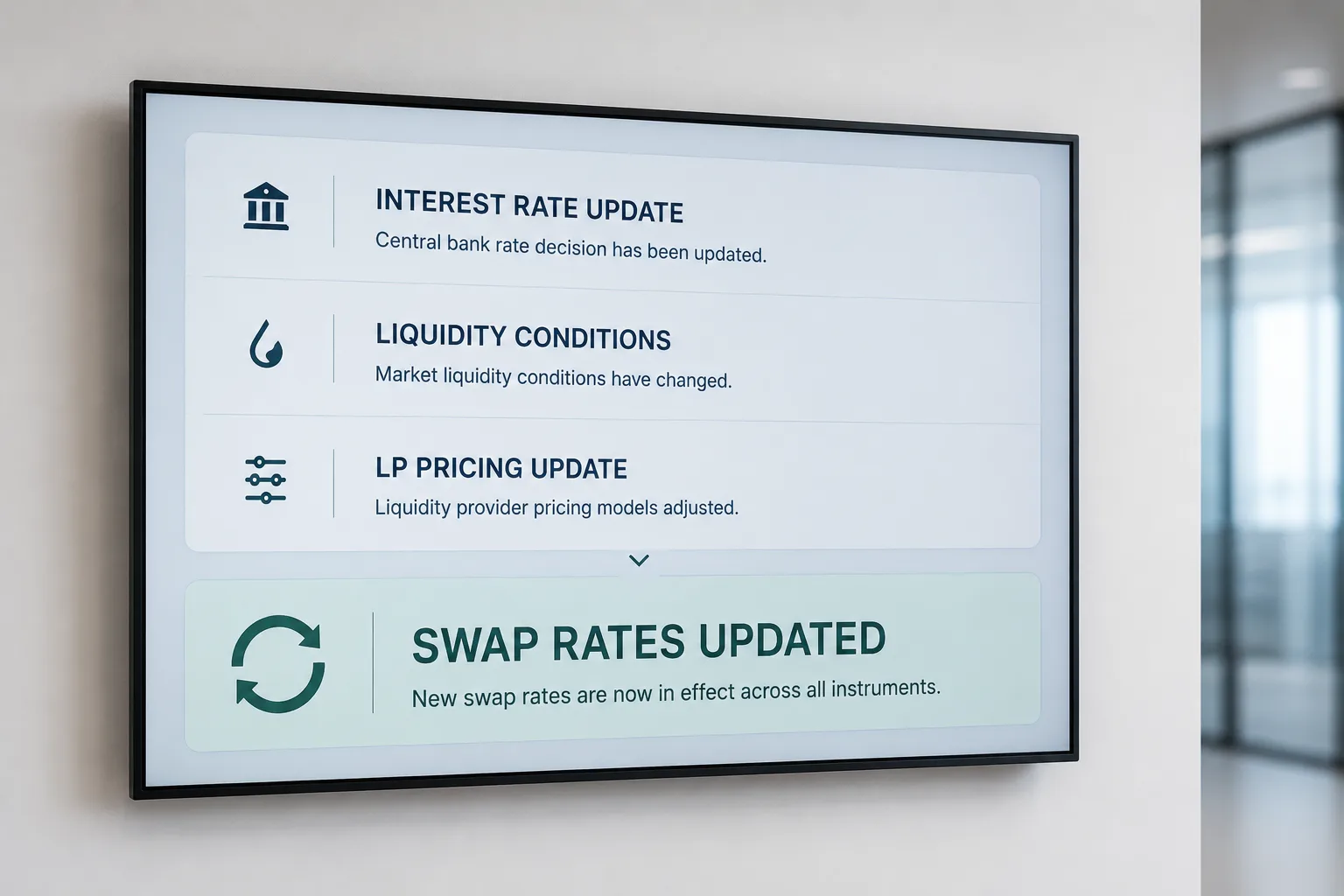
There are multiple factors that can affect the value of a swap rate, including:
• Central bank interest rate fluctuations
• Market liquidity conditions
• Actual organization costs
• Currency fluctuations
• Liquidity providers' pricing models
Due to the variability of these types of variables, swap rates will also fluctuate.
Many trading platforms will provide traders with current swap rates based on the contract sizes of each financial instrument for sale.
Related Articles: What Is Margin Call in Forex?
How Traders Can Manage Swap Costs
While traders typically incur swap fees as part of their trading, they can take steps to reduce their exposure and limit the impact of those fees.
1. An important step that traders should take before entering a longer-term trade is to confirm what the current swap rate is for the instruments they are considering trading. Most online brokers display the swap amounts for buy and sell trades on their platforms.
2. When traders know in advance that swap rates will increase, they may consider avoiding holding overnight positions during that period.
3. Some traders decide to trade currency pairs that have low-interest-rate differentials with one another to minimize the likelihood of incurring large swap fees on their trades.
4. Once traders have a complete understanding of these potential issues, they will be able to manage their costs better and make more informed decisions about their overall trading strategies.
Technology's Impact on Swap Rate Transparency
The vast majority of trading platforms currently in use offer traders a simple way to determine the swap rates and overnight financing costs associated with their trades.
Typically, traders can see the swap value for each instrument in its specification details or in the order entry field.
Furthermore, many trading platforms display the anticipated swap charge before placing a trade.
Because of this technology, traders can estimate the total cost of holding a position for a protracted period and use the swap variable when determining the plans they want to execute during a trade.
As trading technology advances, it becomes easier for traders to access comprehensive cost information.
Summary
For traders who conduct overnight trading, the swap rate explanation is an integral part of calculating their trading cost.
Swap rates are determined by the interest rate differential between the two currencies, and they change after the daily rollover.
Depending on the direction of the trade and the difference in interest rates between the two currencies, the trader will either pay or receive the swap fee.
Short-term traders who rarely experience swaps may not need to overly analyze the effects of swaps; however, frequent traders should evaluate the swap rates they are subject to by keeping track of the swap rates for each security traded, the way interest rates affect the swap rates, and structuring their trade strategy to avoid incurring significant swap charges.
In turn, when traders have a finer understanding of swap rates, they will be able to make better choices when determining the overall costs of their trading, as highlighted in Wikilix Broker Analysis.