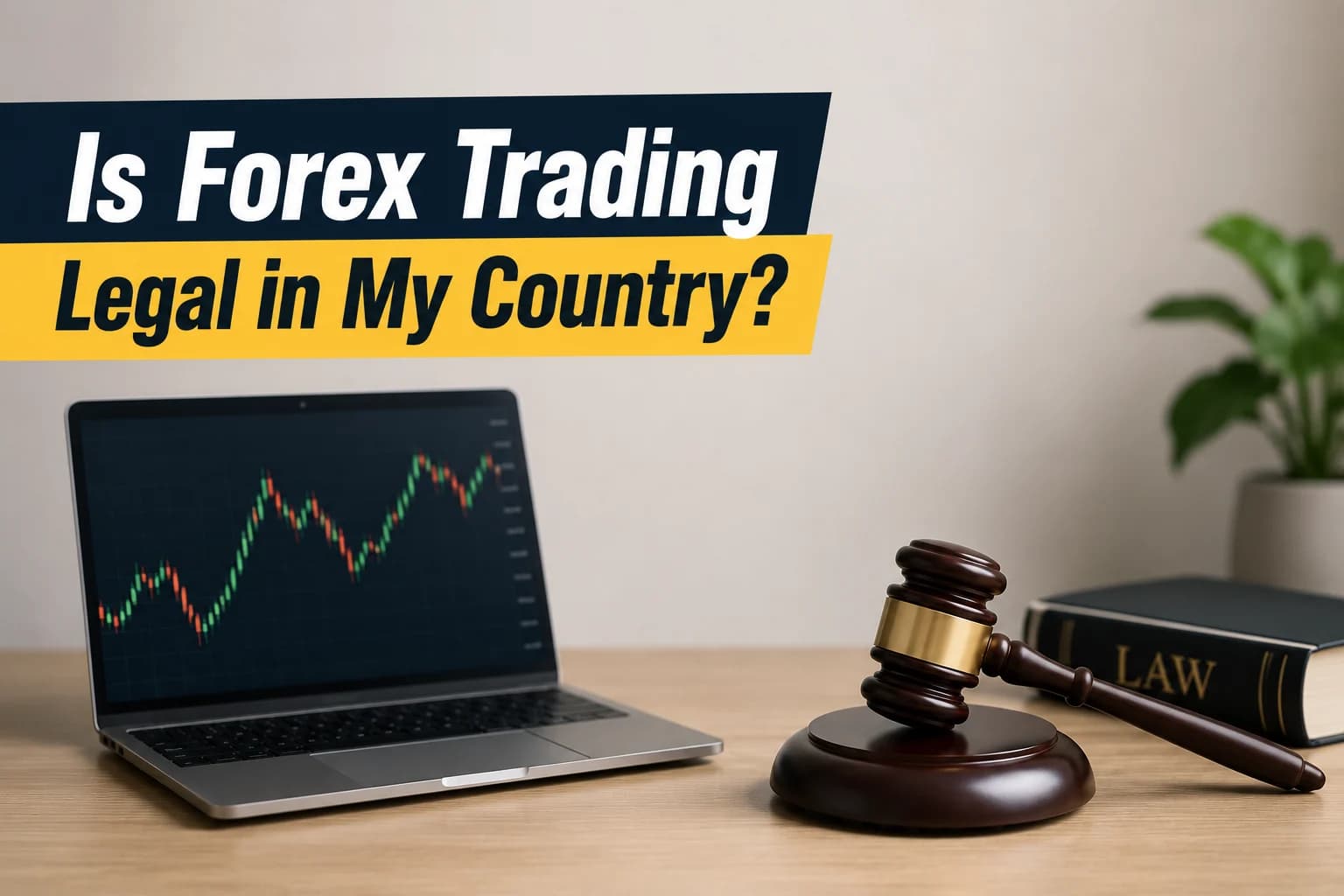
Before opening their first Forex trading account, a lot of people who become interested in Forex ask the question, “Is Forex trading legal in my country?” This is a valid concern. Forex is global, decentralized, and accessible online through brokers, but this does not mean that Forex trading is treated the same way in every nation.
Some governments regulate Forex trading completely and allow licensed brokers to operate domestically. Others restrict different aspects of Forex trading, such as leverage, offshore brokers, and derivative trading. In some cases, Forex trading may be limited or controlled by very strict regulations in the country where the trader is.
You must verify whether Forex trading is legal in your country before you deposit money into an account with any broker. When you trade with a broker regulated in a jurisdiction, you gain protection through a regulated, transparent market and reduced fraud risk.
The purpose of this guide is to inform you about whether Forex trading is legal in the countries/regions below, the differences in how regulations are applied in the different regions, and how to verify that you are trading legally in your jurisdiction prior to making a trade.
What Is the Legal Definition of Forex Trading?
Forex trading is generally viewed to be legal when you, as an individual, can buy and sell currencies through recognised and licensed brokers and/or banks and under the supervision of a regulatory authority.
Most countries are regulated by the government through various agencies or financial regulators that enforce broker Licensing, Investor Protection rules, Financial Reporting standards, and so forth.
The regulators in each Country are designed to make sure that brokers operate with Transparency by having the trader’s funds Segregated, the brokers follow Fair Trading Practices, etc.
Traders who can trade in a regulated environment in their Country of residence typically have access to brokers licensed to provide services in their jurisdiction.
Why Do Countries Regulate Forex Trading?
Governments regulate Forex trading to provide investor protection and grow and maintain Financial Stability.
Forex trading involves the use of leverage and speculative trading and carries a high degree of Financial Risk. Without proper oversight, unregulated brokerages could take advantage of inexperienced traders.
Regulators create rules to establish:
• Licensing for Brokers
• Capital Requirements for Brokers
• Client Fund Protection
• Disclosure of Risk
• Market Transparency
Therefore, by having rules in place, regulators create a safer environment for Retail Traders.
Forex Regulation Around the World
Forex trading laws vary widely across different countries and regions, as outlined in a Global Forex Regulation Overview. Some jurisdictions have strict regulatory frameworks, while others offer more flexible environments.
The following table provides a simplified overview of how forex trading is typically regulated in different regions.
Region | Legal Status | Key Regulatory Authorities | Notes |
United States | Legal and highly regulated | CFTC, NFA | Strict leverage limits and regulatory oversight |
United Kingdom | Legal and regulated | FCA | Strong investor protection rules |
European Union | Legal and regulated | ESMA and national regulators | Standardized leverage rules across EU |
Australia | Legal and regulated | ASIC | Well-established broker oversight |
Japan | Legal and regulated | FSA | Strict leverage and compliance rules |
Some developing markets | Varies | Local financial authorities | Regulation may be evolving |
This table illustrates that forex trading is legal in many parts of the world but subject to different regulatory conditions.
Countries With Strict Forex Regulations
Several jurisdictions impose stringent regulations on the Forex markets. For instance, Forex brokers are required to register with the CFTC in the U.S. and must also be members of the NFA. The leverage available to retail traders is capped, and trades are closely monitored.
There are also strict regulations on Forex brokers providing services to traders in Japan, administered by the Financial Services Agency. Among these regulatory obligations are many detailed reports a broker must submit and restrictions on leverage.
Stringent regulations can also give traders greater confidence in their trading activities; however, they may restrict their use of certain trading mechanisms, including high leverage.
Countries That Have Moderate Regulations
Many jurisdictions allow Forex trading; however, they regulate transactions through their national financial authorities.
try. In general, most developed nations, including the UK, Australia, and many EU countries, require Forex brokers to hold the necessary license to operate legally under their regulations. In addition, each trader can be confident that they are dealing only with licensed brokers in these jurisdictions and can take advantage of all the benefits of competitive trading conditions.
Countries That Have Minimal or Developing Regulations
Some countries lack regulations restricting Forex trading, or have yet to develop them. As a result, while traders can access Forex brokers outside these countries, those brokers may not be regulated. Consequently, trading through offshore brokers can carry more risk than doing so with ones operating under a more developed regulatory framework.
Legitimacy of Forex Trading in the Trader's Country
Before placing a trade in the Forex market, traders should verify whether their country permits Forex trading.
Traders should start by checking the website of their country's financial regulatory authority. These authorities typically publish lists of approved Forex brokers and outline the specific steps traders should follow to verify broker approval.
Furthermore, the trader should compare the Forex broker's information and confirm that it is approved by the appropriate regulatory authority in their country, following the steps in How to Verify a Broker's License.
Reviews and educational materials published by regulatory agencies are also a great resource for trader research and understanding of the regulatory framework in which they will be trading.
Related Articles: How Offshore Broker Regulation Works
Risks of Trading with Unregulated Brokers
Trading forex with an unregulated broker is one of the largest causes of risk in the Forex Market, which is why traders should learn How to Avoid Forex Scams.
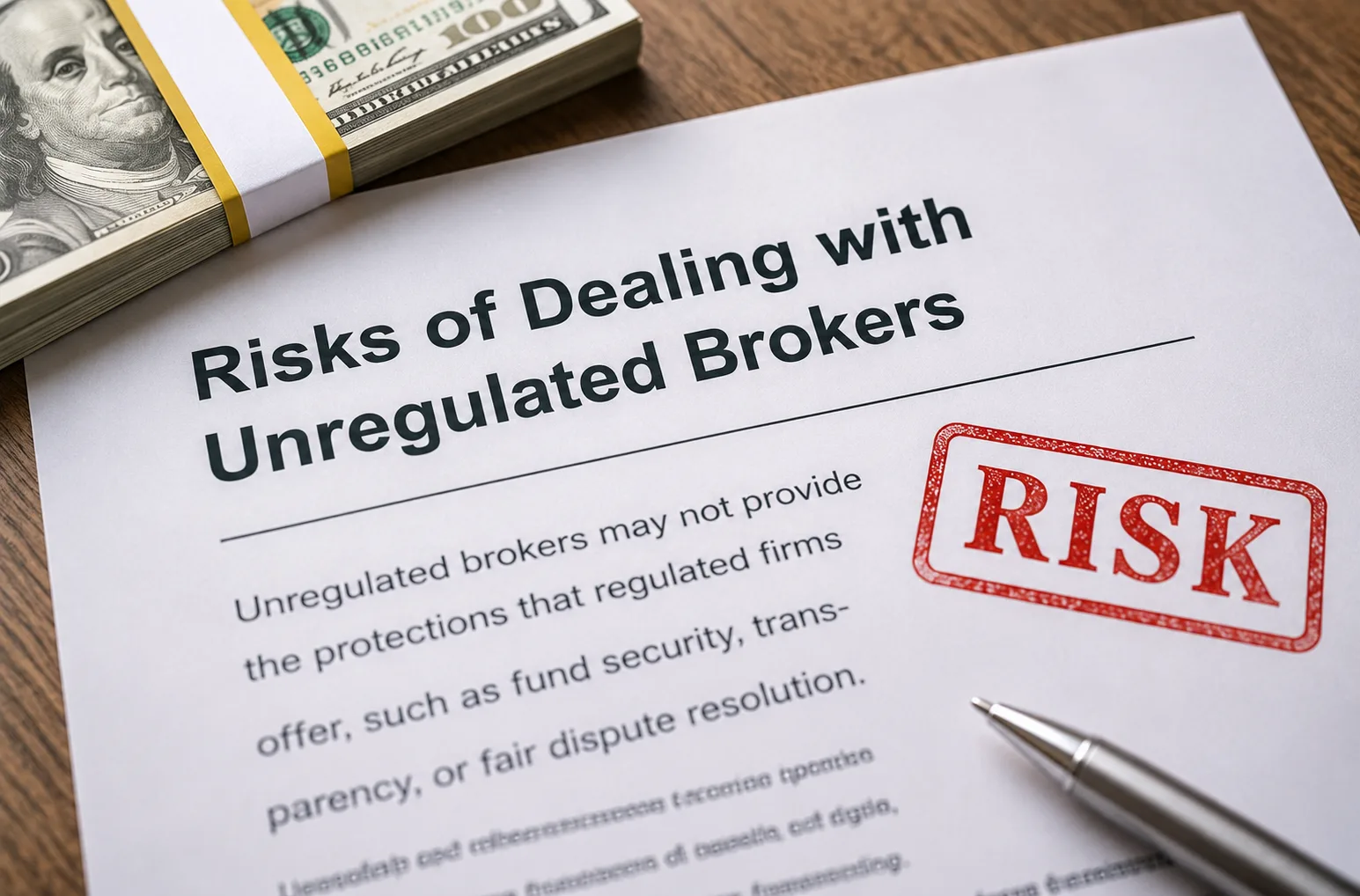
The foundation for the numbers above relies on the fact that unregulated or unlicensed brokers may not have to follow the necessary standards set forth by regulators for regulating their business, which include, but are not limited to, requirements on protecting customers’ funds, pricing transparency, and how to resolve disputes quickly and fairly.
All of these items increase exposure to unfair trading practices and/or problems with withdrawing funds when trading with an unregulated forex broker. If you trade with an unregulated forex broker, it’s highly likely that you will experience some of these problems. By working with regulated brokers, you will also have additional protections, such as segregated customer funds and regulatory oversight of the broker.
How regulation protects forex traders
The FX market is built on trust, and that trust is sustained by regulators' effective oversight.
Regulators require brokerage firms to follow strict guidelines, which include requirements on their operations, such as maintaining an appropriate level of capital reserves, protecting the customer’s funds, and disclosing all risks (including forward-looking risks) with regard to trading using leverage.
Some jurisdictions also provide compensation funds to a trader if a broker becomes insolvent. Stated protections provide a system in which traders can operate with greater confidence, thanks to the obvious benefits of regulatory oversight and transparency.
Common Misconceptions About The Legal Nature Of Forex Trading
There are many misconceptions about whether forex trading is legal.
For example, many people believe forex trading is illegal because it is based on speculation. However, many countries permit speculative trading as long as it is conducted through regulated financial institutions.
Another common misperception about forex trading is that trading with an offshore broker automatically makes you engage in illegal activity. The reality is that some offshore jurisdictions actually do have regulatory structures; however, protections for individual investors may differ across jurisdictions.
Understanding the differences between regulated and unregulated trading environments helps responsible traders trade in line with their country's laws.
Conclusion
The answer to “Is forex trading legal in my country?” depends largely on the regulatory framework in place and whether authorities have established rules to protect investors and ensure financial stability. As explained in Wikilix Broker Analysis, understanding the legal environment is the first step for any trader entering the forex market.
In many countries, forex trading is permitted, but it is typically subject to strict regulations aimed at safeguarding investors and maintaining the integrity of the financial system.
Before opening a forex trading account, it is essential to carry out proper due diligence. Traders should clearly understand the specific legal requirements in their country and verify whether forex trading is allowed in their jurisdiction. Choosing a regulated broker is also critical to reducing risk, increasing transparency, and protecting capital.
Ultimately, successful forex trading begins with a solid understanding of local regulations, followed by disciplined trading that aligns with those legal frameworks.